As NASA prepares to launch the Artemis II mission—marking humanity’s first return to deep space since 1972—the endeavor carries profound geopolitical implications for the Trump administration and broader US strategic interests. This historic flight, carrying three American and one Canadian astronaut, represents more than technological achievement; it symbolizes a critical juncture in global space dominance competitions.
The mission’s timing coincides with heightened domestic divisions within the United States regarding foreign policy, economic concerns, and immigration. A successful lunar operation could provide the Trump administration with substantial political capital, potentially fostering rare national unity while demonstrating American technological prowess.
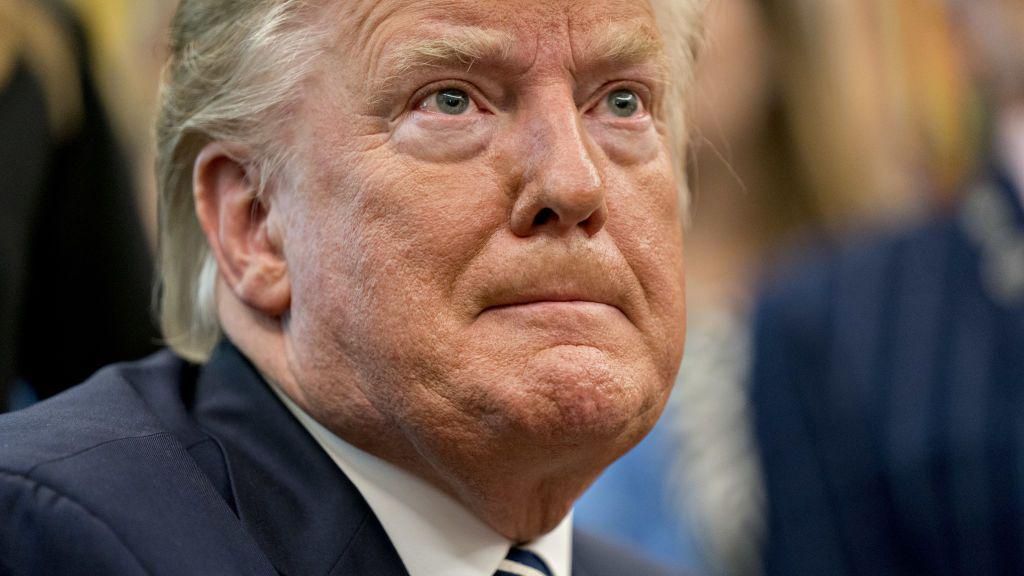
President Trump’s space policy evolution reveals strategic recalibration. Initially focused on Martian exploration during his first term, his administration now prioritizes lunar presence through Executive Order 12102, mandating US return to the Moon by 2028 and establishing permanent lunar infrastructure by 2030. The order explicitly frames space superiority as reflecting national vision and willpower, directly linking cosmic exploration to terrestrial power dynamics.
NASA Administrator Jared Isaacman contextualizes the mission within contemporary geopolitical realities: ‘We face a genuine geopolitical rival challenging American leadership in space. This endeavor transcends symbolic planting of flags; it represents permanent establishment of presence. America will never again relinquish the Moon.’
The modern space race differs fundamentally from Cold War competitions with the Soviet Union. Whereas the Apollo program primarily served ideological demonstration, Artemis incorporates substantial economic considerations. Lunar resources including helium-3 (valued exceeding $20,000/kg), water ice for propulsion, and rare earth minerals like lithium and platinum present unprecedented economic opportunities.
Former NASA Administrator Sean O’Keefe emphasizes the resource dimension: ‘After decades considering the Moon a mere dust bowl, we now recognize its substantial helium-3 deposits, potentially enabling compact nuclear fusion reactors with extended operational lifetimes.’
Space policy experts draw historical parallels to nineteenth-century western expansion. Clayton Swope, former CIA Directorate of Science and Technology veteran, compares lunar exploration to the Lewis and Clark expedition: ‘We cannot precisely quantify the Moon’s value, but we recognize its strategic necessity amidst competition with China.’
The White House explicitly connects space achievement to national identity. Spokesperson Liz Huston states: ‘Through President Trump’s America-First policies, the United States will lead humanity into space, inaugurating unprecedented achievements in cosmic exploration.’
Historical precedent suggests space exploration’s unifying potential. The Apollo 11 mission captivated 125-150 million Americans during the tumultuous Vietnam War era, providing collective pride amid social fragmentation. Experts like Council on Foreign Relations senior fellow Esther Brimmer note: ‘Space remains among the few domains transcending political polarization, representing shared national pride for most Americans.’
As astrophysicist David Gerdes—who witnessed the Apollo landing as a child—reflects: ‘The technological boldness and astronaut spirit inspired generations across political spectra. A diverse contemporary crew returning to the Moon could potentially reunite the nation amidst current divisions.’