As geopolitical tensions in the Middle East continue to destabilize global oil markets, Brazil stands uniquely insulated through its pioneering biofuels program that has evolved into a national energy security asset. The country’s extensive fleet of flex-fuel vehicles—capable of running on pure ethanol, gasoline, or any combination—provides both economic and psychological protection against supply disruptions.
Initiated in 1975 during Brazil’s military dictatorship, the biofuel program has successfully transitioned through democratic eras to create what analysts describe as a “viable alternative” to fossil fuel dependency. This strategic foresight is now drawing international attention, with nations including India and Mexico examining the Brazilian model as a potential blueprint for their own energy security.
The tangible benefits are evident at the pump: While U.S. gasoline prices surged 30% in March, Brazilian prices increased only 5%. This remarkable stability stems from a mature domestic biofuels industry centered on sugarcane-derived ethanol, which accounts for approximately 37.1 billion liters in annual sales according to state energy research data.
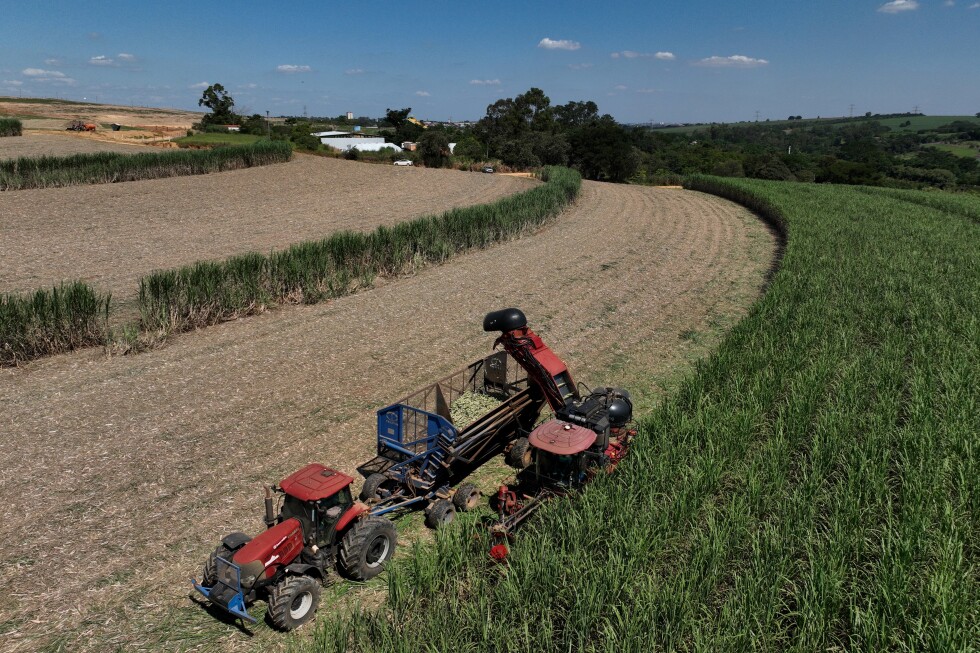
The timing appears particularly fortuitous as Brazil anticipates a record sugarcane harvest beginning in April, projected to yield 30 billion liters of ethanol—4 billion more than the previous year. “That increase alone is equivalent to the total amount of gasoline Brazil imported in all of last year,” noted Evandro Gussi, president of the Brazilian Sugarcane Industry Association (UNICA).
Brazil’s biofuel success story is rooted in São Paulo state, the nation’s agricultural and industrial powerhouse, where production ranges from high-tech export-oriented mega-farms to smaller family operations. Years of state-sponsored research have refined the technology, with institutions like the Science Development Center for Ethanol at Unicamp university driving innovation.
“We have flexibility in ethanol production, in vehicle engines, and from the federal government, which sets the percentage of ethanol in the fuel blend,” explained center coordinator Luis Cortez. “This triple flexibility creates an unmatched adaptive system.”
However, the biofuel shield has its limitations. Diesel prices surged over 20% in March, prompting President Luiz Inácio Lula da Silva to propose import subsidies through May. Unlike gasoline, diesel contains only 14% biodiesel (primarily soybean-based) and remains heavily dependent on imported crude—with Russia supplying most of the 20-30% monthly import requirement.
The current crisis has accelerated international interest in Brazil’s model. Mexican President Claudia Sheinbaum has expressed particular interest in Petrobras technology for producing ethanol from agave, a plant abundant in Mexico. As Gussi observed: “The best news is that this solution has significant replicability potential—even amidst global turmoil.”