The towering legacy of American labor icon Cesar Chavez faces unprecedented reckoning as sexual assault allegations from civil rights pioneer Dolores Huerta catalyze nationwide removal of his monuments and renaming of public tributes. This profound transformation strikes particularly deep chords in California, where approximately 75% of America’s fruits and nuts are harvested and farm labor carries generational significance for countless families.
The movement gained decisive momentum when 95-year-old Huerta, co-founder of the National Farm Workers Association with Chavez, broke decades of silence in a New York Times investigation alleging historical rape. The report further contained testimonies from two daughters of farmworkers claiming underage molestation in the 1970s. Huerta stated she previously withheld her account fearing damage to the farmworkers’ movement.
California’s legislature responded with unanimous approval to rename Cesar Chavez Day as Farmworkers Day, reflecting Senator Suzette Martinez Valladares’ declaration that ‘the legacy of farmworkers belongs to families like mine across California – not to any one individual.’ This legislative action mirrors similar reevaluations occurring nationwide where Chavez’s name graces dozens of schools, streets, and public buildings.
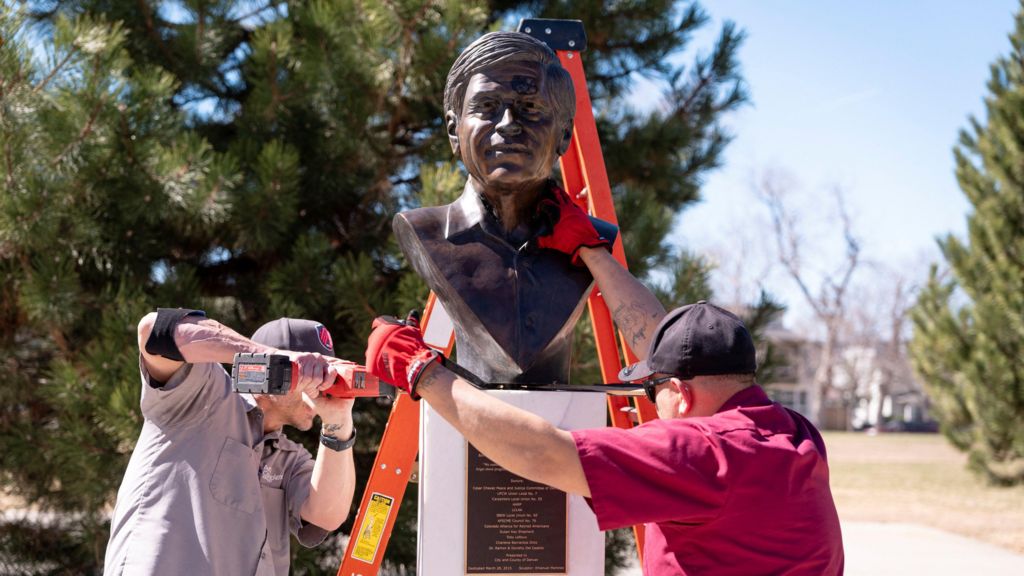
The physical landscape undergoes visible transformation as municipalities remove busts from public parks—exemplified by recent actions in Denver’s Cesar Chavez Park—and artists reconsider murals. Los Angeles artist MisterAlek transformed his 2021 Chavez mural into a tribute to Huerta, explaining the updated artwork ‘illustrates the type of person that she was… speaking loud for people defending our rights.’
Yet the conversation reveals nuanced perspectives regarding historical preservation. Muralist JD ‘Zender’ Estrada, who created a Chavez tribute in 1994 when Los Angeles renamed a street in his honor, advocates for contextual renovation rather than complete removal. ‘We have to preserve and conserve murals,’ Estrada noted, suggesting updated artworks could better recognize contributions from Filipino and other international farmworkers while maintaining historical context.
Los Angeles Mayor Karen Bass encapsulated the complex emotional response, acknowledging feeling ‘devastated’ while recognizing Chavez’s foundational role in justice movements that inspired her childhood commitment to activism. The unfolding reevaluation balances traumatic allegations against transformative labor achievements that included leading the landmark Delano grape strike and creating the enduring activist mantra ‘si, se puede’ (yes, we can).