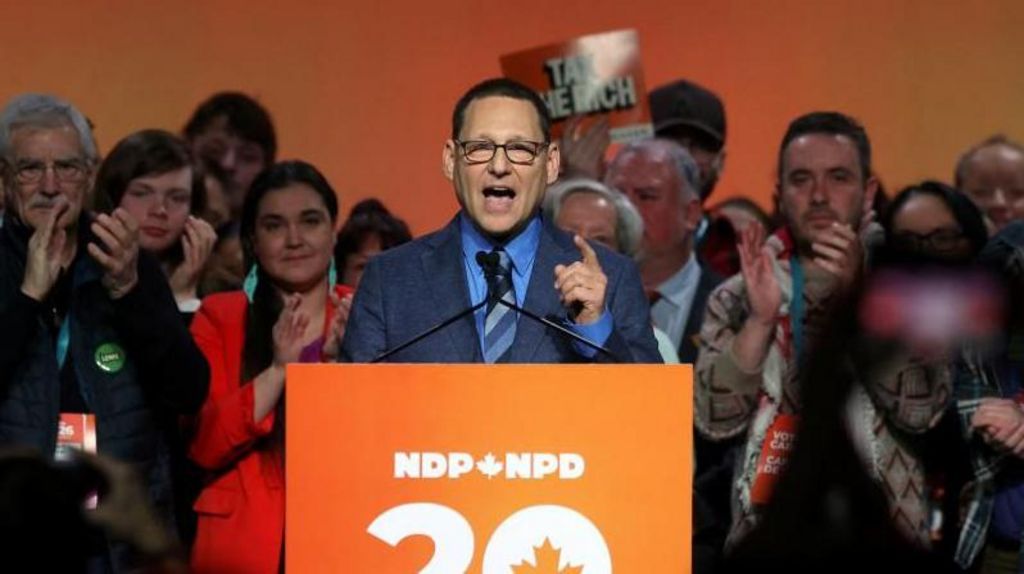
Canada’s New Democratic Party has elected Avi Lewis as its new leader following a decisive first-ballot victory on Sunday, immediately exposing significant internal divisions over energy policy within the left-leaning party. Lewis, who ran on a platform emphasizing aggressive climate action and economic affordability, now faces immediate challenges from provincial NDP leaders in Western Canada who oppose his stance against new oil and gas development.
The leadership transition has revealed a growing rift between the federal party’s environmental priorities and the economic concerns of energy-producing provinces. Shortly after his victory, Saskatchewan NDP leader Carla Beck publicly rejected Lewis’s invitation to meet, describing his resource development positions as “ideological and unrealistic” in a formal letter. Similarly, Alberta NDP leader Naheed Nenshi expressed concerns that Lewis’s direction would not serve his province’s interests, emphasizing the need for federal leaders who understand Alberta’s essential role in Canada’s economy.
Despite these criticisms, Lewis characterized the disagreements as evidence of a broadening political coalition. “Hard conversations are necessary,” Lewis told reporters on Monday. “These disagreements mean our tent is growing and are a sign of health.” He maintained that his door remains open to those who disagree with his energy policies while reaffirming his opposition to new fossil fuel development.
Lewis cited the ongoing Israeli-American conflict with Iran and resulting oil price volatility as evidence that “the energy economy is extremely unstable.” He argued for accelerating Canada’s transition to renewable energy to create “a more stable, secure, and safe economy, and a more independent Canadian economy.”
The new leader received support from Manitoba Premier Wab Kinew, who acknowledged potential for “heated debates” but emphasized alignment on broader issues. “We’re fighting for the people who don’t have a voice right now,” Kinew stated. Lewis confirmed receiving “words of wisdom and encouragement” during their hour-long meeting in Winnipeg.
Federal NDP caucus members expressed unity behind Lewis, with interim leader Don Davies stating the party was “100% united” and could serve as “a powerful voice for all the voters who do not see themselves reflected” by Liberal or Conservative policies. Lewis, who does not currently hold a parliamentary seat, indicated he would focus on engaging with the party’s national base rather than immediately pursuing elected office.
The leadership transition occurs as the NDP seeks to rebuild after significant losses in last year’s federal election, while simultaneously navigating the complex balance between environmental priorities and economic realities in Canada’s energy-producing regions.