Kenya’s prestigious flower export sector is facing severe financial hemorrhaging, with weekly losses reaching $1.4 million since the onset of Middle East hostilities, according to industry reports. The Kenya Flower Council (KFC), the premier organization representing floral growers and exporters, revealed that cumulative losses have exceeded $4.2 million over the past three weeks due to escalating transportation challenges and diminished market demand.
Clement Tulezi, Chief Executive Officer of KFC, detailed the unprecedented cost pressures: “We’re experiencing significant logistical constraints, including substantial movement delays and extended routing alternatives. Current pricing has soared to $5.80 per kilogram—the highest rate witnessed in a decade.”
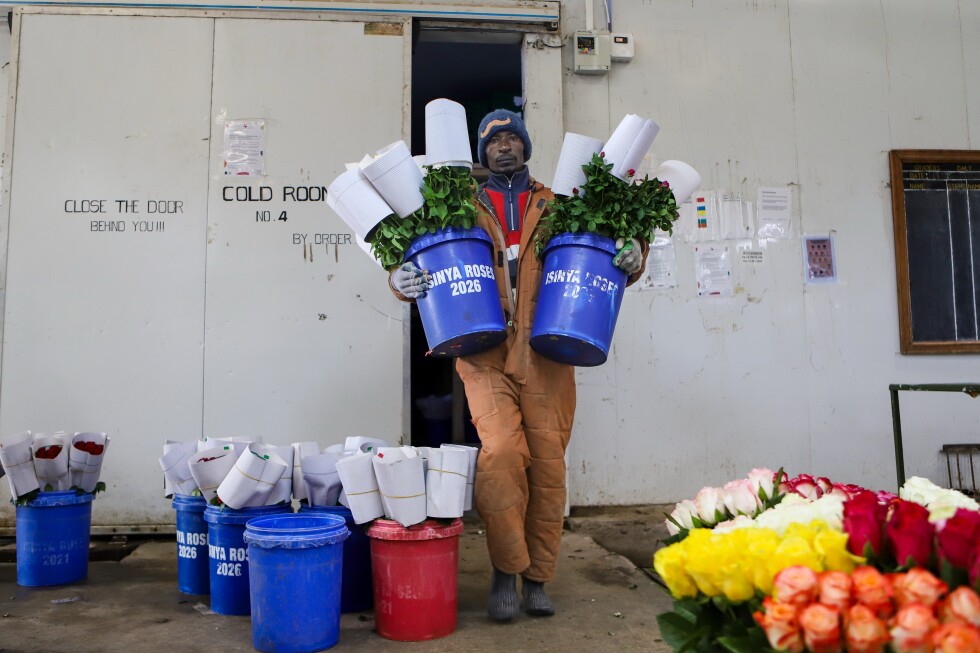
The crisis is particularly evident at Isinya Flower Farms, located 56 kilometers south of Nairobi, where export volumes have plummeted dramatically. Marketing Manager Anantha Kumar reported: “Our daily exports have collapsed from 450,000 stems to approximately 150,000-200,000 stems. This drastic reduction forces us to discard nearly half of our production capacity.”
While Middle Eastern destinations typically constitute about 30% of Isinya’s market and 15% nationally, the conflict’s ripple effects have severely impacted European-bound shipments—which normally represent 70% of Kenya’s floral exports. Kumar explained the dual challenge: “Sky-high freight rates have made purchases unaffordable for customers, while simultaneously, availability has drastically diminished. European carriers now charge approximately $5 per kilogram, doubling standard rates, as Middle Eastern carriers have suspended operations.”
Industry experts warn of potential massive job losses in a sector that directly employs approximately 500,000 Kenyans. The Kenya Flower Council is actively petitioning the government to establish direct cargo flights to Europe to preserve market access and provide economic relief to struggling growers.