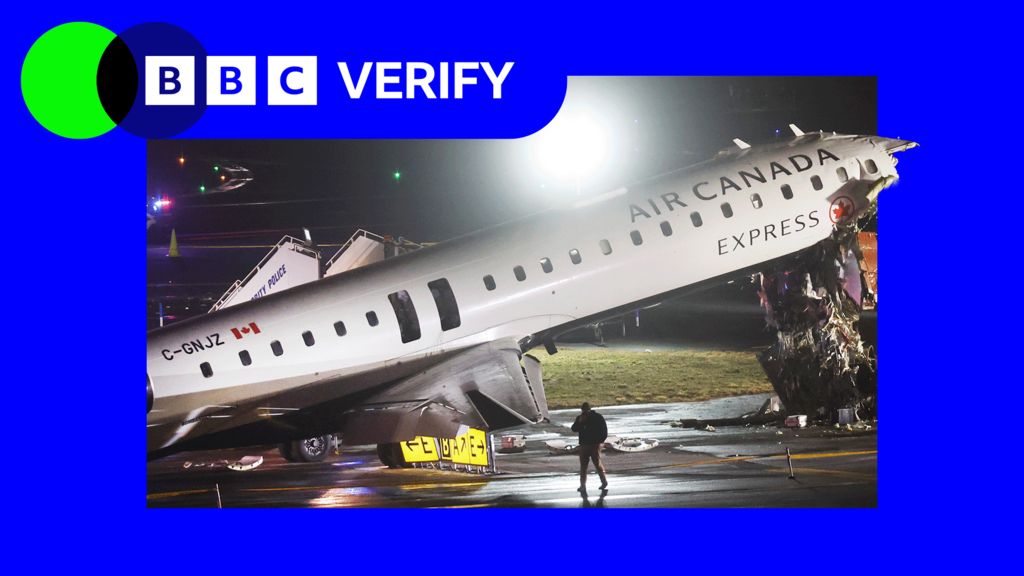
A meticulous investigation by BBC Verify has reconstructed the critical timeline leading to the catastrophic collision between an Air Canada aircraft and an emergency response vehicle at New York’s LaGuardia Airport. The incident, which resulted in multiple fatalities, unfolded during challenging weather conditions that significantly impacted visibility and operational protocols.
According to verified flight data and air traffic control communications, the Airbus A320 was executing its final approach during reduced visibility conditions when the collision occurred. Preliminary analysis indicates the aircraft was slightly off its standard glide path moments before impact. Simultaneously, airport ground control had authorized the fire apparatus to cross the active runway following established emergency response procedures to another potential incident.
The investigation reveals a critical 8-second window where both vehicles converged on the runway intersection. Enhanced radar tracking shows the aircraft’s descent rate and velocity were within operational parameters, while the emergency vehicle maintained regulated crossing speed. The convergence occurred during a period of particularly dense ground fog that reportedly impaired both cockpit and vehicle operator visibility.
Aviation safety experts emphasize that such incidents require simultaneous system breakdowns across multiple safety layers. The investigation is examining communication protocols between tower control, ground control, and emergency response teams, alongside instrument landing system performance during the incident. This accident represents one of the most significant runway incursion events in recent U.S. aviation history, prompting immediate review of ground movement procedures at major airports during low-visibility operations.