The escalating military confrontation between the US-Israel alliance and Iran has precipitated a severe disruption to global supply networks, creating unprecedented challenges for international commerce. According to supply chain experts, the strategic Strait of Hormuz—a critical maritime corridor handling approximately 20% of global oil shipments—has become effectively impassable despite lacking official closure status, triggering a cascade of logistical complications worldwide.
Professor Mohammad Elahee of Quinnipiac University’s International Business program warns that contemporary just-in-time inventory systems lack the resilience to withstand prolonged regional conflicts. “In an era when firms carry minimal buffer stock and rely on highly optimized supply chains,” Elahee emphasized, “a prolonged war that creates disruptions in air and shipping routes would most likely cause severe supply chain shocks with ripple effects reverberating throughout the world.”
The strategic waterway facilitates far more than petroleum products, transporting substantial volumes of essential commodities including one-third of global seaborne fertilizer, petrochemicals, plastics, and aluminum. Container vessels also move critical supplies of food, pharmaceuticals, consumer goods, and industrial machinery along the vital Asia-Europe trade corridor.
Current operational data reveals alarming developments: over 100 commercial vessels remain immobilized in the Gulf region since hostilities intensified in mid-March. Major shipping conglomerates including A.P. Moller-Maersk and Hapag-Lloyd have implemented temporary suspensions of Middle Eastern operations citing safety concerns. Concurrently, freight rates for Asia-Middle East routes have experienced dramatic increases, compounding existing logistical challenges.
The supply chain deterioration compounds recovery efforts from previous disruptions, including COVID-related logistical failures and recent tariff implementations. Retail and e-commerce sectors face particular vulnerability due to their dependence on extensive logistics networks. Elahee projects that “cost increases [will become] embedded in nearly every product they move, resulting in price escalation for consumers.”
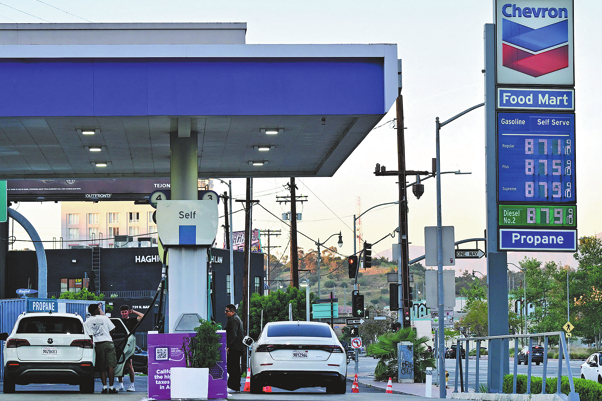
While the United States maintains substantial domestic oil production capacity, industry experts caution against assumptions of immunity from global disruptions. Robert Kaufmann of Boston University’s Global Development Policy Center notes that transportation costs will inevitably rise across all moved commodities, potentially impacting prices for clothing, food, and travel services for American consumers.
The current crisis echoes recent supply chain challenges, including the two-year Red Sea blockage from 2023-2026 due to Houthi militant activities, which forced rerouting via Africa’s Cape of Good Hope. The present conflict has additionally forced closure of Middle Eastern airspace, creating critical delays for time-sensitive air cargo shipments, particularly perishable goods requiring precise logistical coordination.
Industry analysts confirm that numerous shipping companies have begun diverting Gulf-bound cargo to alternative ports, while regional airports remain shuttered to commercial transit. This multidimensional logistics crisis demonstrates the profound interconnectedness of global supply networks, where regional disturbances rapidly propagate through international economic systems.