A high-stakes meeting between Japanese Prime Minister Sanae Takaichi and US President Donald Trump at the White House on Thursday was marred by diplomatic awkwardness and concerns over escalating military cooperation in the Asia-Pacific region. The discussions, primarily focused on the ongoing US-Iran conflict and Japan’s potential role, took an unexpected turn when Trump invoked Japan’s 1941 attack on Pearl Harbor to justify lack of consultation with allies regarding recent strikes against Iran.
During an Oval Office press conference, Trump responded to a Japanese reporter’s question about allied consultation with startling historical analogy: “We wanted surprise. Who knows better about surprise than Japan? Why didn’t you tell me about Pearl Harbor?” Prime Minister Takaichi’s visibly surprised reaction captured the diplomatic discomfort of the moment.
Despite this strained exchange, Trump expressed appreciation for Japan’s support regarding Iran, contrasting it favorably with NATO’s response, though without specifying Japan’s potential contributions. Earlier, Takaichi had made the controversial assertion that Trump alone could bring world peace, drawing immediate criticism from Japanese opposition leaders who characterized the statement as “shocking” and “a serious problem.”
The meeting produced significant bilateral agreements, including over $70 billion in new US energy investments and enhanced defense cooperation. The White House announced Japan’s commitment to rapidly strengthening its defense capabilities and increasing its military budget. Both nations affirmed plans to deploy advanced capabilities in Japan and advance joint missile production initiatives.
Regional security experts expressed deep concern about these developments. Da Zhigang of the Heilongjiang Provincial Academy of Social Sciences warned that US-Japan military collaboration “is driven by ulterior motives and severely undermines security in the Asia-Pacific region.” Professor Zhang Yulai of Nankai University noted that the partnership serves mutual interests: the US seeks to reduce financial burdens of troop deployment, while Japan aims to overcome post-war military constraints toward becoming a “normal country.”
The so-called “denial defense posture”—a recent Japanese military development goal—represents a significant departure from the nation’s traditional exclusively defense-oriented policy. Analysts caution that this shift, combined with joint missile development and advanced military deployments, will likely intensify regional arms races and increase conflict risks throughout the Asia-Pacific.
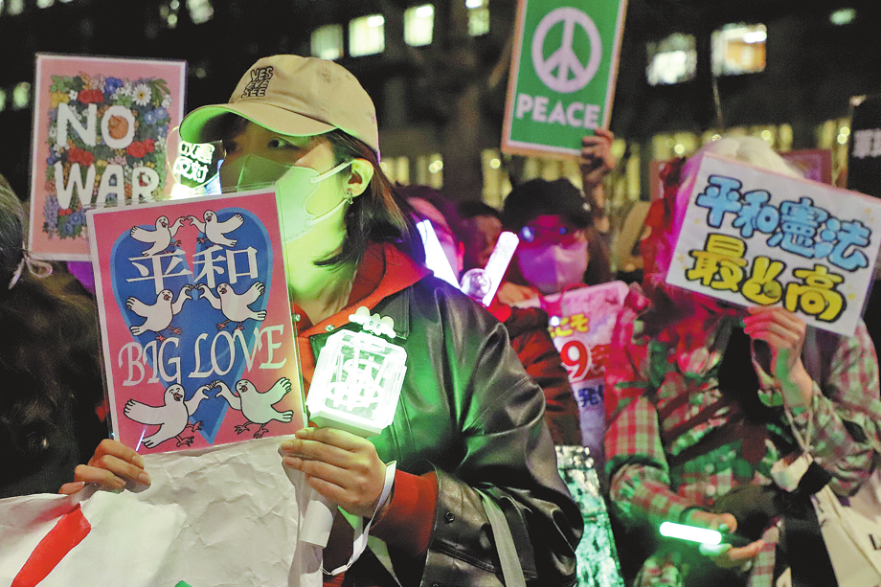
The meeting occurred against a backdrop of domestic opposition in Japan, where over 10,000 citizens rallied outside Tokyo’s Diet building protesting constitutional revisions and long-range missile plans, highlighting the contentious nature of Japan’s military expansion.