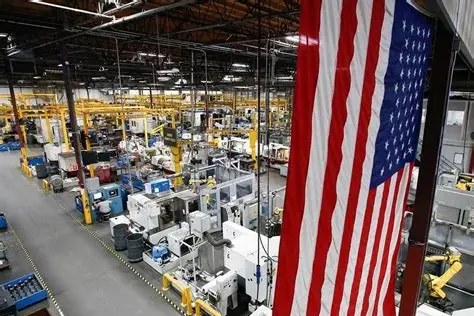
WASHINGTON — The Trump administration’s tariff-centered economic agenda is producing severe unintended consequences for American manufacturing, contrary to its stated objectives. Jay Allen, a Trump supporter and owner of Allen Engineering in northeast Arkansas, exemplifies this troubling trend as his company struggles under the weight of import taxes.
Allen’s manufacturing operation, which produces high-end industrial concrete equipment selling for up to $100,000 per unit, has been severely impacted by increased costs for imported components including engines, steel, gearboxes, and clutches. Despite his initial support for the president’s economic policies, Allen reported operating at a loss in 2025 directly attributable to tariffs, forcing workforce reductions from 205 to 140 employees and price increases of 8-10% that risk further depressing sales.
This case study reflects broader economic data showing 98,000 manufacturing jobs lost during Trump’s first year back in office. The administration’s core rationale—that tariffs would stimulate domestic factory growth and generate sufficient revenue to reduce federal deficits—has failed to materialize. Instead, U.S. companies are now seeking over $130 billion in tariff refunds through litigation against the government.
The White House maintains that positive indicators including construction spending, factory construction hiring, and manufacturing productivity gains will eventually yield benefits. Pierre Yared, acting chairman of the White House Council of Economic Advisers, stated via email that production timelines mean “it will be some more time before we fully materialize the benefits of the president’s policies.”
However, economic analysts challenge this optimism. Joseph Steinberg of the University of Toronto notes that even under ideal conditions, manufacturing employment would require a decade to recover to pre-tariff levels. The current situation falls far short of this best-case scenario due to persistent policy uncertainty that discourages business expansion.
The challenge is particularly acute for small and medium manufacturers, who comprise 98% of U.S. manufacturing establishments but lack the lobbying power or brand recognition of corporate giants to mitigate tariff impacts. Industry groups are advocating for targeted tax credits and exemptions for raw materials and components not available at scale domestically, as the U.S. continues to lag severely behind China in global manufacturing share.