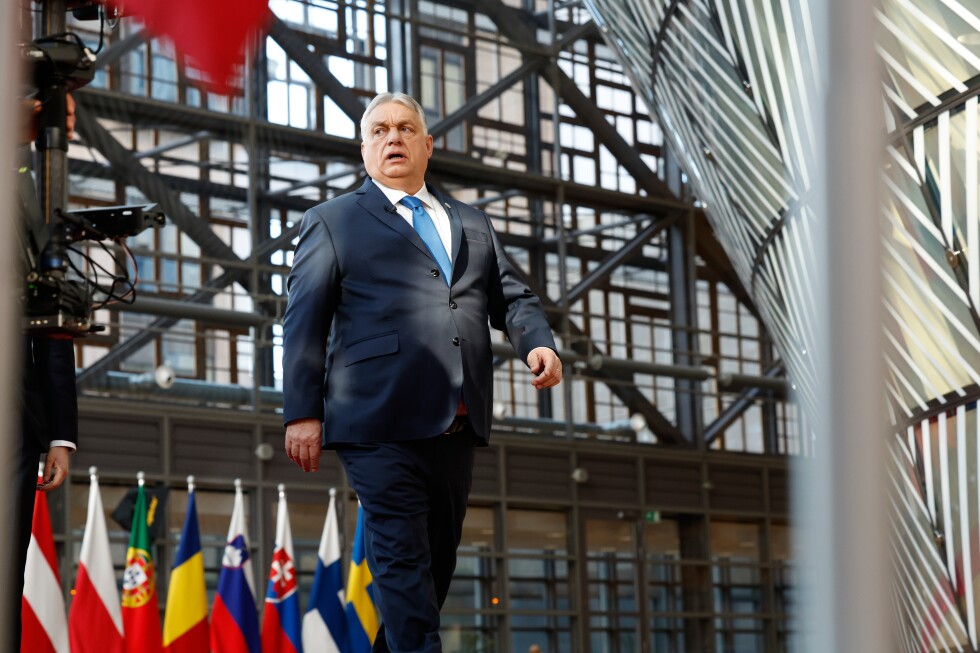
BRUSSELS — European Union leaders launched unprecedented criticism against Hungarian Prime Minister Viktor Orbán during Thursday’s summit, accusing him of weaponizing vital Ukrainian assistance for domestic political gains. The confrontation exposes deepening fractures within the bloc as Hungary obstructs a previously approved €90 billion ($103 billion) support package for Ukraine’s military and economy.
Finnish Prime Minister Petteri Orpo expressed the collective frustration: “He’s exploiting Ukraine as an electoral weapon, which is unacceptable. We reached an agreement, and this constitutes a betrayal of that consensus.”
The emergency funding, deemed essential by EU officials for Ukraine’s survival, requires disbursement by early May. This timeline necessitates immediate procedural progress within the coming weeks—a prospect now jeopardized by Hungarian obstruction.
Prime Minister Orbán, who maintains close ties with Russian President Vladimir Putin and faces declining poll numbers ahead of April elections, has intensified anti-Ukrainian rhetoric throughout his campaign. He portrays Ukrainian President Volodymyr Zelenskyy as an existential threat to Hungary while positioning himself as the sole guardian of Hungarian security.
Belgian Prime Minister Bart De Wever challenged Orbán’s narrative: “If this is electoral theater, it cannot override our collective decisions. It’s indefensible to approve agreements then refuse implementation.”
The deadlock originates from January’s disruption of Russian oil shipments via the Druzhba pipeline through Ukraine. While Ukrainian authorities attribute the damage to Russian attacks, Orbán accuses Zelenskyy of deliberately withholding energy supplies to Hungary.
European Commission President Ursula von der Leyen and European Council President António Costa attempted to break the impasse by offering EU-funded pipeline repairs. Technical teams currently await security clearance in Kyiv for site inspection.
Orbán remains unmoved, declaring: “This transcends politics—it’s existential for Hungary. Secure oil access is non-negotiable for our nation’s survival.”
The crisis highlights structural vulnerabilities in EU governance mechanisms requiring full unanimity among member states, enabling a nation representing just 2% of the bloc’s population to block critical multinational decisions.