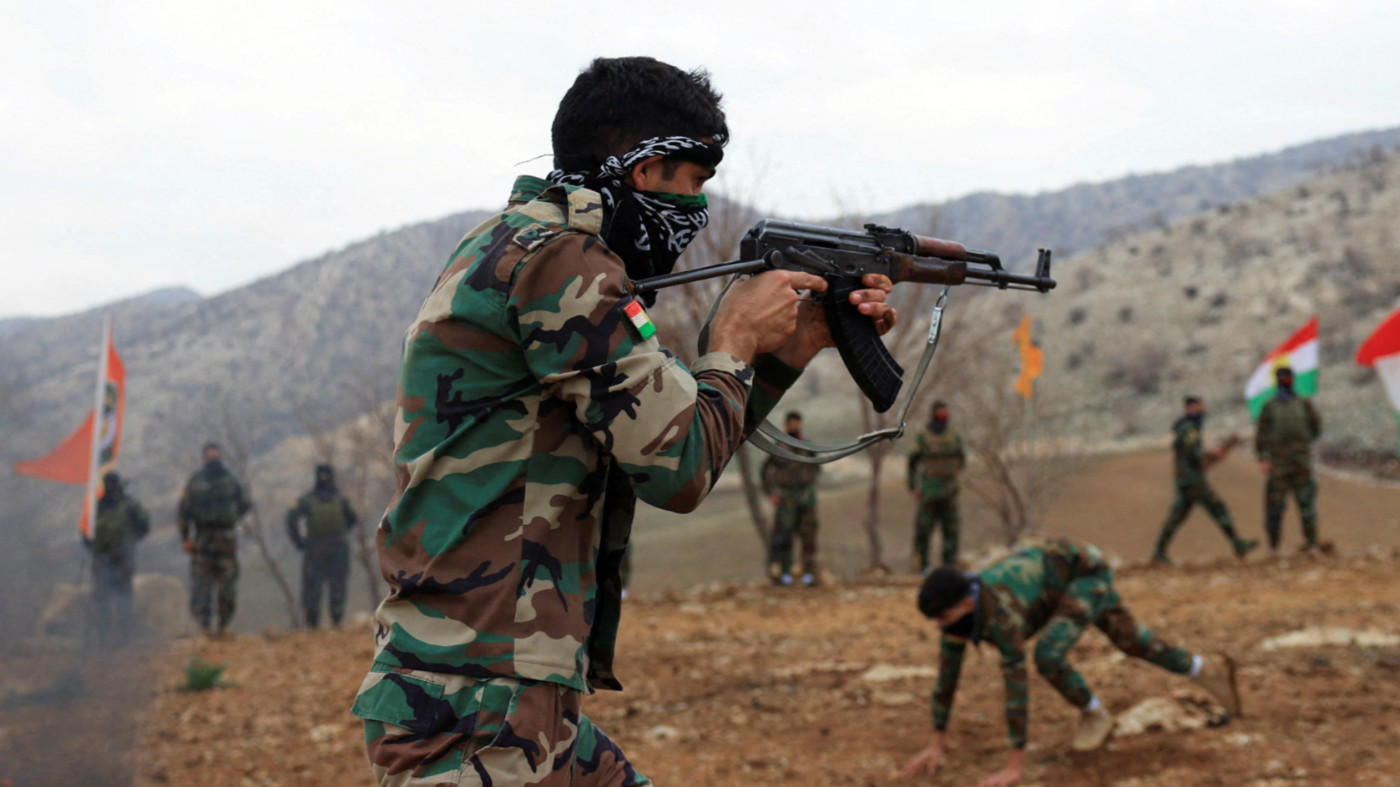
Amid escalating tensions in the US-Israeli campaign against Iran, President Donald Trump’s administration has sent mixed signals regarding Kurdish involvement in the conflict. Initially encouraging Iranian Kurdish forces to cross from Iraq into Iran on March 5th—calling such action “wonderful”—Trump subsequently reversed his position days later, stating he had “ruled that out” to avoid further complicating the war.
This diplomatic maneuvering occurs against a backdrop of historical Kurdish mistrust toward US alliances. Many Kurdish factions remember previous betrayals, particularly during the 1991 uprising against Saddam Hussein when US support failed to materialize, leading to devastating consequences. The Kurdish Regional Government (KRG) in Iraq has actively discouraged armed Iranian Kurds from engaging in the conflict, while Tehran has already targeted Kurdish bases in Iraq, prompting US missile defenses to protect Erbil, the regional capital.
The Kurdish people, numbering 30-40 million across the Middle East, represent the fourth-largest ethnic group in the region. Their historical pursuit of autonomy has been met with persistent resistance from regional governments. In Iran specifically, Kurdish opposition groups recently formed the Coalition of Political Forces of Iranian Kurdistan (CPFIK), advocating for decentralized governance within Iran rather than full independence.
Regional dynamics further complicate potential Kurdish involvement. The Iraqi government has explicitly warned the KRG against allowing Kurdish groups to be drawn into the conflict, threatening to secure the border if necessary. Iranian military official Ali Akbar Ahmadia warned on March 6th that the Kurdistan Region in Iraq would be “widely targeted” should Kurdish forces cross into Iran, with Tehran withdrawing support previously provided during the ISIS conflict.
Despite some exiled Kurdish groups expressing openness to intervention, leadership remains cautious. Abdullah Mohtadi of the Iranian Kurdish Komala party stated they would only intervene if the Iranian government was significantly weakened, noting “We will not send our forces to the slaughterhouse.” Qubad Talabani, deputy prime minister of the KRG, unequivocally stated: “Our forces would not get involved under any circumstances. This is not our war, and we’ve made that very clear.”