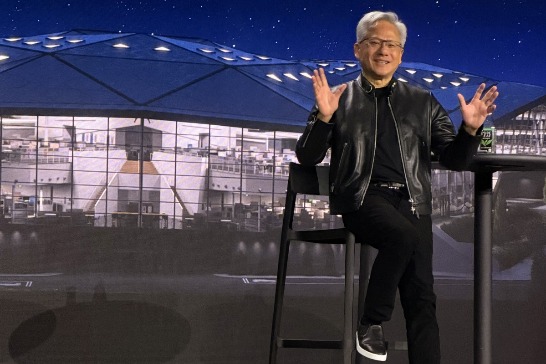
In a landmark move poised to reshape the future of transportation, NVIDIA has announced strategic partnerships with Chinese automotive giants BYD and Geely to advance autonomous vehicle technology. The announcement came during CEO Jensen Huang’s keynote address at the NVIDIA GTC conference in San Jose, California, where he declared that “the ChatGPT moment of self-driving cars has arrived.”
The collaboration will see both Chinese automakers implement NVIDIA’s Drive Hyperion platform—a comprehensive ecosystem integrating advanced chips, computing systems, sensors, and specialized software engineered specifically for Level 4 autonomous vehicle development. Level 4 automation represents vehicles capable of operating without human intervention within designated operational domains.
Expanding beyond Chinese manufacturers, NVIDIA also revealed partnerships with Japanese automakers Isuzu and Nissan for its robotaxi platform, signaling a broad global push toward autonomous mobility solutions. The Hyperion platform supports the entire development lifecycle, from cloud-based AI training to real-time decision-making systems on the road.
Huang emphasized the enormous commercial potential of autonomous transportation, describing it as a “multitrillion-dollar business” that could fundamentally transform global mobility patterns. “The autonomous vehicle business itself is much larger than people think,” Huang stated during a press conference, noting that current limitations in road travel are primarily constrained by human drivers (“butts on seats”).
The conference also featured demonstrations from Chinese autonomous driving firm WeRide, which showcased its Robotaxi GXR built on the NVIDIA Drive Hyperion platform. The company reported that the technology significantly reduces system costs while accelerating the deployment of safe, reliable Level 4 robotaxi operations and facilitating cross-market validation.
WeRide unveiled ambitious expansion targets, planning to deploy over 2,600 robotaxis globally this year with aspirations to reach tens of thousands by 2030, highlighting the rapid scaling anticipated in the autonomous vehicle sector.