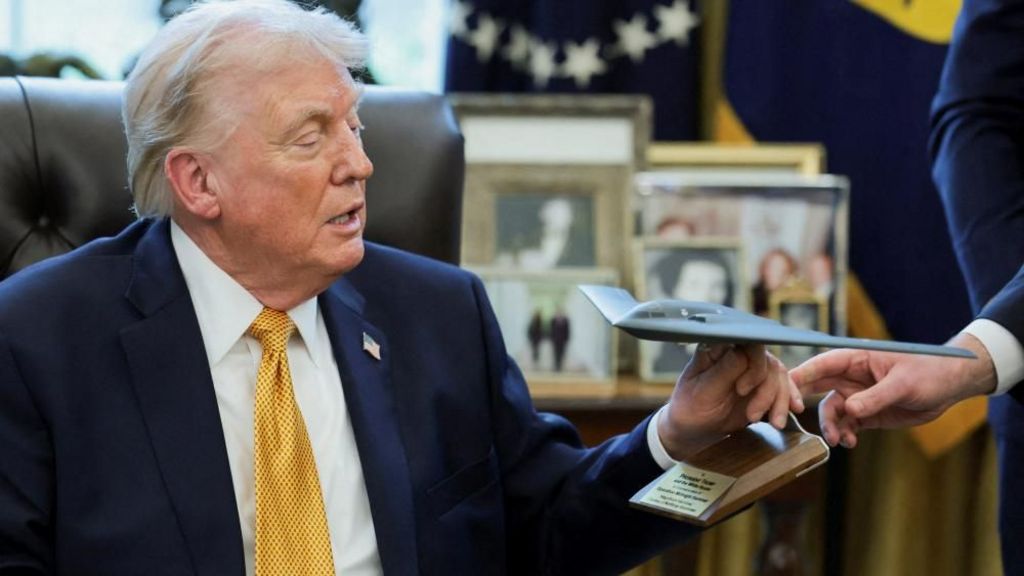
As the U.S.-Israeli military campaign against Iran enters its third week, President Donald Trump confronts defining decisions that could determine the trajectory of his presidency. Despite the gravity of the situation, the commander-in-chief continues to display his characteristic diversionary style, discussing topics ranging from Kennedy Center renovations to World Cup tournaments during recent White House remarks.
The administration now faces mounting evidence that Operation Epic Fury—the military designation for the Iran conflict—may extend for weeks or longer, contradicting Trump’s earlier claims of a “very complete” victory. This reality has forced the postponement of a planned presidential trip to China and prompted efforts to assemble an international coalition to secure the Strait of Hormuz, a critical waterway where Iranian attacks threaten global oil shipments.
However, the coalition-building initiative has met with limited success. Key allies including Japan, Australia, and European powers have expressed reluctance to participate, with UK Prime Minister Keir Starmer explicitly stating his nation “will not be drawn into the wider war.” This leaves Trump with the unenviable choice of either committing more U.S. naval resources to secure the strait or declaring victory and withdrawing, each option carrying significant risks.
The strategic dilemma is compounded by domestic economic concerns. Energy prices have surged dramatically, with gasoline averaging $3.72 per gallon—a sharp increase from $2.94 just one month ago. According to Clifford Young of Ipsos, sustained high energy costs could severely damage Trump’s political standing, particularly among centrist Republican and independent voters who cite cost of living as their primary concern.
Meanwhile, the administration reportedly ordered the deployment of a Marine amphibious unit comprising 5,000 personnel from Japan to the Middle East, signaling potential escalation. Any introduction of ground forces would represent a dramatic shift in the conflict and risk triggering public backlash against another prolonged military engagement.
With seven months until midterm elections, Trump faces competing pressures: securing a strategic victory without triggering economic fallout at home or becoming mired in an extended conflict that contradicts his campaign promises to avoid foreign entanglements. The president’s assertion that “We’re the strongest nation in the world” underscores his confidence, but the complex reality suggests no risk-free options remain available.