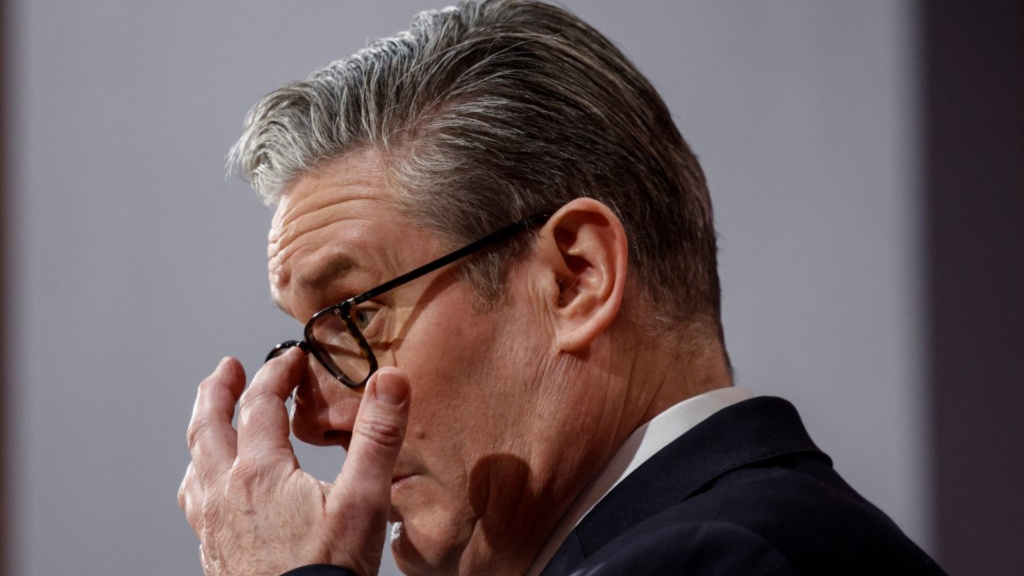
British Prime Minister Keir Starmer announced on Monday that the United Kingdom is formulating a “viable plan” to facilitate the reopening of the strategically critical Strait of Hormuz. This declaration followed a high-stakes discussion with US President Donald Trump, who had previously issued stark warnings about NATO’s future should member states decline to assist American efforts in securing the vital maritime passageway.
The Strait of Hormuz, through which approximately twenty percent of global oil shipments transit, has become the focal point of international tension following Iran’s effective blockade in retaliation against US-Israeli military operations. President Trump’s weekend appeal to multiple nations, including Britain, China, France, Japan, and South Korea, for a collective “team effort” has placed the Starmer administration in a complex diplomatic position.
Despite overwhelming domestic opposition to military engagement, Britain finds itself increasingly entangled in the conflict. The UK government has permitted American forces to utilize British military installations as staging grounds for bomber missions targeting Iranian missile facilities. Energy Secretary Ed Miliband revealed the government’s consideration of deploying minesweeping drones—sophisticated devices that mimic ship patterns to safely detonate underwater mines—rather than warships to the region.
Prime Minister Starmer emphasized the economic imperative of reopening the strait to “ensure stability in the markets,” while acknowledging the considerable challenges involved. He asserted that while US-Israeli operations have “massively weakened” Iran’s military capabilities, any lasting solution would require a “negotiated agreement” to constrain Tehran’s nuclear ambitions and guarantee secure international shipping lanes.
The evolving situation has exposed strains in the transatlantic relationship, particularly regarding Britain’s initial refusal to authorize American strikes from the joint UK-US base on Diego Garcia. Whitehall sources indicate the Starmer government views the US-Israeli offensive as lacking legal justification and contrary to British national interests.
President Trump’s criticism of NATO as a “one-way street” and his remarks about Britain’s delayed naval contribution have been met with measured responses from UK officials. Work and Pensions Secretary Pat McFadden emphasized that Britain maintains no obligation to acquiesce to all American requests, characterizing the relationship as “enduring” beyond current political personalities.
As military activity intensifies—with US bombers operating from British soil and Iranian drones attacking bases housing British personnel—the Starmer government faces mounting pressure to balance alliance commitments with domestic political realities while pursuing de-escalation in an increasingly volatile regional conflict.