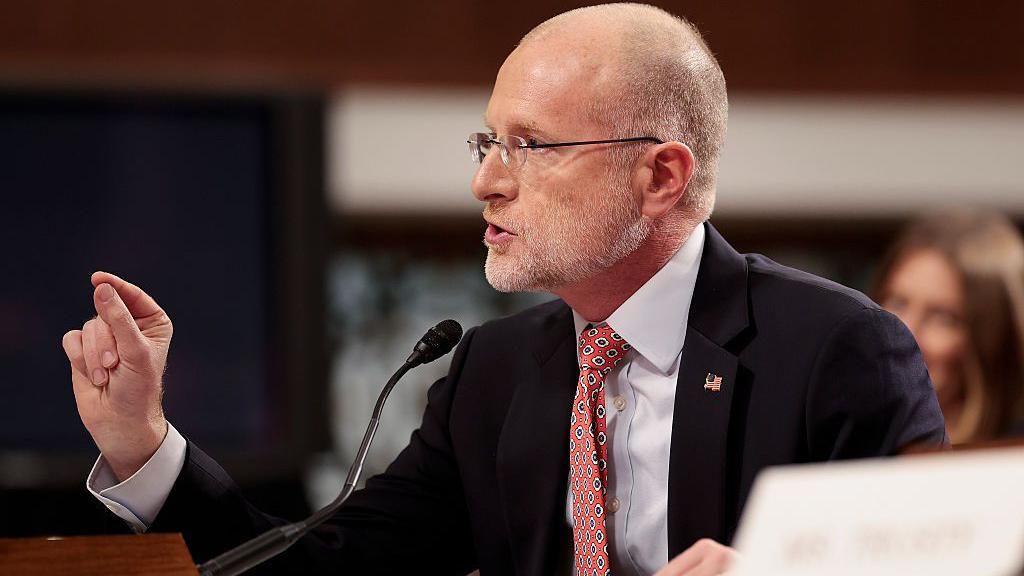
A constitutional confrontation has emerged between U.S. media regulators and broadcast networks following controversial remarks by Federal Communications Commission (FCC) Chair Brendan Carr. The dispute originated when Carr explicitly threatened to revoke broadcasting licenses in response to former President Donald Trump’s criticisms of media coverage regarding U.S.-Israel relations with Iran.
During an interview with CBS News, Carr asserted that broadcast licenses do not constitute ‘property rights’ and emphasized that stations must operate according to public interest standards. His comments came directly after Trump accused media organizations of deliberately undermining national security interests in their wartime reporting.
‘The legal framework is unequivocal,’ Carr stated on social media. ‘Broadcasters must operate in the public interest, and they will lose their licenses if they do not.’ This position reflects the FCC’s statutory authority as the nation’s broadcast media regulator, governing radio, television, and satellite communications, including oversight of mergers and decency complaints.
The threat prompted immediate backlash from Democratic lawmakers who condemned Carr’s position as constitutionally impermissible. Massachusetts Senator Elizabeth Warren declared that ‘government censorship of disfavored speech about Trump’s Iran war is illegal,’ while California Governor Gavin Newsom characterized the threat as ‘flagrantly unconstitutional.’ Senator Mark Kelly accused the administration of attempting to evade accountability through regulatory overreach.
This incident continues a pattern of tension between the Trump administration and media organizations. Carr previously advocated for suspending ABC host Jimmy Kimmel following criticism of Republican responses to political violence, resulting in the show’s temporary removal from airwaves. Trump has consistently pursued legal action against major news organizations including the Wall Street Journal and New York Times over alleged bias.
The FCC operates as an independent agency that grants eight-year licenses to individual broadcast stations, many affiliated with major networks, though it explicitly does not license the networks themselves. According to its official guidelines, the Commission’s content oversight remains ‘very limited’ due to First Amendment protections and statutory prohibitions against censorship. Its regulatory authority specifically excludes cable networks and streaming platforms, covering only broadcast television and radio content.