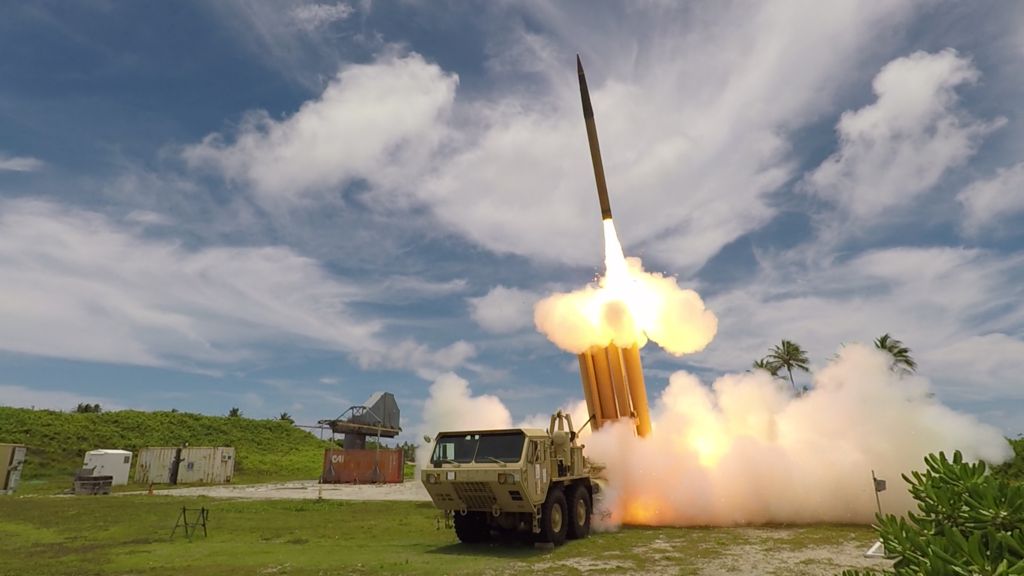
In a significant strategic repositioning, the United States has initiated the relocation of components from its Terminal High-Altitude Area Defense (THAAD) system in South Korea to reinforce its military capabilities in the Middle East. This decision, confirmed by multiple officials to the Washington Post and South Korean media outlets, comes amid intense hostilities between US-Israeli forces and Iran, now entering its twelfth day.
The relocation follows reports that Iranian strikes have potentially destroyed a critical THAAD radar installation in Jordan—a $300 million asset crucial for ballistic missile detection. Originally deployed to South Korea in 2017 as a deterrent against North Korean nuclear threats, the THAAD system has long been a point of geopolitical friction. Its presence provoked strong opposition from local South Korean communities and drew sharp criticism from China, which viewed the system’s powerful radar as a threat to its regional security and a tool for espionage.
Each THAAD battery, manufactured by Lockheed Martin, represents a substantial investment at approximately $1 billion per unit. The system employs hit-to-kill technology to neutralize short and medium-range ballistic missiles at high altitudes, even beyond Earth’s atmosphere. With only eight operational systems globally—two already stationed in the Middle East (Jordan and Israel)—the redistribution underscores mounting pressure on US missile defense resources.
According to Professor John Nilsson-Wright of Cambridge University, this move indicates the urgent need to compensate for the heavy expenditure of missile defense assets amid Iran’s sustained attacks. Iranian forces have launched over 500 ballistic missiles, straining interception capabilities and raising concerns about inventory depletion.
South Korean President Lee Jae-myung publicly acknowledged his government’s opposition to the withdrawal, stating that while Seoul objects, it lacks leverage to prevent the move. Despite assurances that the relocation won’t undermine South Korea’s deterrence strategy, analysts note unusual diplomatic tension between the allies.
China’s Foreign Ministry reaffirmed its longstanding objection to THAAD deployment on the Korean Peninsula. Although Beijing may perceive the relocation as a favorable development, experts like Professor Ian Chong from the National University of Singapore caution that only permanent removal would constitute a strategic victory for China.
Meanwhile, North Korea remains silent, though observers warn that Kim Jong Un might seize the opportunity to test South Korean defenses with limited provocations. The broader implication, experts note, is whether prolonged engagement with Iran will critically impair the US’s ability to respond to contingencies in other regions, particularly the Indo-Pacific.