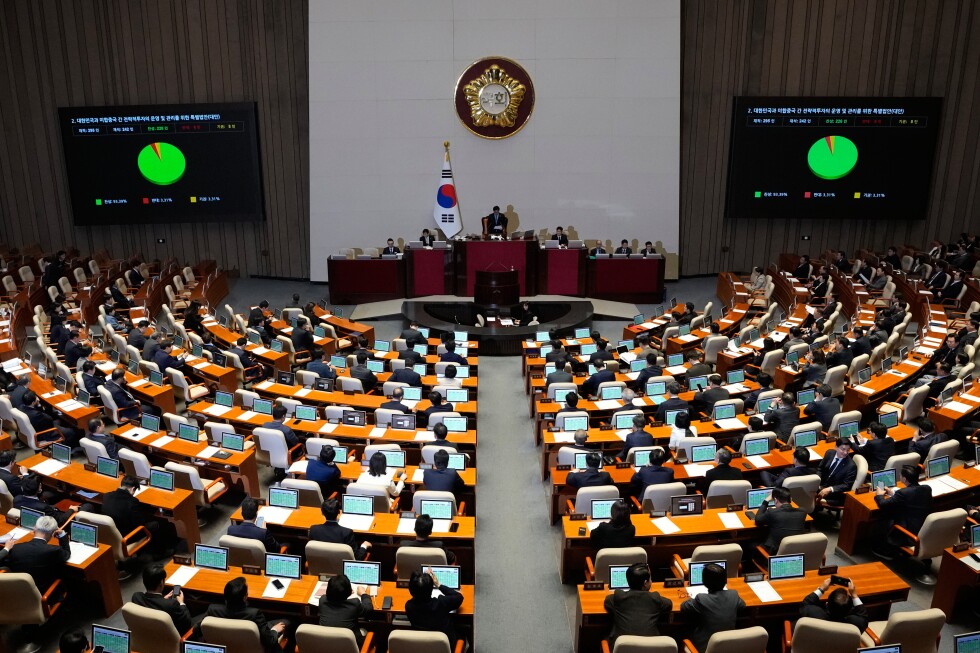
South Korea’s National Assembly has enacted landmark legislation establishing a framework for $350 billion in U.S. investments, a move designed to avert the reinstatement of punitive tariffs by the Trump administration. The legislation passed overwhelmingly with a 226-8 vote on Thursday, creating a specialized public corporation to oversee and manage the massive investment commitment.
The legislative action occurs against a backdrop of escalating trade tensions, with the Trump administration simultaneously launching new investigations into manufacturing practices of key U.S. allies including South Korea, Japan, and China. These probes could potentially lead to additional import taxes if American officials determine trading partners engage in unfair practices.
This development follows months of delicate negotiations between Seoul and Washington, culminating in a November agreement where South Korea committed $200 billion toward U.S. semiconductor and high-tech industries, plus an additional $150 billion for American shipbuilding sectors. In exchange, Washington reduced reciprocal tariffs on South Korean goods from 25% to 15%.
The agreement, forged during an October summit between President Trump and South Korean President Lee Jae Myung, includes protective measures capping annual investments at $20 billion to safeguard South Korea’s foreign currency reserves. Despite the legislation’s passage, opposition lawmakers expressed significant concerns about South Korea’s economic vulnerability and the potential for investments that might contradict national business interests.
Progressive Party representative Son Sol voiced strong opposition, stating, ‘We cannot be the money machine Trump wants us to be,’ highlighting concerns about insufficient legislative oversight mechanisms within the bill. The legislative process had faced considerable delays due to opposition resistance, prompting Trump to threaten in January to restore 25% tariffs on South Korean automobiles, pharmaceuticals, and other key exports.