South Sudan’s healthcare infrastructure stands in a state of catastrophic failure, with the nation’s leadership paradoxically seeking medical treatment abroad while their citizens face near-total institutional abandonment. The recent case of Jonglei State Governor Riek Gai Kok—who urgently flew to Nairobi for hypertension treatment—epitomizes the systemic decay fueled by rampant corruption. Transparency International ranks South Sudan’s elite as the world’s most corrupt, with governance failures directly causing the collapse of public services.
As the nation slides back into civil conflict, healthcare provision now rests almost entirely with international NGOs. Over 80% of medical services are delivered by organizations like the International Committee of the Red Cross (ICRC) and Médecins Sans Frontières (MSF). At Juba Military Hospital, ICRC staff receive unofficial ‘incentives’ because government salaries—typically $10-50 monthly—remain unpaid for months. “Without these payments, no one would remain here,” confessed one anonymous worker.
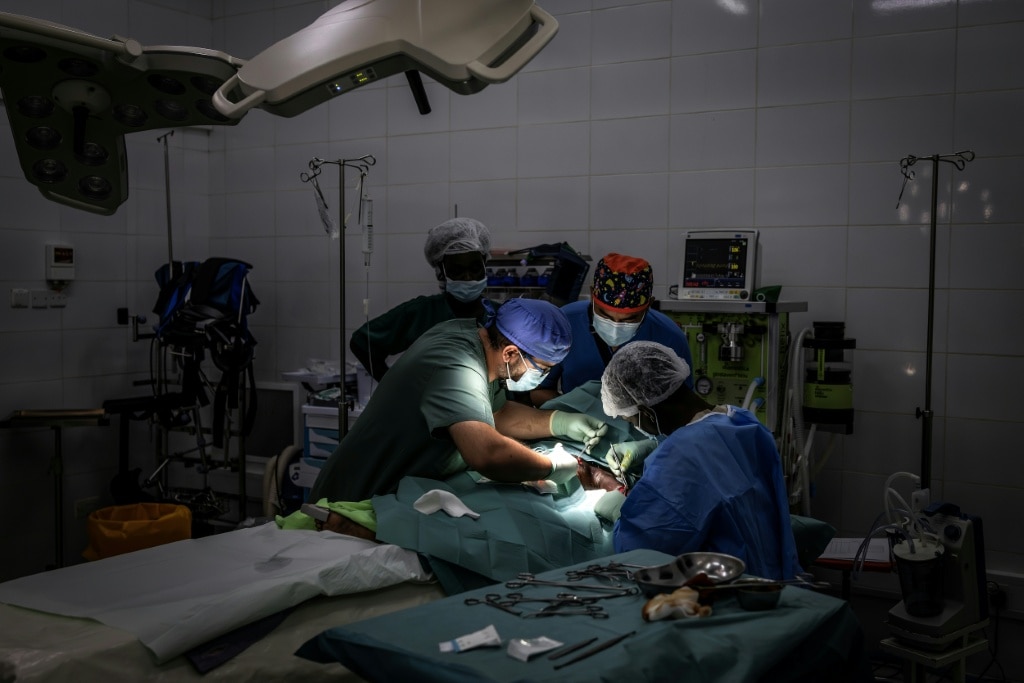
Clinical realities are grimmer still. Wounded patients lie on blood-stained floors, with gunshot victims struggling to breathe. ICRC physiotherapist Angeth Jervas Majok reports treating some patients multiple times before they ultimately succumb to violence. With only 300km of paved roads—often impassable during rains—wounds frequently become infected before reaching care, making amputations common. These survivors then face social stigmatization, often unable to return home.
The human cost is staggering: UN reports indicate over 5,100 civilian deaths and hundreds of thousands displaced recently, warning of impending “all-out civil war.” Health outcomes have dramatically regressed despite $1.4 billion in foreign aid (2024) and over $25 billion in oil revenues since 2011. Life expectancy remains frozen at 58 years since independence, maternal mortality rates are six times the global average, and one in ten children die before age five.
Healthcare workers operate in extreme danger: MSF facilities suffered 11 attacks in the past year. ICRC’s surgical unit in Juba now features blast doors and emergency supplies alongside medical equipment. With the US threatening funding cuts and NGOs gradually withdrawing, Information Minister Ateny Wek Ateny acknowledged liquidity “difficulties” while rejecting corruption rankings. Meanwhile, 92% of South Sudanese live below the poverty line, their health sacrificed to governance failures.