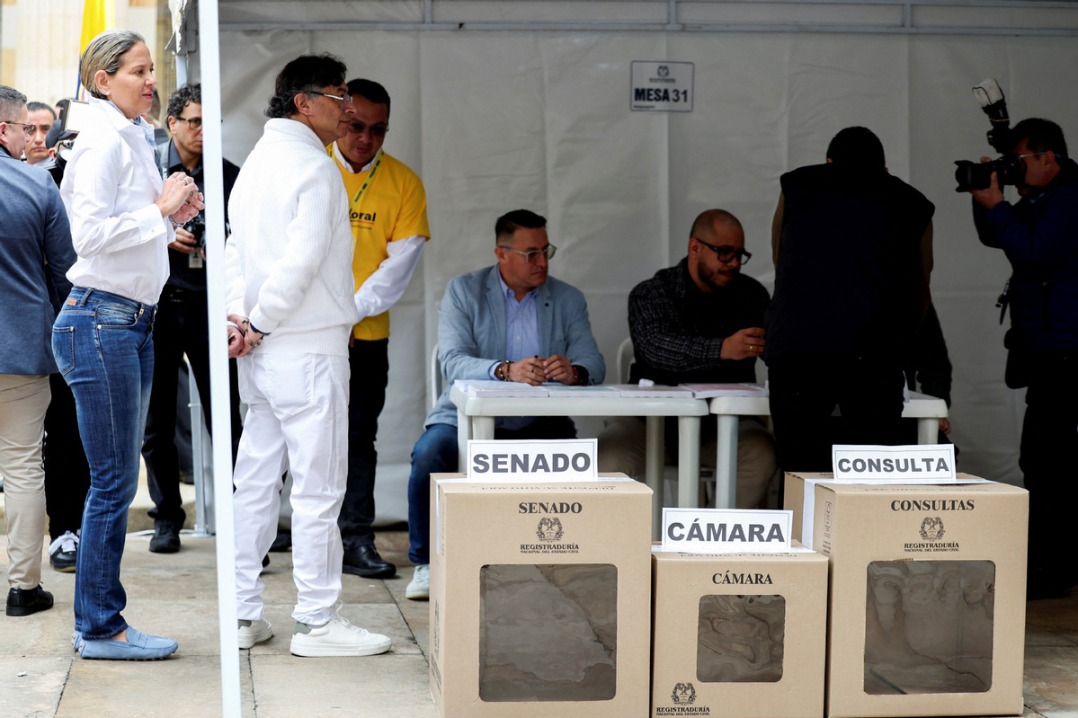
BOGOTA – As Colombia commenced its pivotal legislative elections on Sunday, President Gustavo Petro issued a compelling appeal for enhanced electoral transparency and robust citizen engagement. The president, accompanied by First Lady Veronica Alcocer, cast his ballot at a polling station within the Congressional building, using the occasion to champion significant reforms to the nation’s electoral oversight system.
President Petro formally urged electoral authorities to transition election auditing responsibilities from private contractors to state-controlled mechanisms. This proposed shift aims to establish greater institutional accountability and reduce external influences in the electoral process.
Emphasizing law enforcement’s critical role, Petro revealed that the National Police had intercepted approximately 4 billion pesos (over one million US dollars) allegedly intended for voter coercion among economically vulnerable populations. The president characterized this substantial seizure as merely ‘a tiny amount compared to what we know,’ suggesting widespread attempts to undermine electoral integrity.
Petro directly connected electoral crimes to powerful criminal networks involved in drug trafficking and illegal mining operations, describing them as ‘mafias that take over institutions’ that threaten democratic foundations.
The Colombian leader called upon citizens to actively participate as election observers nationwide, stating that genuine ‘democratic culture’ and ‘democratic soul’ must precede the establishment of truly democratic institutions. His remarks highlighted the philosophical underpinnings of his administration’s electoral integrity campaign.
With over 41 million eligible voters participating across 13,746 domestic and international voting centers, Sunday’s elections carried significant weight beyond legislative representation. The simultaneous primaries conducted by Colombia’s three major political blocs—right, center, and left—would determine presidential candidates for the upcoming electoral cycle, making citizen participation particularly consequential for the nation’s political trajectory.