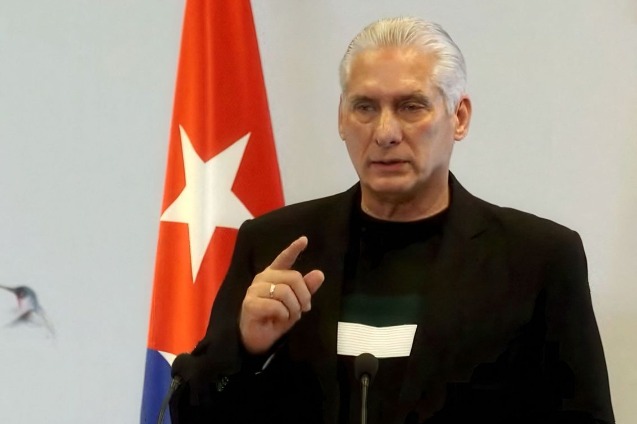
A diplomatic confrontation has emerged between the United States and Cuba following a regional summit convened in Florida by U.S. President Donald Trump. Cuban President Miguel Diaz-Canel publicly condemned the gathering as a ‘neocolonial’ initiative designed to enforce U.S. military dominance across Latin America.
The controversy centers on a meeting that brought together approximately a dozen Latin American leaders aligned with Washington’s policies. The primary agenda focused on forming a new multinational coalition to combat drug cartels operating throughout the hemisphere. Participants included representatives from Argentina, Ecuador, El Salvador, Guyana, and Panama.
President Diaz-Canel articulated his strong objections through a social media post, characterizing the event as a ‘small, reactionary and neocolonial summit.’ He asserted that the participating governments had effectively consented to ‘the lethal use of U.S. military force’ to address internal security challenges within their own nations. This criticism came shortly after President Trump made remarks suggesting Cuba was in its ‘final moments’ as a nation.
The summit’s conception originated following the cancellation of the 10th Summit of the Americas, which was abandoned during previous U.S. military deployments near Venezuela’s coastline. The current gathering occurs against a backdrop of increasing economic pressure on Cuba, including what analysts describe as a de facto oil blockade that has contributed to severe shortages of food, medicine, and periodic electricity blackouts on the island.