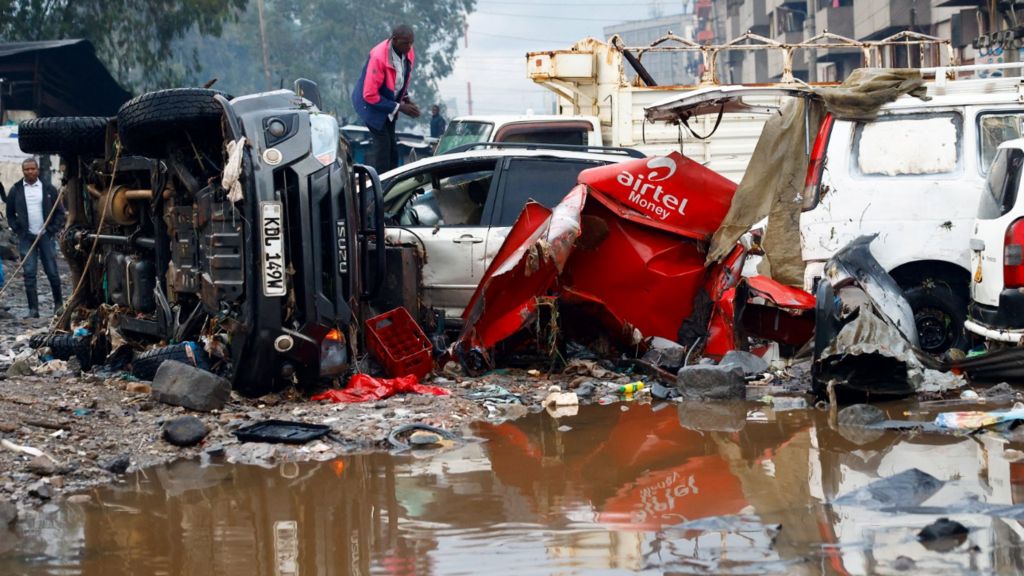
Nairobi, Kenya’s capital, is reeling from a night of catastrophic flooding that has resulted in at least 23 fatalities and widespread devastation. Torrential overnight rainfall triggered severe inundation across the city, submerging major highways, stranding vehicles, and trapping residents during the evening rush hour.
According to police reports, approximately 30 individuals have been successfully rescued from the floodwaters, though many others drowned after being swept into raging rivers. Some victims succumbed to electrocution in the chaotic conditions. The flooding has caused extensive property damage, forced road closures, and displaced numerous residents from their homes.
Kenya’s military has been deployed to assist emergency operations, focusing particularly on rescuing people trapped inside their vehicles. The situation has severely impacted air travel, with several flights bound for Nairobi Airport being cancelled or diverted to Mombasa on the coast.
The Kenya Meteorological Department had issued advanced warnings predicting 30-70mm of rainfall in Nairobi and surrounding counties, alerting authorities to potential urban flooding and reduced visibility. River levels are expected to continue rising through March 9th, with Nairobi, the Central Highlands, Lake Victoria Basin, and coastal areas remaining under heightened alert for additional peak rainfall in coming days.
Eyewitness accounts reveal the human tragedy unfolding beneath the floodwaters. John Lomayan, a 34-year-old security guard, described recognizing someone trapped beneath a car that had been washed away when the Nairobi River burst its banks. “I saw him being carried by the water from up there,” he told Reuters, gesturing up the road. “We didn’t know where he had gone. It is only now that we see him under the car.”
Major transportation arteries including Mombasa Road, Uhuru Highway, Kirinyaga Road, and sections of the Westlands district remain completely submerged. The combination of stalled vehicles and fast-moving floodwaters created particularly dangerous conditions throughout the capital.
Authorities have advised residents to avoid flooded streets and drainage channels while emergency responders continue assisting stranded motorists and pedestrians. This disaster echoes last year’s tragic flooding across Kenya and neighboring Tanzania that claimed hundreds of lives through similar patterns of heavy rainfall causing severe flooding and landslides.