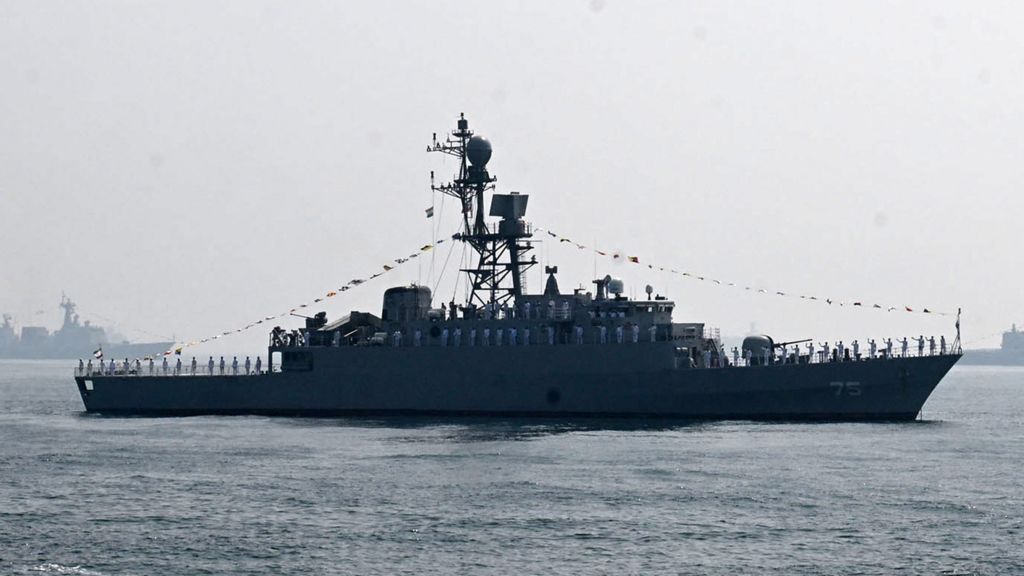
The Pentagon has released footage capturing the precise moment a U.S. submarine torpedoed and sank the Iranian warship Iris Dena in the Indian Ocean on March 4th, 2026. The attack occurred in international waters off Sri Lanka’s southern coast, resulting in the tragic loss of at least 87 sailors from the 130-strong crew.
The sinking represents a severe escalation in the ongoing conflict between the United States, Israel, and Iran, and has placed India in a deeply uncomfortable diplomatic position. The Iranian frigate had been an official guest of the Indian Navy just weeks prior, participating in the International Fleet Review 2026 and Exercise Milan in Visakhapatnam—a large multilateral naval exercise designed to showcase India’s growing maritime leadership.
According to U.S. Defense Secretary Pete Hegseth, the vessel ‘thought it was safe in international waters’ but instead ‘died a quiet death.’ Military analysts, including retired Vice Admiral Arun Kumar Singh, believe the attack was executed with a single Mark-48 torpedo, a heavyweight weapon carrying approximately 650 pounds of high explosive, capable of breaking a ship in two. The vessel sank within minutes, leaving little time for rescue.
The incident has sparked intense debate within India’s strategic community. Expert Brahma Chellaney labeled the event a ‘strategic embarrassment’ for Delhi, arguing that by turning India’s ‘maritime neighbourhood into a war zone,’ Washington has severely undermined India’s carefully cultivated image as the Indian Ocean’s ‘preferred security partner.’
India’s official response has been notably cautious. While Prime Minister Narendra Modi has broadly called for ‘dialogue and diplomacy,’ he has not directly addressed the sinking or criticized the American strike. This balancing act reflects India’s complex position: drawing closer to Washington on defense while maintaining longstanding ties with Tehran.
The legal standing is clear under the Second Geneva Convention, which requires warring parties to rescue shipwrecked sailors only if it doesn’t endanger their own vessel. In practice, submarines like the American attacker rarely surface to assist. The strategic implications, however, are profound, signaling both the spreading geography of the war and India’s limited ability to manage its fallout.