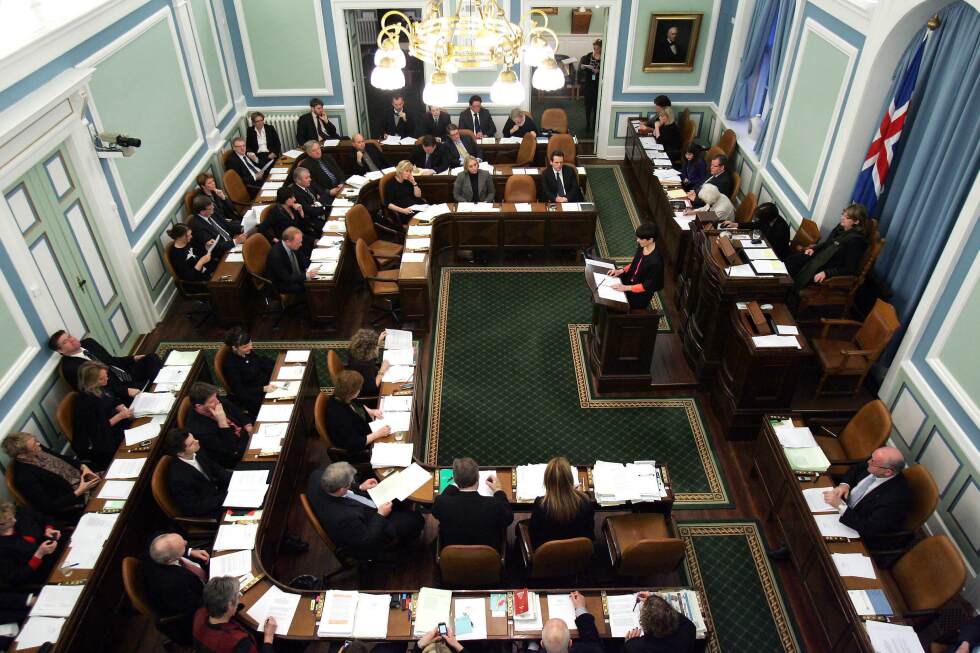
REYKJAVIK, Iceland — Iceland’s government has formally proposed an August referendum to determine whether the nation should resume European Union membership negotiations, marking a significant potential shift in its foreign policy stance over a decade after initially abandoning accession talks. The Cabinet approved a resolution on Friday calling for an August 29 vote, though the proposal still requires parliamentary approval from the Althingi before proceeding. This development comes as the Arctic nation of 400,000 people confronts growing concerns about regional security and economic stability. Prime Minister Kristrun Frostadottir’s center-left coalition government, elected in 2024, had originally planned a referendum by 2027 but accelerated the timetable following provocative statements from former U.S. President Donald Trump regarding neighboring Greenland. The geopolitical landscape has been further complicated by Russia’s war in Ukraine, trans-Atlantic tensions, and rising living costs, prompting this fiercely independent nation to reconsider its strategic positioning. Iceland maintains a unique security position as a nation without a standing army, relying instead on NATO membership and a bilateral defense agreement with the United States. Historically, Iceland resisted EU membership primarily due to concerns about protecting its rich North Atlantic fishing grounds from European fishing fleets. The country initially applied for EU membership in 2009 following the catastrophic collapse of its banking sector during the global financial crisis, but negotiations were suspended in 2013 and formally terminated in 2015 under a center-right government. Currently, Iceland participates in the EU’s single market through the European Economic Area agreement and is part of the Schengen free-travel zone. The EU accession process typically involves a rigorous, multi-year evaluation of 35 policy areas including financial systems, fisheries management, agricultural regulations, and fundamental freedoms. Any successful accession requires unanimous approval from all existing EU member states, a requirement that has recently proven challenging as demonstrated by Hungary’s threat to veto Ukraine’s membership bid.