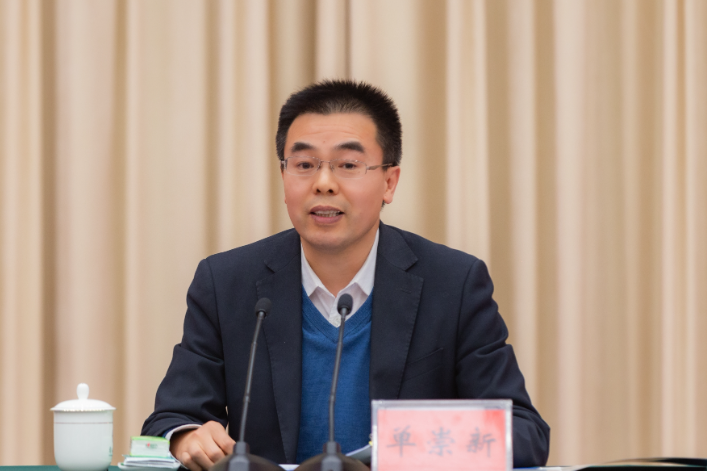
Shan Chongxin, Vice-President of Zhengzhou University and member of China’s National Committee of the Chinese People’s Political Consultative Conference, has positioned the commercialization of scientific research as a critical national priority during the ongoing Two Sessions political gatherings. The renowned ultra-hard materials expert emphasized that integrating education, technological advancement, and talent development forms the fundamental strategic support for achieving China’s high-level self-reliance in technology.
With China’s ultra-hard materials industry now leading globally in scale and application breadth, Shan identified persistent challenges preventing true innovation leadership. While acknowledging six decades of significant progress, he noted three critical gaps: insufficient original innovation in material systems, unstable high-end supply chain consistency, and persistent barriers between research, equipment manufacturing, and downstream applications.
Shan’s proposals focus on creating synergistic ecosystems where education aligns with industry needs, research targets national bottleneck areas, and talent retention receives prioritized attention. He emphasized that core competition in high-end materials ultimately constitutes talent competition, which must be fostered through integrated education-technology partnerships.
At Zhengzhou University, these principles are being implemented through strategic positioning that aligns with national needs, regional development endowments, and technological frontiers. The institution aims to serve as both an explorer of cutting-edge science and a solver of major technological challenges while cultivating strategic talent.
Looking toward China’s 2035 education system goals, Shan envisions universities functioning as vital connectors between regional development and the national innovation system, addressing international academic frontiers while simultaneously supporting economic and social development objectives.