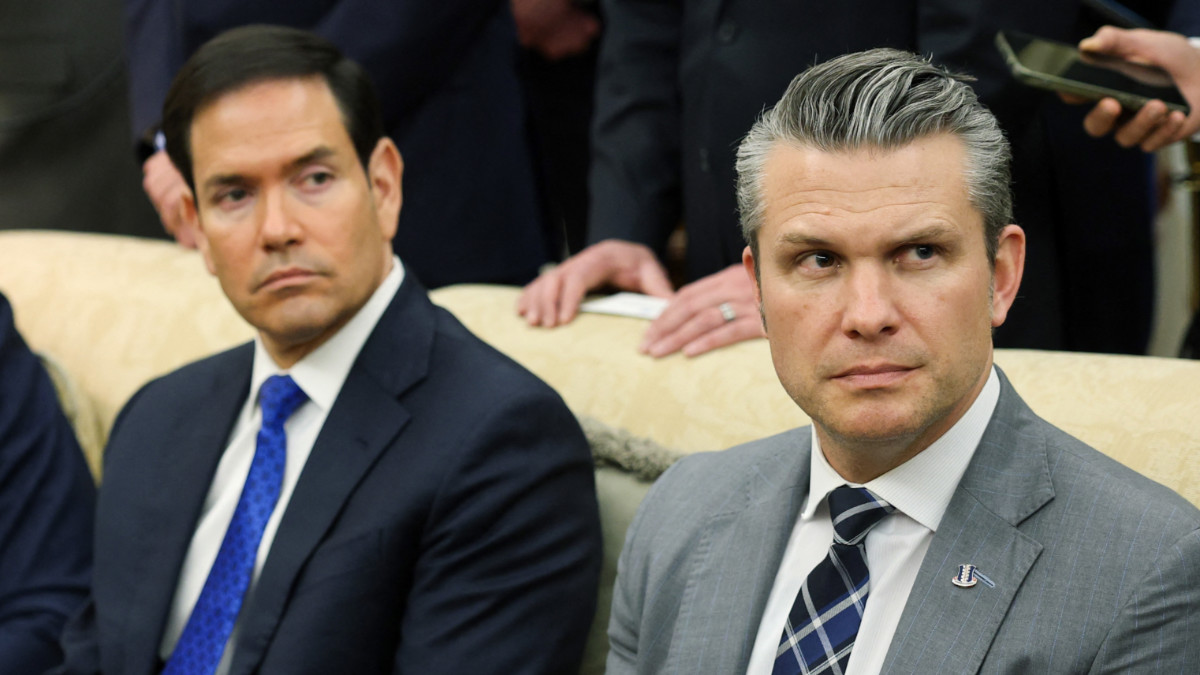
A significant policy division has emerged within the highest echelons of the US government regarding military strategy toward Iran, with Secretary of War Pete Hegseth and Secretary of State Marco Rubio engaged in intense disagreements over potential ground troop deployment. According to three former US officials and a senior regional official familiar with the matter, the cabinet members have been described as “at each other’s throats” regarding whether to accede to Israel’s request for American boots on the ground.
Secretary Hegseth, known for his combative media style from his Fox News background, has expressed support for more direct military intervention. In contrast, Secretary Rubio has demonstrated considerable caution about entangling the United States in another prolonged Middle Eastern conflict. This fundamental disagreement reflects broader tensions within the administration about the scope and objectives of military engagement with Iran.
The current US approach has primarily relied on aerial bombardment and standoff strikes utilizing cruise and ballistic missiles. However, recent reporting indicates an expansion of covert operations, with CNN revealing that the CIA has initiated training and arms provision to Kurdish fighters operating within Iranian territory. According to one Gulf official, discussions have even included deploying special operations teams to target high-ranking Iranian Revolutionary Guard Corps (IRGC) officials and nuclear program personnel.
The philosophical divide between the officials extends to their public communication strategies. When questioned about potential troop deployments, Hegseth responded with characteristic defiance: “Why in the world would we tell you, the enemy, anybody, what we will or will not do in pursuit of an objective.” Meanwhile, Rubio has shown greater sensitivity to domestic opposition against placing American soldiers in harm’s way.
Complicating matters further, military personnel have reportedly expressed discomfort with certain commanders framing the conflict in religious terms, describing it as “part of God’s plan” that would facilitate the return of Jesus Christ. Hegseth, who possesses a Crusader cross tattoo on his chest and identifies as an ultra-conservative Christian, has not publicly addressed these concerns.
President Trump has maintained strategic ambiguity regarding ground operations, telling The New York Post: “I don’t have the yips with respect to boots on the ground – like every president says, ‘There will be no boots on the ground.’ I don’t say it. I say ‘probably don’t need them,’ [or] ‘if they were necessary’.”
The administration’s stated objectives have similarly fluctuated between destroying Iran’s ballistic missile capabilities and nuclear program to openly advocating for regime change. This week, Rubio initially suggested military action was precipitated by intelligence suggesting an imminent Israeli attack on Iran, though he subsequently retracted this explanation.
The human cost of the conflict continues to mount, with at least six US service members confirmed killed. During a recent press briefing, Hegseth lamented that military achievements were being overshadowed by combat casualties: “We’ve taken control of Iran’s airspace and waterways without boots on the ground. We control their fate. But when a few drones get through or tragic things happen, it’s front-page news.”