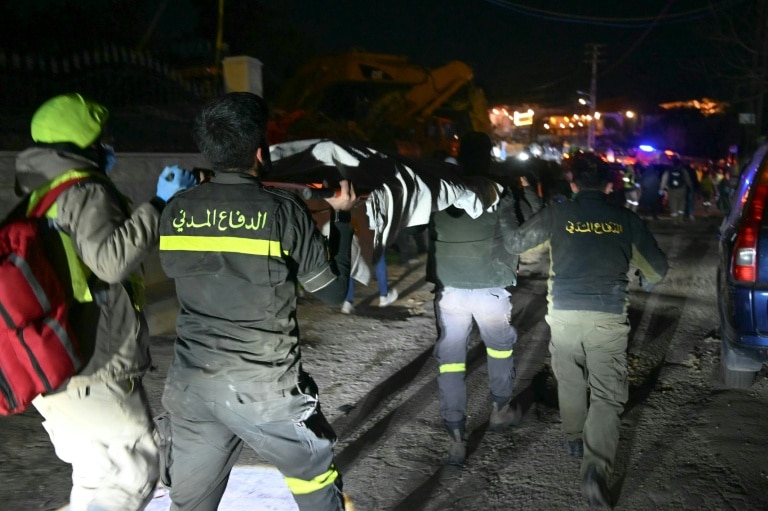
The Middle East conflict escalated dramatically with significant developments across multiple fronts. In Beirut, a powerful explosion reverberated through the Lebanese capital shortly after midnight Wednesday amid ongoing exchanges between Israeli forces and Hezbollah militants. The confrontation intensified following Hezbollah’s rocket attacks against Israel, which the group stated was retaliation for the killing of Iranian supreme leader Ali Khamenei.
Qatar made a significant security breakthrough, announcing the dismantling of two Iranian spy cells linked to Iran’s Revolutionary Guards. The nation’s official press agency reported that ten suspects had been apprehended, with investigations revealing their connections to the Revolutionary Guards and instructions to conduct espionage and sabotage operations. This development is particularly notable given Qatar’s hosting of a major US military base and its repeated targeting by Iranian strikes since the conflict’s inception.
Israel confirmed launching a new wave of strikes against Iranian targets, with military officials describing the operations as ‘broad wave of strikes’ following Iran’s launch of three separate missile barrages toward Israeli territory. Earlier assessments revealed that Israeli forces had targeted an underground nuclear facility in Iran where scientists were allegedly developing critical components for nuclear weapons covertly.
US Admiral Brad Cooper, commanding Middle East military operations, reported that nearly 2,000 targets had been struck in Iran, significantly degrading Iranian air defenses while destroying hundreds of ballistic missiles, launchers, and drones.
The conflict expanded to diplomatic fronts with a drone attack causing a fire near the US consulate in Dubai as Iran increased targeting of American diplomatic missions throughout the Gulf region. Witnesses reported hearing explosions before observing flames, with local police establishing security perimeters around the affected area.
International response intensified as France deployed its flagship aircraft carrier Charles de Gaulle to the Mediterranean. President Emmanuel Macron announced the strategic redeployment from the North Atlantic to address the widening conflict, with the vessel having recently docked in Malmö, Sweden.
The United States arranged charter flights to facilitate American evacuations from Jordan, Saudi Arabia, and the United Arab Emirates, with the State Department committing to secure additional capacity as security conditions permit.
Political tensions flared as President Donald Trump threatened to sever all trade relations with Spain following its refusal to permit US military use of its bases for operations against Iran. The administration simultaneously criticized Britain for insufficient cooperation. Spain’s government maintained that US base usage must comply with United Nations Charter provisions.
Trump further announced that the US Navy would provide escort services for oil tankers through the Strait of Hormuz if necessary, emphasizing America’s commitment to ensuring global energy free flow while ordering Washington to provide shipping insurance guarantees.
In Iraq, an airstrike struck the Jurf al-Nasr military base in southern territory, causing material damage according to sources from the Iran-backed Kataeb Hezbollah group. The organization has suffered significant losses, with over ten fighters killed in strikes across Iraq since Saturday. Additional explosions were reported in Sulaimaniyah as the autonomous Kurdistan region, hosting US troops and Iranian Kurdish fighters, continued to be a primary target for Iranian drone operations.