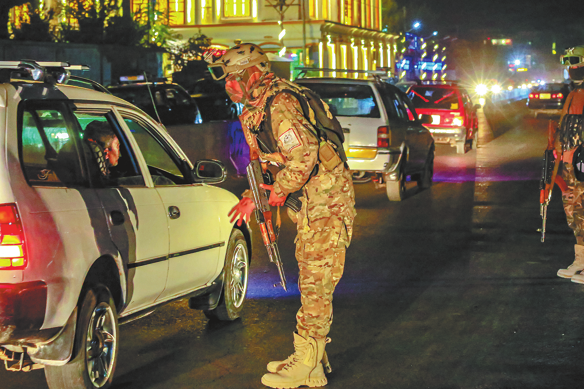
Tensions along the Pakistan-Afghanistan border have dramatically escalated into declared open warfare, with both nations reporting significant military casualties and engaging in reciprocal airstrikes against military installations. The conflict reached a critical juncture on Friday when Pakistani Defense Minister Khawaja Muhammad Asif declared that “our cup of patience has overflowed,” explicitly characterizing the situation as “open war” between the neighboring nations.
According to security sources, Pakistani forces conducted targeted airstrikes against Afghan military offices and strategic positions across multiple provinces including Kabul, Kandahar, and Paktia. Simultaneously, ground operations intensified at various locations along the shared border region. The Taliban-led Afghan government confirmed these strikes while launching retaliatory attacks against Pakistani military installations, though simultaneously calling for diplomatic resolution to the escalating crisis.
Visual evidence disseminated by Pakistani security officials depicted intense artillery exchanges illuminating night skies along the frontier, while footage from Kabul revealed substantial plumes of black smoke rising from targeted sites with significant fires visible throughout the capital. Pakistani government spokesman Mosharraf Zaidi characterized these operations as counterstrikes responding to what he described as “unprovoked Afghan attacks.”
The human cost of the conflict remains sharply disputed between the two nations. Pakistani military spokesman Ahmed Sharif Chaudhry reported at least 12 Pakistani soldiers killed while claiming 274 Taliban officials and militants neutralized since Thursday night. Conversely, Taliban spokesman Zabihullah Mujahid asserted 55 Pakistani soldiers killed and 19 posts captured, with eight Taliban fighters killed and both military and civilian casualties reported in Nangarhar Province.
The international community has responded with growing concern to the border crisis. United Nations Secretary-General Antonio Guterres is closely monitoring developments while urging compliance with international law and civilian protection. Russian authorities have called for immediate cessation of cross-border attacks and diplomatic resolution, while China has emerged as a key mediation force through its diplomatic channels.
Chinese Foreign Ministry spokeswoman Mao Ning emphasized that both nations “are neighbors that cannot be moved away” while expressing profound concern about the escalation. Beijing has positioned itself as a constructive mediator, advocating for ceasefire implementation, restraint, and dialogue-based conflict resolution. Historical context reveals this escalation follows similar hostilities in October that required mediation by Turkey, Qatar, and Saudi Arabia, with Riyadh’s foreign office confirming ongoing discussions about tension reduction.
The core dispute centers on Pakistan’s longstanding accusations that Afghanistan harbors militants conducting cross-border attacks—claims consistently denied by Afghan authorities who maintain that Pakistan’s security challenges constitute an internal matter. This fundamental disagreement continues to fuel one of South Asia’s most volatile border conflicts despite international intervention attempts.