CAIRO — The devastating civil war in Sudan has created a humanitarian crisis of catastrophic proportions, with community aid workers becoming systematic targets of violence while attempting to feed starving populations. Since conflict erupted between the Sudanese army and the Rapid Support Forces (RSF) paramilitary group in April 2023, the western Darfur region has descended into unprecedented violence and famine.
The strategic city of el-Fasher, once a sanctuary for displaced persons, fell to RSF forces last October after an 18-month siege that starved the population into submission. United Nations officials confirm several thousand civilians were killed during the takeover, with only 40% of the city’s 260,000 residents managing to escape the brutal onslaught. The fate of the remaining population remains unknown, creating what aid organizations describe as one of Africa’s most severe humanitarian disasters.
At the heart of this tragedy are the community-led charity kitchens that have become both lifelines and death traps for volunteers. According to documentation from the Aid Workers Security database and testimony from Emergency Response Rooms volunteers, more than 100 kitchen workers have been killed since the conflict began—though the actual number is believed to be significantly higher given the collapse of record-keeping systems.
The targeting follows a disturbing pattern: humanitarian workers are abducted, beaten, and held for ransom demands typically ranging from $2,000 to $5,000. Those whose families cannot pay are often executed and left in unmarked graves. RSF fighters and their local collaborators have systematically identified and eliminated kitchen staff, accusing them of receiving “illicit funds” or showing allegiance to opposing forces.
Enas Arbab, a 19-year-old pregnant mother, represents the human cost of this targeted violence. Her father, Mohamed Arbab, was taken from their home in el-Fasher after being beaten in front of his family. When the family couldn’t meet the ransom demand, RSF fighters informed them they had executed him—his body never recovered. A month later, when her husband disappeared under similar circumstances, Arbab fled north toward Egypt with only her infant son.
The Emergency Response Rooms—a grassroots initiative that has expanded to operate in 13 Sudanese provinces with 26,000 volunteers—reports that 57% of documented aid worker killings occurred in Khartoum while it was under RSF control, with at least 21% in Darfur. The organization has lost more than 50 volunteers in the capital alone.
Dan Teng’o, communications chief at the U.N. Office for Humanitarian Affairs, notes the difficulty in determining whether workers are targeted specifically for their humanitarian work or due to perceived political affiliations. What remains clear is that their prominent community role makes them visible targets in a conflict that has killed thousands, triggered mass displacement, and created severe food insecurity.
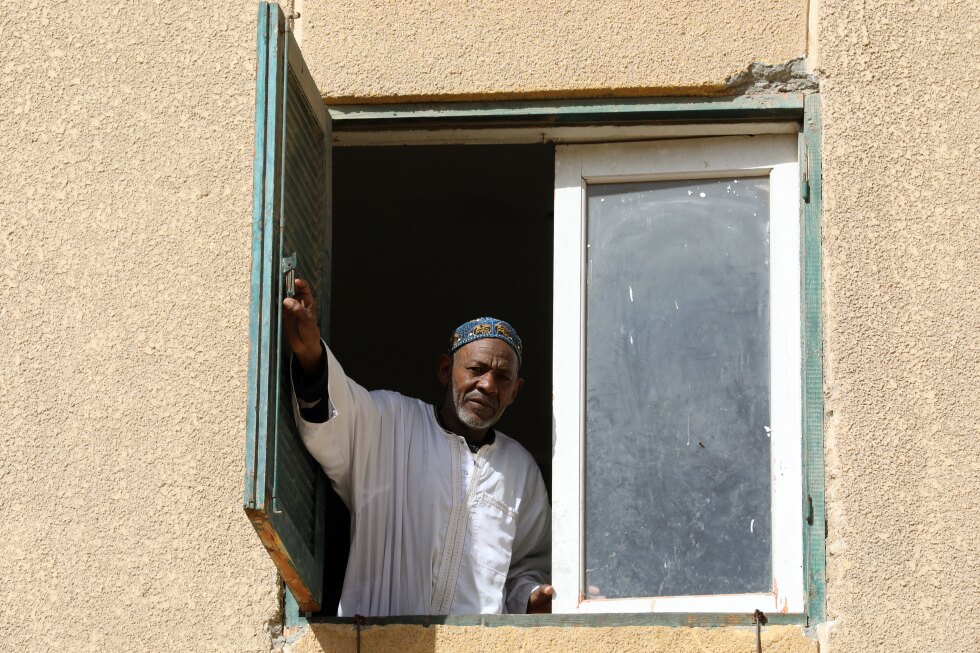
For those who survive, the trauma continues. Farouk Abkar, a 60-year-old kitchen volunteer from el-Fasher, survived drone strikes and physical assault that left him with missing teeth and birdshot wounds to his head. Now in Egypt, he shares an apartment with at least 10 other Sudanese refugees, unable to afford medical care for his chronic injuries and psychological trauma.
The kitchen closures in conflict zones have left vulnerable households without viable alternatives, forcing them to rely on local markets where food prices have become unaffordable. In East Darfur’s Khazan Jedid town, three remaining charity kitchens struggle to feed approximately 5,000 people daily despite constant harassment and violence against workers.
Tragically, even escape doesn’t guarantee safety. Enas Arbab, who had hoped to rebuild her life in Egypt, was reportedly stopped by Egyptian authorities while traveling to Alexandria last month and deported back to Sudan—returning her and her young son to the very violence they had risked everything to escape.