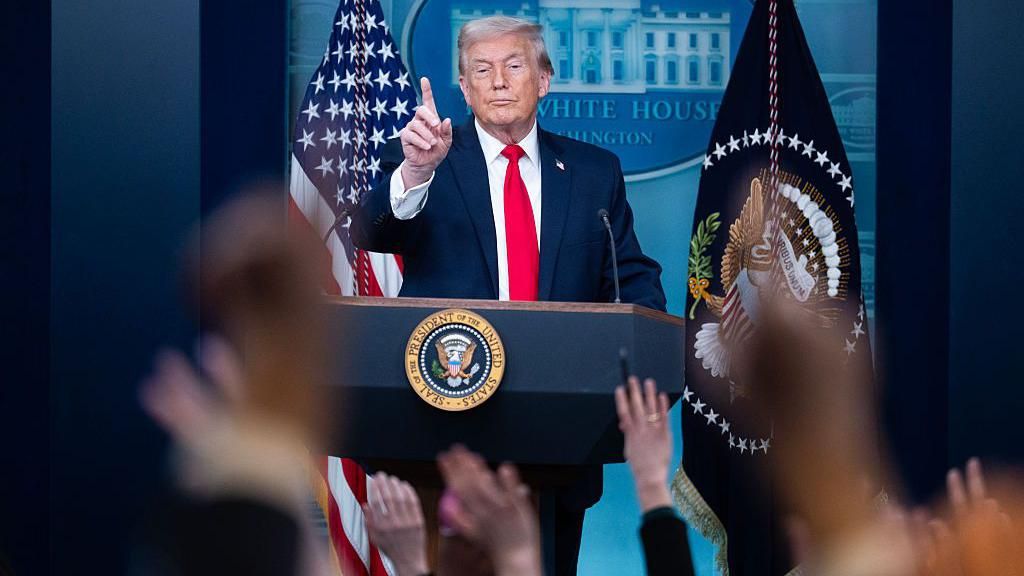
In an unprecedented legal setback for the executive branch, the U.S. Supreme Court has ruled that President Donald Trump overstepped his authority by invoking emergency powers to implement reciprocal, country-specific tariffs. This decision effectively dismantles a cornerstone of Trump’s aggressive trade strategy, which had previously upended global economic norms through unilateral actions.
The controversial tariffs, first announced during last April’s ‘Liberation Day’ ceremony in the Rose Garden and later expanded through threats against European nations regarding Greenland, had established an average tariff rate of approximately 15% on imports. While the Court’s ruling theoretically reduces this rate by more than half, the practical impact remains complex. A baseline tariff of about 6% persists—triple the pre-2025 levels—implemented through various other legal mechanisms.
Despite the judicial check, importers may experience minimal immediate relief. The administration’s use of the 1977 International Emergency Economic Powers Act (IEEPA) had already prompted significant supply chain adaptations, with many businesses shifting sourcing away from heavily tariffed nations like China. This agility, combined with importers absorbing additional costs, has paradoxically muted the inflationary impact on U.S. consumers while generating substantial government revenue—tariff collections reached $240 billion last year.
The White House has signaled its intention to pursue alternative legal avenues to maintain its trade policy objectives, though these pathways are notably more complex and time-consuming. This creates a dual landscape of opportunity and risk: importers may rush goods through during the interim period, while smaller businesses with less flexible supply chains face renewed uncertainty.
Globally, the decision has catalyzed a reassessment of trade relationships. While China has sustained export strength through IT hardware demand fueled by the AI boom, other Asian manufacturers like Thailand and Vietnam have gained market share. Simultaneously, Beijing has intensified outreach to African emerging markets and traditional U.S. allies like Canada.
The enduring legacy of Trump’s trade approach may be the accelerated diversification of global supply chains and trading partnerships. Despite the turbulence, international trade volumes likely exceeded global economic growth in 2025, demonstrating how nations have adapted to volatility. However, this fresh uncertainty may further strain relationships with traditional partners like the EU and UK, potentially driving them closer together in response to perceived U.S. unpredictability.
Financial markets now face additional layers of complexity regarding existing agreements—such as those with Japan involving investment guarantees in exchange for tariff relief—and the broader implications of a presidency that has weaponized economic uncertainty as a diplomatic tool. While the Supreme Court has removed one potent policy lever, the world continues navigating the transformed trade landscape that Trump’s actions created.