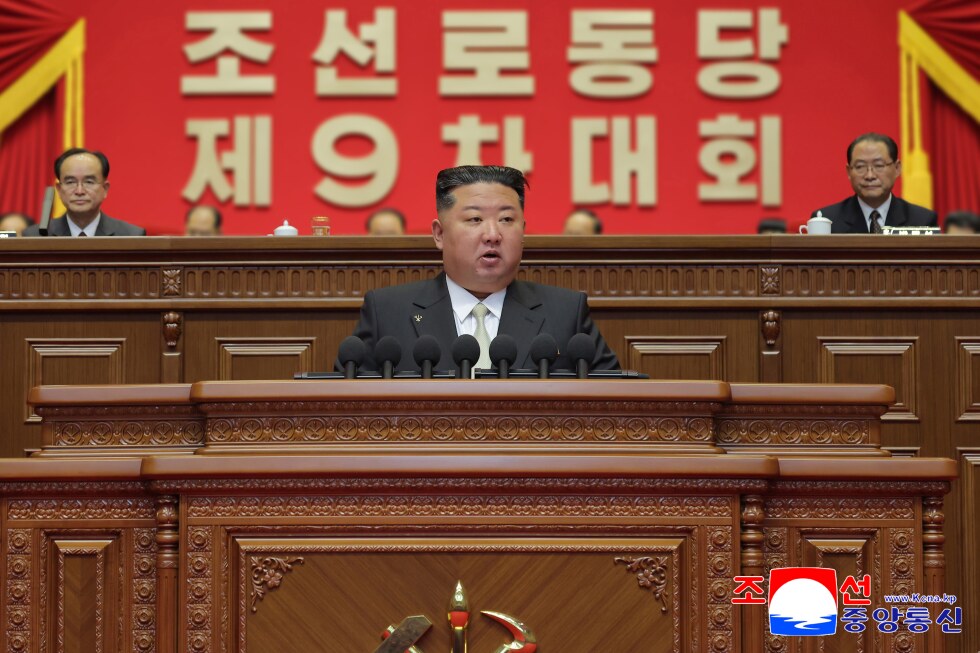
SEOUL, South Korea — North Korea has commenced its most significant political gathering, the Workers’ Party Congress, where Supreme Leader Kim Jong Un is anticipated to outline his strategic vision for the nation’s next five-year development cycle. The event, which began Thursday in Pyongyang, marks a pivotal moment for cementing the Kim dynasty’s authoritarian governance while addressing critical domestic and international challenges.
In his opening address, Kim emphasized economic achievements and national resilience since the previous congress in 2021, which coincided with the COVID-19 pandemic’s peak. He proclaimed substantial progress in economic development and regional positioning, characterizing these advances as an ‘irreversible’ enhancement of North Korea’s global standing. ‘This created favorable conditions and circumstances for giving a greater spur to our socialist construction,’ Kim stated, acknowledging the ‘heavy and urgent historic tasks’ of boosting economic construction and improving living standards.
Notably absent from initial state media coverage were direct references to Kim’s nuclear weapons program or ongoing standoffs with the United States and South Korea. However, geopolitical analysts anticipate the congress will address these issues as Kim continues to leverage global tensions to advance his strategic objectives.
Recent geopolitical maneuvers have seen North Korea deepen alliances with Russia and China. Kim has capitalized on Russia’s war in Ukraine to accelerate his nuclear and missile capabilities while providing substantial military support to Moscow—potentially in exchange for economic assistance and technological transfers. Simultaneously, he has strengthened ties with China, North Korea’s traditional ally and economic lifeline, through diplomatic visits and summits.
While North Korea’s information blockade obscures accurate economic assessment, external experts suggest a gradual recovery fueled by post-pandemic trade resumption with China and weapons exports to Russia. The congress follows weeks of military demonstrations and inspections of industrial and housing projects, showcasing alleged achievements under Kim’s leadership.
Approximately 5,000 delegates, including 224 central leadership members, are participating in the event expected to span several days. Experts predict Kim will outline ambitious economic targets and plans to expand his nuclear-armed military, which already possesses systems targeting U.S. allies in Asia and long-range missile capabilities potentially reaching the U.S. mainland.
South Korea’s intelligence agency is monitoring potential signals regarding Kim’s teenage daughter, Kim Ju Ae (approximately 13), being positioned as a potential successor—a move that would formalize the regime’s fourth-generation dynastic succession.
Diplomatic relations remain frozen since the 2019 collapse of talks between Kim and former U.S. President Donald Trump. North Korea has consistently rejected dialogue offers, demanding the U.S. abandon its denuclearization requirements as a precondition for negotiations. Relations with South Korea have similarly deteriorated, with Kim abandoning peaceful reunification rhetoric in favor of a hostile ‘two-state’ doctrine for the Korean Peninsula—a stance potentially to be institutionalized in the Workers’ Party constitution during this congress.