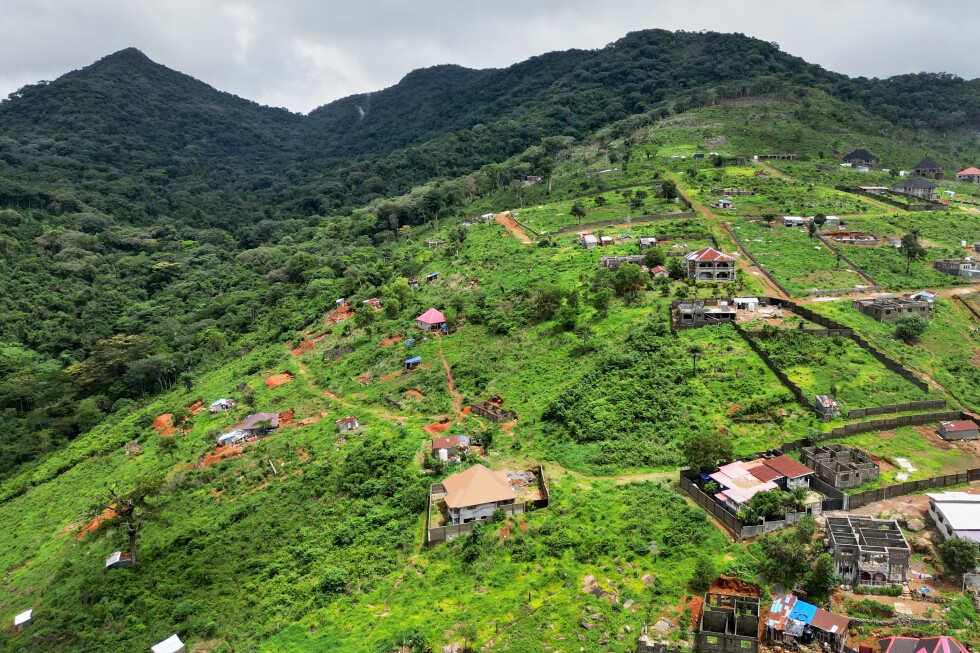
FREETOWN, Sierra Leone — An explosive government investigation obtained exclusively by The Associated Press and The Gecko Project reveals systematic illegal construction of luxury mansions within Sierra Leone’s Western Area Peninsula National Park, with evidence indicating complicity by senior government officials. Nearly four years after President Julius Maada Bio commissioned the probe, its findings remain concealed from the public despite identifying an “environmental time bomb” threatening the capital’s water supply and ecosystem.
The investigation uncovered that at least 50 extravagant homes have been constructed or are underway within the park boundaries in the Bio Barray neighborhood, where rainforest stood as recently as 2019. Satellite imagery analysis confirms ongoing construction despite legal prohibitions against development in protected areas.
Critical findings indicate that former Lands Minister Denis Sandy signed approximately 175 documents granting land leases to private individuals—a move described as “flagrant violation” of environmental protections. The committee recommended punitive measures against Sandy and 16 other named officials, but no substantive action has been taken.
The environmental implications are severe: the threatened national park serves as both a vital watershed for Freetown—providing 90% of the city’s water through an adjacent reservoir—and a proposed UNESCO World Heritage Site. Deforestation increases risks of catastrophic landslides and water shortage crises, reminiscent of a 2017 landslide that killed over 1,000 people.
Freetown Mayor Yvonne Aki-Sawyerr, an environmentalist and presidential aspirant, stated unequivocally that the government is “fully aware of what is going on,” alleging that powerful residents receive explicit permission to ignore environmental laws.
Despite President Bio’s public commitment that “nobody is above the law” and promises to act on the findings, current Chief Minister David Sengeh provided vague responses regarding implementation. Meanwhile, the Anti-Corruption Commission claims it never received the report, and the National Protected Area Authority’s former director asserted all encroachment had ceased—contradicted by AP’s on-the-ground observations.
The investigation identified 876 landowners within park boundaries, with AP verification confirming 46 villas inside protected territory. At least 14 property owners hold government positions, including within the presidential office, land ministry, and Environment Protection Agency, raising serious questions about institutional corruption and environmental governance.