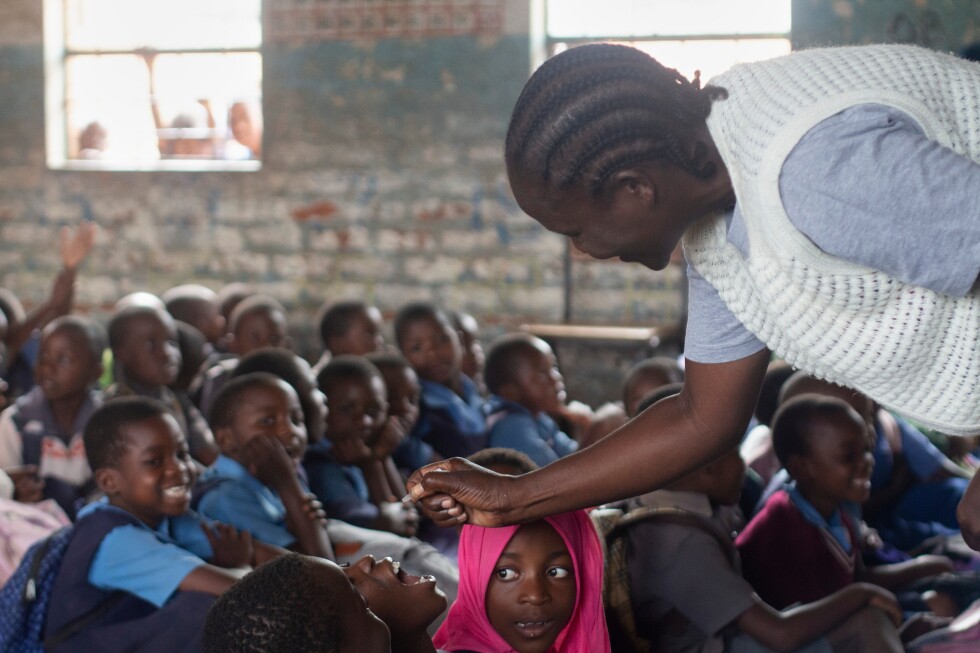
BLANTYRE, Malawi — Health workers moved through crowded Malawian classrooms this week, administering oral polio vaccines to children seated on floors as the nation confronts an unexpected public health challenge. The emergency campaign, launched Wednesday, highlights the complex realities of global polio eradication efforts nearly four decades after the World Health Organization initiated its elimination program.
The vaccination drive follows last month’s detection of vaccine-derived poliovirus type 2 in Blantyre’s sewage systems, prompting health authorities to deploy 1.7 million doses of a novel oral vaccine specifically designed to combat circulating vaccine-derived outbreaks. Malawi’s Deputy Health Minister Charles Chilambula personally championed the campaign, emphasizing the urgency of containing the mutated strain discovered in environmental samples.
This development represents another setback for global health authorities who had nearly declared victory over polio just five years ago, when only five natural polio cases were reported worldwide. Current WHO data reveals 38 natural poliovirus cases recorded between January and October 2025—all confined to Pakistan and Afghanistan—alongside 151 vaccine-derived cases across 13 countries, indicating a troubling epidemiological shift.
Vaccine-derived poliovirus emerges when the weakened live virus in oral vaccines mutates into a form capable of triggering new outbreaks, complicating eradication efforts. This phenomenon has recently overtaken wild poliovirus in case numbers, though health officials emphasize that wild polio cases have decreased by over 99% since 1988, when 125 countries reported endemic transmission.
Malawi’s polio concerns resurfaced in 2022 when a child contracted wild poliovirus—the nation’s first case in three decades. The current detection of vaccine-derived strain adds another layer of complexity to elimination efforts. UNICEF’s Malawi health chief Dr. Joe Collins Opio indicated the campaign would initially focus on eight districts before expanding nationally across the country of 22 million people.
Health workers—primarily women in distinctive blue uniforms—conducted door-to-door vaccinations while carrying cooler boxes containing vaccines. Officials deployed motorbikes to reach remote communities and organized open-air educational events featuring health messages interspersed with popular music. Children participated by holding signs advocating polio protection.
Dr. Akosua Sika Ayisi, a WHO public health specialist assisting the campaign, emphasized that polio remains a persistent global threat, noting that Malawi’s success depends on ensuring every eligible child receives complete vaccination. The highly contagious disease affects the nervous system and can cause irreversible paralysis, typically spreading through contaminated food or water, with approximately one in 200 cases resulting in paralysis.