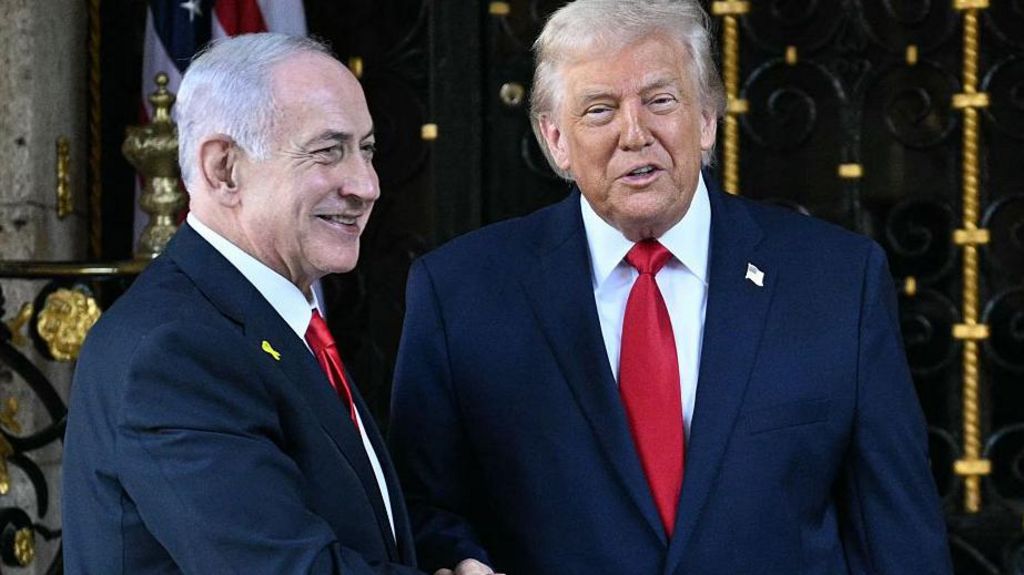
Israeli Prime Minister Benjamin Netanyahu convened with President Donald Trump at the White House on Wednesday amid heightened Middle Eastern tensions and critical negotiations concerning Iran’s nuclear capabilities. This sixth diplomatic engagement since Trump’s return to office underscores the special relationship between the two leaders.
Netanyahu articulated Israel’s position that any nuclear agreement must extend beyond uranium enrichment limitations to include restrictions on Iran’s ballistic missile development and cessation of support for proxy organizations including Hamas and Hezbollah. “I will present to the president our outlook regarding the principles of these negotiations,” Netanyahu stated prior to his departure.
Iranian President Masoud Pezeshkian responded with defiance during celebrations marking the 47th anniversary of Iran’s Islamic Revolution, asserting Tehran’s willingness to discuss nuclear verification while rejecting what he termed “excessive demands.” The Iranian leader emphasized: “Our Iran will not yield in the face of aggression, but we are continuing dialogue with all our strength.”
The diplomatic exchanges occur against a backdrop of military posturing, with Trump acknowledging consideration of deploying a second aircraft carrier strike group to the region. This follows the previous month’s deployment of the USS Abraham Lincoln after Trump threatened strikes against Iran in response to governmental crackdowns on protests.
Analysts note both sides operate under significant constraints. Netanyahu faces pressure from right-wing coalition partners to secure comprehensive concessions, while Iranian leadership contends with economic strain from reinstated sanctions and internal unrest. Georgetown University’s Daniel Byman observed: “Israel is concerned that in the haste to get a deal, the president might embrace a deal that doesn’t address Iran’s missile programme or support for proxy groups.”
The negotiations simultaneously intersect with fragile Gaza ceasefire implementation efforts between Israel and Hamas. A White House spokesperson reaffirmed the administration’s commitment to “strengthen regional security in the Middle East” while implementing Trump’s “historic Gaza peace agreement.”