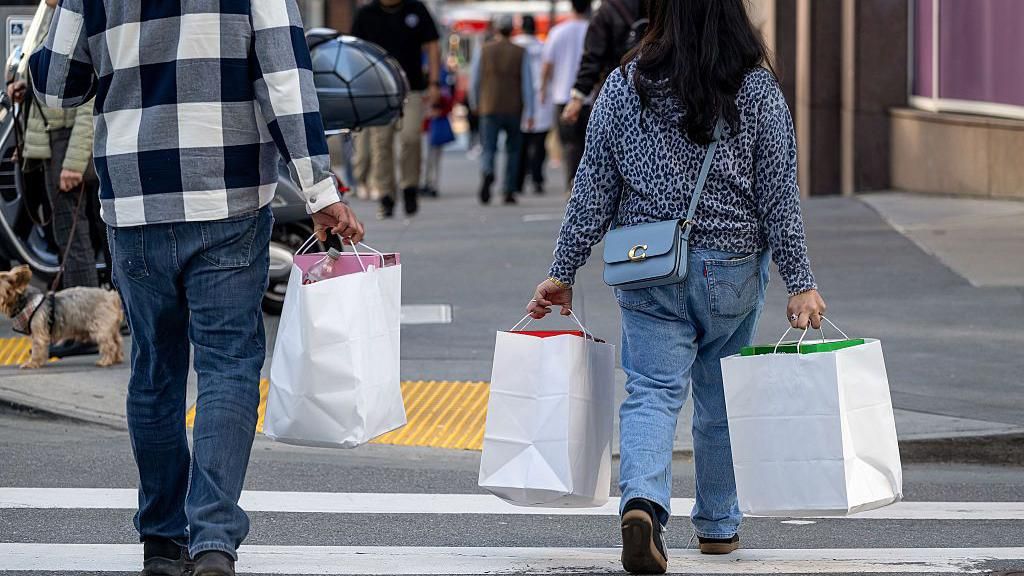
The United States witnessed an unanticipated stagnation in retail sales during the crucial December holiday season, according to a delayed Commerce Department report released Tuesday. This flat performance—following a 0.6% increase in November—signals potential consumer retrenchment amid growing economic uncertainties.
The data reveals distinct sectoral weaknesses, with furniture stores experiencing a 0.9% monthly decline and clothing retailers seeing a 0.7% drop—categories particularly vulnerable to tariff exposures. While year-over-year sales still showed a 2.4% increase, this represented a noticeable deceleration from November’s 3.3% annual growth rate.
Economic analysts attribute this softening to multiple converging factors: a faltering labor market, persistent inflationary pressures, and cooling wage growth that saw its slowest pace in over four years at just 0.7% in Q4 2025. Chris Zaccarelli of Northlight Asset Management observed, “Consumer spending has finally caught up with consumer sentiment, and not in a good way.”
Despite concerning indicators, economists caution against premature pessimism. Michael Pearce of Oxford Economics suggested potential rebounds from three Federal Reserve interest rate cuts implemented last year and the upcoming tax refund season. The unemployment rate’s dip to 4.4% in December provides additional grounds for measured optimism.
The report underscores a growing economic divergence, with high-income consumers continuing to drive spending while many households increasingly focus on essential purchases. EY-Parthenon’s Gregory Daco noted this “economics of necessity” trend, evidenced by increased spending on gasoline and building materials alongside declines in discretionary categories like electronics and apparel.
As markets await forthcoming labor market data and Q4 growth estimates, the December retail figures present a complex portrait of consumer behavior in the world’s largest economy, balancing between temporary weakness and fundamental resilience.