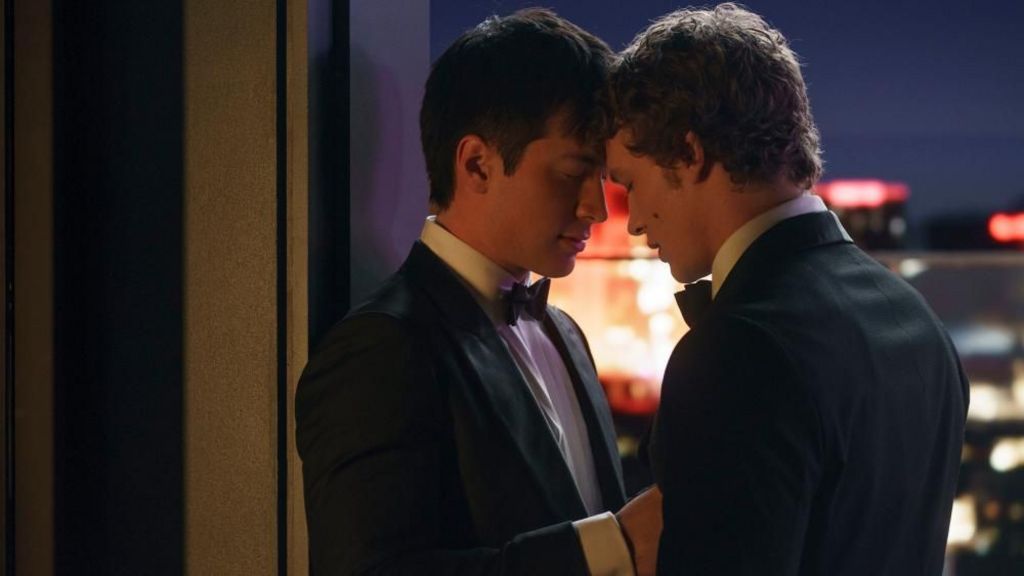
In an extraordinary turn of events, former waiters Connor Storrie and Hudson Williams have become global sensations through their starring roles in ‘Heated Rivalry,’ a Canadian-produced series that has defied conventional industry expectations. The show, adapted from Rachel Reid’s explicitly queer hockey romance novels, depicts a clandestine romantic relationship between two competing ice hockey athletes.
Produced with a modest budget of under CAD$5 million per episode, the six-episode series was filmed in Ontario within just over one month. Despite its limited resources and relatively unknown cast, the show has achieved remarkable international acclaim since its North American premiere last November. Storrie portrays Russian player Ilya Rozanov while Williams embodies Canadian athlete Shane Hollander, with both actors experiencing unprecedented career transformations that typically require years to achieve.
‘The production presented numerous casting challenges,’ reveals Jenny Lewis, who alongside co-casting director Sara Kay, had merely three months to identify performers meeting stringent criteria including comfort with sexual content, linguistic versatility, skating proficiency, and athletic appearance. ‘Many agents might have been deterred, but Connor and Hudson demonstrated exceptional willingness to embrace every aspect of the production,’ Kay adds.
The series has achieved historic milestones, with its penultimate episode matching Breaking Bad’s record for the highest-rated episode on IMDB. Its cultural impact extends beyond viewership metrics—the actors have served as Olympic torchbearers, appeared on prominent late-night programs, and Storrie is scheduled to host Saturday Night Live.
Executive producers Jacob Tierney and Brendan Brady maintained artistic integrity despite pressure to modify the show’s explicit LGBTQ+ content for financial backing. Canadian streaming service Crave, having previously collaborated with Tierney on projects like Letterkenny and Shoresy, granted creative freedom that proved instrumental in engaging the source material’s dedicated fanbase.
Old Dominion University media studies professor Myles McNutt observes: ‘Tierney pursued an astonishingly faithful adaptation beyond expectations.’ This dedication resonated with existing fans while attracting substantial new audiences through strategic engagement initiatives that incorporated fan communities into promotional campaigns.
The series’ international distribution expanded organically, with HBO Max acquiring rights for the United States and Australia, while Sky secured distribution for the UK and Ireland. The production’s success has generated significant ancillary benefits—Rachel Reid’s audiobook catalog experienced a 1,500% global listening increase on Spotify, and her previously published novel became a New York Times bestseller seven years after initial publication.
Unlike conventional streaming productions featuring established stars in high-budget formats, Heated Rivalry demonstrates that compelling storytelling and authentic representation can transcend financial constraints. The production team emphasizes commitment to artistic merit over social media metrics, with Kay noting: ‘We prioritize acting excellence rather than seeking the next viral star.’
The series has profoundly impacted all involved, including composer Peter Jones (stage name Peter Peter), whose atmospheric score has received widespread acclaim. ‘Music constitutes the emotional foundation that resonates with audiences,’ Jones remarks, acknowledging the overwhelming public response.
With a second season confirmed following the show’s meteoric success, the production team anticipates maintaining their Canadian talent focus while preserving the creative authenticity that distinguished the inaugural season. Industry observers hope the series will continue resisting conventional streaming demands that often compromise artistic vision for broader accessibility.