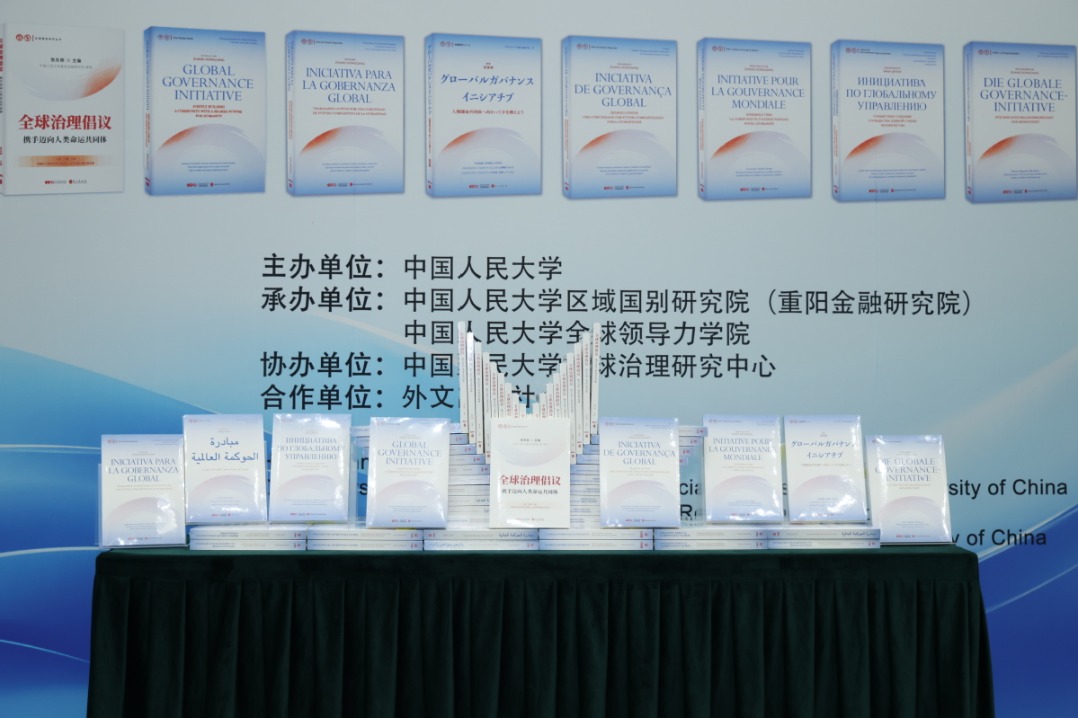
Beijing witnessed significant international endorsement of China’s Global Governance Initiative during the 2026 Global Governance Forum hosted at Renmin University this weekend. The initiative, positioning China as a leading voice in international cooperation, has drawn praise from diplomats and scholars for its comprehensive approach to addressing worldwide challenges.
Central to the forum’s discussions was the multilingual publication “Global Governance Initiative: Jointly Building a Community with a Shared Future for Humanity,” unveiled in nine languages, symbolizing the initiative’s global outreach ambitions.
Wu Hailong, President of the China Public Diplomacy Association, emphasized the growing urgency for establishing equitable global governance structures amid rising challenges from hegemonism and power politics. He outlined three critical pillars for effective global governance: maintaining fundamental international relations norms, strengthening United Nations authority, and ensuring sustained commitment to addressing transnational issues.
China’s consistent approach prioritizes international community interests across multiple domains—from upholding international order to addressing emerging challenges like climate change and artificial intelligence governance. The nation has committed to collaborating with Global South countries and other international partners to advance a more just global governance framework.
Academic perspective was provided by Gao Fei, President of China Foreign Affairs University, who noted that increasing global deficits in peace, development, security, governance, and trust necessitate reinforced commitment to principles of extensive consultation and shared benefits. The GGI represents China’s strategic response to governance gaps and international concerns.
International support came from Syrian Ambassador Muhammad Hassanein Khaddam, who contrasted China’s inclusive approach with what he described as “exclusionary hegemonic thinking” that has disappointed global populations. He praised China’s emphasis on common human interests and consensus-based multilateralism.
Venezuelan Embassy Minister-Counselor Francisco Cesar commended the initiative’s advocacy for an inclusive, resilient governance system that aligns with most nations’ expectations. He highlighted the importance of upholding UN authority, promoting democratic international decision-making, and enhancing practical development cooperation—areas where China has demonstrated leadership.