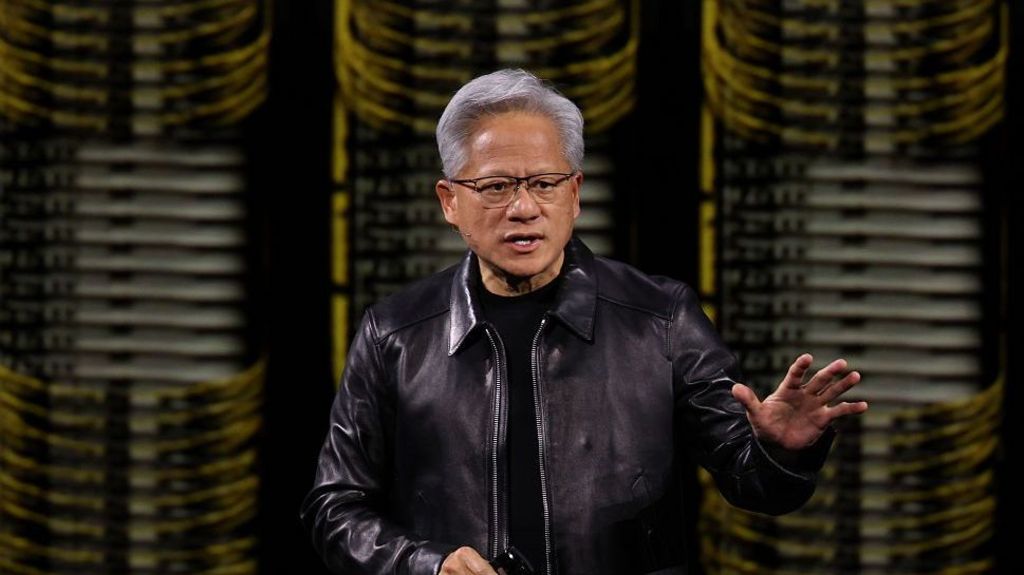
The global tech industry was sent reeling this week by a bombshell development involving Jensen Huang, the 63-year-old, leather-jacket-clad long-serving chief executive of trillion-dollar AI chip giant Nvidia, a figure often playfully dubbed the “Taylor Swift of tech” for his cult-like following across global innovation circles. The firm has launched a formal internal probe into Huang’s reported extramarital romantic relationship with Alice Huang, no familial relation, former chief executive of Singapore-based data centre operator Megaspeed, who U.S. national security officials allege is a Chinese intelligence operative. The unforeseen scandal has rippled far beyond the personal sphere of Huang and his family, landing at the volatile intersection of cutting-edge AI innovation, U.S.-China geopolitical rivalry, and transnational national security protocols. At the core of the controversy lies the high-stakes global race for AI supremacy, a competition U.S. President Donald Trump has repeatedly framed as a zero-sum game where “whoever wins AI, wins” global economic and geopolitical dominance. As the world’s unrivalled leading manufacturer of high-performance AI data centre chips, Nvidia commands overwhelming market demand, with its latest enterprise-grade units retailing for $50,000 apiece, and large-scale AI infrastructure deployments often incorporating hundreds of these premium components. The U.S. government first imposed strict export restrictions on Nvidia’s top-tier chips to block China from accessing the most advanced AI hardware, before later loosening some of the regulatory guardrails. Now, unconfirmed reports first surfaced by Bloomberg indicate that Megaspeed, under Alice Huang’s leadership, purchased billions of dollars worth of Nvidia processing units in November 2025, with U.S. officials raising concerns the equipment may have been illicitly diverted to China in violation of export controls. Megaspeed has categorically denied any improper use of its purchased Nvidia products. Adding further layers of complexity, Jensen Huang has long been a vocal advocate for relaxing U.S.-China AI chip export limits, pushing back against prevailing national security consensus to argue that U.S. and Chinese AI leadership are not mutually exclusive. In a 2025 interview with the BBC, Huang stated, “President Trump wants America to win and President Xi wants China to win, and it’s possible for both of them to do so” — a position that runs directly counter to the zero-sum framing adopted by both Washington and Beijing. Nvidia’s internal investigation is now tasked with resolving a series of high-stakes unanswered questions: whether Alice Huang obtained unauthorised access to Nvidia’s proprietary next-generation technology via her personal connection to the CEO, whether any sensitive intellectual property or restricted hardware was transferred to Chinese state actors, and whether Huang violated the firm’s explicit code of conduct banning romantic or personal relationships with key clients. No formal evidence has emerged to date confirming Huang shared classified or proprietary information, and Nvidia’s board has publicly reaffirmed its support for its CEO, who has committed to full cooperation with the probe and stated he intends to remain in his post. Even U.S. President Trump has voiced public backing, describing Huang as “honourable” and suggesting there may be extenuating circumstances behind the reported relationship, stopping short of condemning the tech leader. While Nvidia’s stock price has experienced a modest dip in the wake of the news, it has not suffered a catastrophic collapse, indicating most shareholders are not yet abandoning their confidence in Huang’s leadership. For context, Huang has led Nvidia for more than 30 years, steering the company through decades of market upheaval and making the prescient early call to pivot the firm’s entire operational focus to AI chip development long before the technology entered mainstream global adoption. Industry analysts widely note that no clear internal successor stands ready to step into Huang’s role, and a sudden leadership vacuum at Nvidia would almost certainly slow the pace of global AI development significantly. The scandal carries broader national security ramifications as well: as a core member of the U.S. tech elite, Huang holds rare, unrivalled access to top White House officials and senior national security leadership, meaning he has been privy to highly sensitive classified information related to U.S. AI strategy. U.S. officials have already gone to extreme lengths to protect its AI technological edge, even withholding some advanced AI model access from the UK’s official AI Safety Institute over concerns about unauthorised proliferation. Chinese government officials have formally rejected all allegations that Alice Huang was engaged in espionage activities, though Western national security agencies have long documented widespread, large-scale state-backed economic espionage operations targeting sensitive tech intellectual property across private sector firms. For a leader who is famously known for running a high-pressure, demanding corporate culture that often features public all-staff meetings where he calls out individual employees for mistakes to prevent repeated errors across the firm, Huang now faces a deeply ironic test: hoping his staff, board, and political allies will extend him the same grace he rarely offered to underperforming team members. In a final, striking twist, a leader who has built his career on pioneering cutting-edge technological innovation now finds himself potentially ensnared by one of the oldest counterintelligence tactics in the world: a classic honey trap operation.
Zoe Kleinman: Nvidia CEO’s affair will cause ripples across US and beyond