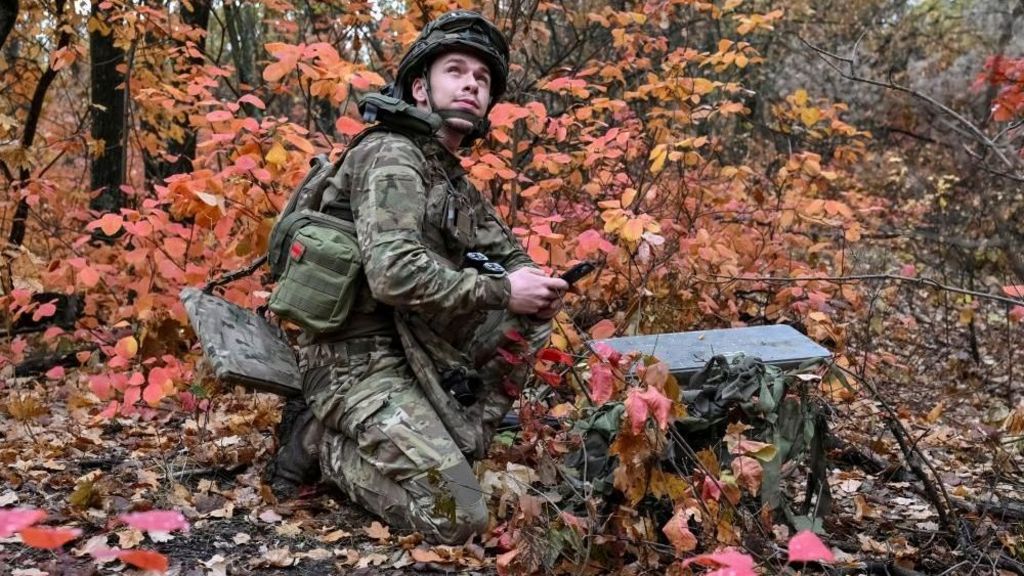
Ukrainian President Volodymyr Zelensky has publicly warned that unresolved speed limitations on the U.S.-supplied, military-grade Starshield satellite internet system are severely hampering Kyiv’s ability to fend off incoming Russian missile and drone assaults, at a critical juncture as winter approaches and the country’s vulnerable energy infrastructure faces heightened risk of targeted strikes. The specialized Starshield platform, a military-focused iteration of Elon Musk’s Starlink network procured for Ukraine by the U.S. government, is distinct from the standard consumer-grade Starlink service that Ukrainian frontline forces rely on for general battlefield communications, and is purpose-built to support real-time air defense interception operations. Reports of crippling speed throttling on Starshield terminals first emerged in October, sparking a public, contradictory back-and-forth between Musk and U.S. President Donald Trump: Musk asserted full operational control of the system rested with the U.S. federal government, while Trump rejected all responsibility and stated he had directly instructed the tech billionaire to restore full functionality to the service. Though brief signs of normalized performance appeared roughly one week after the initial controversy flared, Ukrainian officials confirmed the restrictive speed caps remained in place, creating cascading failures for their air defense drone fleet. Zelensky detailed that interceptor drones lose their operational connection to human operators once they reach speeds of 161 kilometers per hour (100 miles per hour), rendering them completely incapable of overtaking Russian jet-powered Shahed drones, the Iranian-designed loitering munitions that Moscow has deployed en masse to target Ukrainian electrical substations. These connectivity barriers are compounded by a separate, persistent shortage of U.S.-manufactured Patriot air defense interceptors, a gap that Russian military commanders have actively exploited to ramp up offensive strikes across Ukrainian territory. Overnight attacks spanning Saturday to Sunday targeted critical energy infrastructure in the Zaporizhzhia, Sumy, Odesa, Zhytomyr, and Kirovohrad regions, alongside key railway facilities in Dnipro, Kharkiv, and Zaporizhzhia. Casualty reports confirm at least two fatalities in a strike on an infrastructure site in Mena, Chernihiv Region, as stated by regional governor Vyacheslav Chaus, with dozens more people injured across multiple affected areas including Donetsk and Kyiv. In a reciprocal operational move, Ukraine’s defense forces announced they had executed long-range strikes on two strategic facilities in the central Russian city of Nizhnekamsk, Tatarstan: a petrochemical plant and an oil refinery, both of which Kyiv says supply the raw fuel that sustains Moscow’s war effort. Additional Ukrainian cross-border strikes killed one civilian in the Russian port city of Taganrog, according to local regional governor Yuri Slyusar, while two more civilians – a truck driver and an elderly woman – were killed in Russian-occupied Luhansk Region, per Moscow-installed regional leader Leonid Pasechnik. Parallel to these battlefield developments, Estonia has declared it will fully close all its border crossing points with Russia starting December 1, in direct response to a foiled suspected sabotage plot targeting domestic drone manufacturer Threod Systems. Estonian security officials have detained eight individuals accused of carrying out an attempted arson attack on the firm, alleging the group was directed by Russia’s GRU military intelligence agency. Moscow has not issued any public comment on the alleged plot, but Estonian Foreign Minister Margus Tsahkna emphasized that the new border measures are a clear signal that hostile acts against Estonian sovereignty will carry tangible, severe consequences.
Zelensky urges US and Musk to lift Starlink restrictions and be on ‘right side of history’