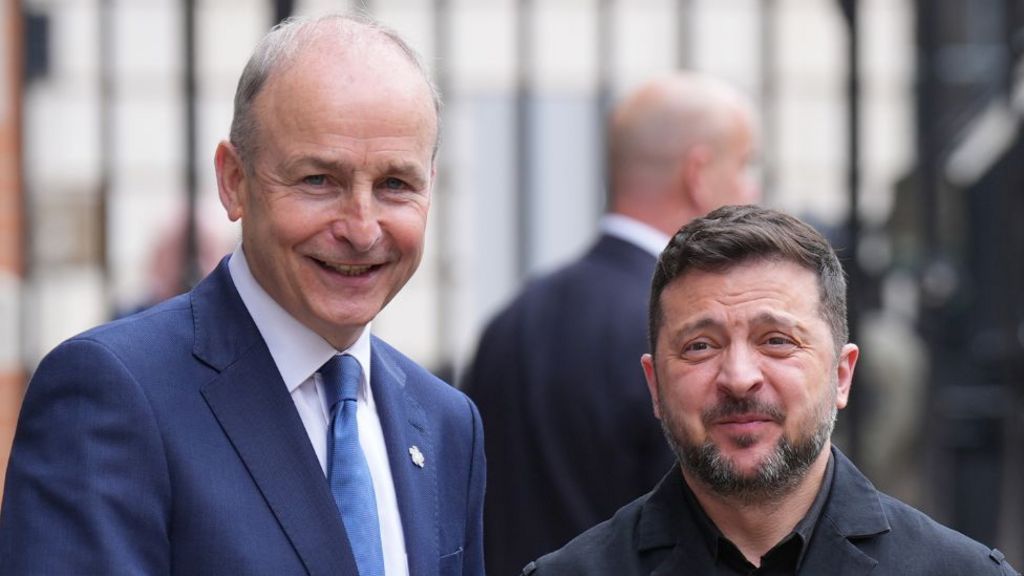
DUBLIN — A landmark ceremonial event kicking off Ireland’s six-month term holding the rotating presidency of the Council of the European Union launched in the Irish capital on July 1, 2026, with Ukrainian President Volodymyr Zelensky gracing the guest list alongside top EU and Irish leaders. The gathering, which opened with a formal flag-raising ceremony featuring performances of both the Irish national anthem and the European Union’s official anthem, marks the eighth time Ireland has held the rotating presidential role since it joined the European Economic Community, the EU’s precursor, in 1973. The last time Dublin assumed the responsibility was 2013, and this current term will run through the end of December 2026. As the presiding country, Ireland will be tasked with steering legislative negotiations across EU policy areas and mediating consensus between the bloc’s 27 member states.
Irish Taoiseach Micheál Martin opened the ceremony by extending official welcomes to European Council President António Costa and visiting Ukrainian President Zelensky. In his opening address, Martin emphasized that Ireland’s decades-long evolution into a modern, outward-facing economy and inclusive society cannot be separated from its decades of European Union membership. “Ireland has always been a deeply European country,” Martin told attendees, framing the nation as “a beacon of hope for the transformative potential of the European appeal.” He went on to reaffirm Ireland’s longstanding commitment to Ukraine amid Russia’s ongoing full-scale invasion, stating: “We will stand unswervingly by the people of Ukraine. We are determined to ensure Ukraine get the peace and justice they deserve.” The presidency role passed to Ireland from Cyprus, which completed its own six-month term in June 2026.
In his address at the ceremony, Zelensky offered his warm congratulations to Ireland on assuming the presidency, noting that the role carries an outsized “great responsibility” for the bloc. He thanked Ireland for its consistent “attention to Ukraine” and recalled that the country has stood with Kyiv from the “very beginning” of Russia’s full-scale invasion in 2022. “We must protect lives and our values from Russia’s anti-European aggression, and when we face many other challenges, both in international affairs and at the national level,” Zelensky said. He added that the European Union currently holds a unique “opportunity and responsibility to be a force that brings more stability” to the European continent and the broader global order.
Costa echoed this sentiment in his own remarks, praising Ireland for its consistent leadership in upholding the core tenets of the international rules-based system. “Ireland has consistently been at the forefront” of efforts to defend these foundational principles, Costa noted, highlighting the country’s longstanding commitment to multilateral cooperation and European integration.