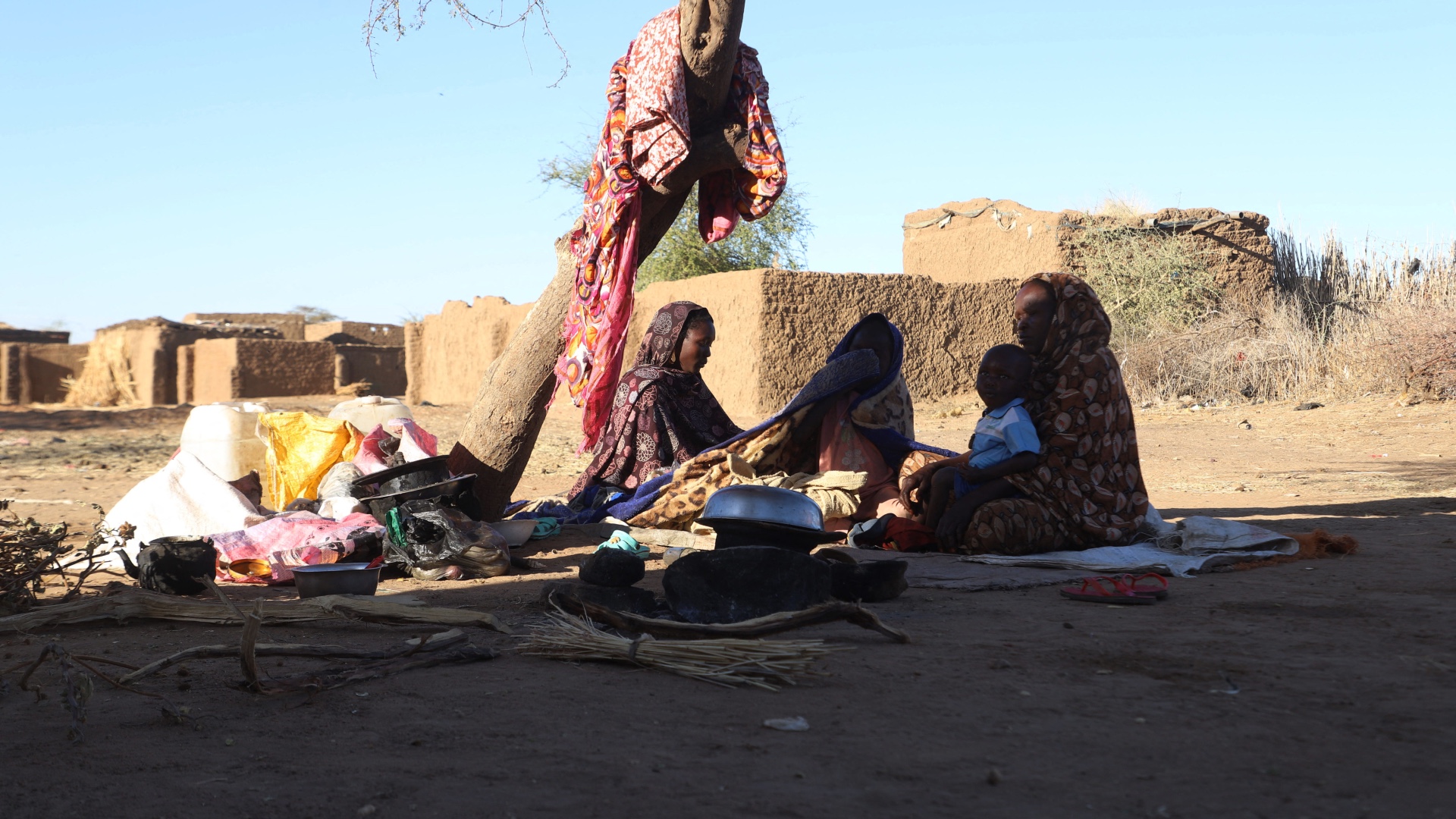
On Wednesday, global human rights advocacy group Amnesty International published a damning new report confirming that Sudan’s Rapid Support Forces (RSF) has carried out crimes against humanity and systematic ethnic cleansing during its 18-month siege of el-Fasher, the capital of Sudan’s North Darfur state. These findings add to a growing body of evidence collected over the past year documenting widespread atrocities committed by the paramilitary group during the conflict, aligning with prior image and video analysis conducted by Middle East Eye.
Amnesty Secretary General Agnes Callamard described the report’s grim conclusions as “a stain on the conscience of humanity”, emphasizing that children were not incidental casualties of the violence — they were deliberately targeted on a mass scale. In a formal statement, she detailed that children across the region have been killed, injured, sexually assaulted, abducted, and forcibly conscripted into fighting ranks. The organization’s investigation drew on first-hand testimonies from 247 people, most of whom directly witnessed or survived abuses in North Darfur, a region bordering both Libya and Chad.
The investigation confirms that non-Arab communities, particularly the Zaghawa ethnic group, were intentionally singled out for attack. Researchers documented pervasive use of ethnic slurs and dehumanizing language, including the term “falangay” which references historical slavery, during RSF offensives. After residents fled their settlements, RSF fighters systematically burned villages to eliminate any possibility of return — a deliberate tactic that Amnesty classified as consistent with the legal definition of ethnic cleansing.
Nine men who were held in the Mina al-Bari detention center on el-Fasher’s eastern outskirts between mid-2024 and early 2025 shared particularly harrowing accounts of abuse. Held for up to five months in sealed shipping containers, the detainees described lethal conditions with stifling heat and almost no circulating air that left many struggling to breathe. One detainee recalled, “My body was drying out completely, other people as well as myself lost consciousness. [The RSF] thought we had died, so they just threw us out of the container. After a while, they realized we were still alive. They tortured us again and took us back inside the container.”
The report explicitly names three senior RSF leaders it holds responsible for serious violations of international law. The group’s top commander Al-Fateh Abdullah Idris, better known by his alias Abu Lulu, was identified after video evidence emerged showing him executing captive civilians. Two other senior officers linked to atrocities at the Mina al-Bari facility — Major General Gedo Hamdan Ahmed Mohamed (alias Abu Shouk) and Lieutenant Colonel Abbas Khater Bakhit — are also accused of systematic torture of detainees.
Amnesty’s report calls for two urgent, concrete actions from the global community: an immediate nationwide ceasefire to end hostilities across Sudan, and the deployment of a dedicated independent international security force to protect vulnerable civilian populations in conflict zones. Callamard pushed back against the international community’s pattern of empty rhetorical condemnation, arguing that meaningful action has been blocked by policy choices from wealthy nations. She specifically cited cuts to humanitarian aid for Sudan implemented after the return of the Trump administration to U.S. power, as well as ongoing attacks on multilateral accountability mechanisms including the United Nations and International Criminal Court (ICC), which have faced escalating threats and U.S. sanctions targeting their officials.
The ongoing conflict in Sudan, which erupted in April 2023 between the RSF and the official Sudanese Armed Forces (SAF), has already spawned the world’s largest unbroken humanitarian and displacement crisis, according to a recent statement from non-profit advocacy group Refugees International. During the el-Fasher siege that ran from May 2024 to October 2025, widespread famine took hold of the city, forcing starving families to consume ambaz — a peanut oil production byproduct normally reserved for animal feed, the report confirmed.
The RSF traces its origins to the Janjaweed militias that carried out a well-documented genocide in Darfur more than 20 years ago. The group has long relied on external backing: multiple independent investigations have confirmed that the United Arab Emirates (UAE), which maintains close political and security ties to the RSF, has supplied consistent weapons and logistical support to the paramilitary throughout the current war. Despite official Emirati denials, extensive reporting from Middle East Eye — drawing on satellite imagery, flight and ship tracking data, weapons serial numbers, and on-the-ground sources across the region — has repeatedly verified this ongoing supply of military aid. U.S. policy has indirectly enabled this support: since the war began, successive U.S. administrations have continued to authorize weapons sales to the UAE, which hosts the critical U.S. Al-Dhafra Air Base and has built close ties to the Trump family.
Earlier in 2025, a bipartisan bill introduced by Maryland Democratic Senator Chris Van Hollen — crafted to cut off unintended U.S. support for the RSF after intelligence sharing from the prior Biden administration — was blocked by Senate Republicans six months after its introduction. The block came immediately after RSF forces seized full control of el-Fasher and overran Sudanese military outposts in the city. More recently, Sudan’s ambassador to the U.S. Mohamed Abdalla Idris has called on the Trump administration to formally designate the RSF as a terrorist organization to enable sweeping sanctions, pointing to the group’s extreme violence. “Boko Haram was designated. Al-Qaeda was designated. IS was designated… why not the Janjaweed? What the Janjaweed are doing is far even worse than what some of those organisations have done,” he argued.
Amnesty’s new findings build on a UN report released just last month that attributed 87 percent of all verified conflict-related sexual violence in Sudan over the past three years to RSF fighters, their affiliates, and allied Arab militias. That UN report confirmed that rape, gang rape, and sexual slavery have been used systematically as weapons of war by the RSF, warning that ongoing impunity for these crimes risks locking generations of Sudanese into repeated cycles of violence.
A joint investigation published Monday by Lighthouse Reports, Sudan War Monitor, and Evident added further context on external support for the RSF, confirming that the paramilitary’s fighters are still being trained to use UAE-supplied weapons at five military camps across Libya, run by Khalifa Haftar’s Libyan Arab Armed Forces (LAAF), which continues to partner with the UAE to support the RSF despite regional pressure. RSF defectors and LAAF sources confirmed the camps also provide logistical support including fuel and pickup trucks for the group. On the same day the joint investigation was published, a broad coalition of human rights and legal organizations filed an official request with the ICC calling for an investigation into alleged aiding and abetting of atrocity crimes in Darfur by high-level officials from the UAE and other neighboring Sudanese states.