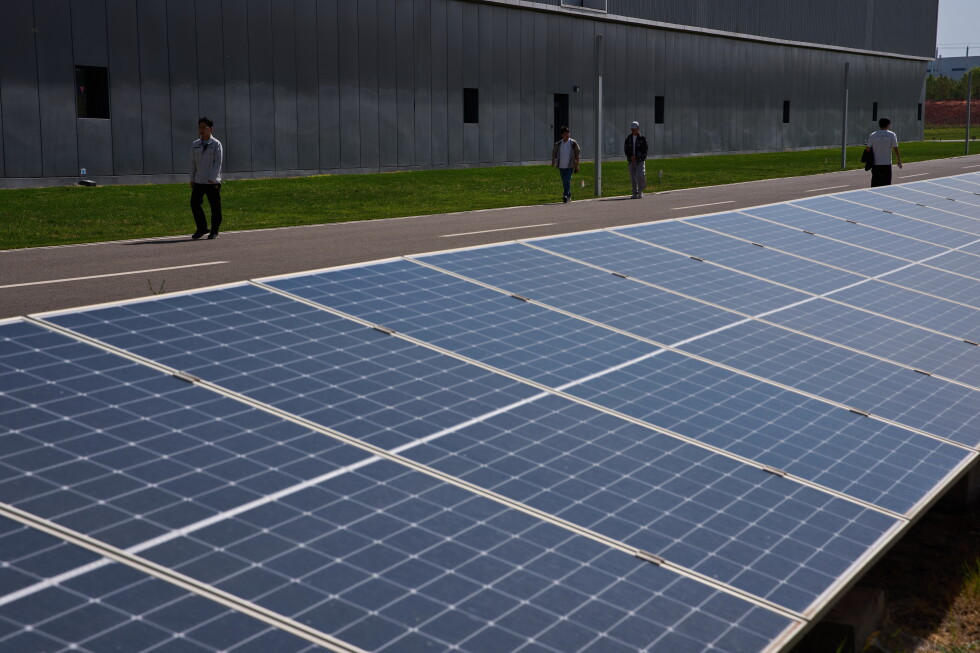
ORDOS, China — When viewed from above, the 3 million-plus solar panels that stretch across the desert landscape at Inner Mongolia’s Dalad Banner solar farm form a striking image: the shape of a galloping horse, a timeless nod to the region’s centuries-old nomadic traditions. Just a short drive from this cutting-edge renewable energy site, a massive coal-fired power plant stands ready to send 700 kilometers of electricity east to Beijing, China’s bustling capital.
This juxtaposition of clean solar infrastructure and fossil fuel generation perfectly encapsulates the dual-track, “all-of-the-above” energy strategy that has positioned Inner Mongolia as China’s single largest production base for both renewable energy and coal. The region’s ongoing energy transition mirrors the trajectory of China as a whole: wind and solar generating capacity are expanding at a breakneck pace, even as coal remains an irreplaceable pillar of the national power supply.
China has outpaced every other country in the world for new wind and solar installations, but recent 2025 data from China’s National Energy Administration shows coal-fired plants still accounted for 51% of the country’s total electricity generation. This paradox is most pronounced in Inner Mongolia, where growth in renewable capacity has gone hand in hand with expansion of coal output, according to energy analysts.
“While China as a whole is transitioning away from coal, Inner Mongolia is most certainly the most paradoxical part of the story. In Inner Mongolia’s case, more renewables often means more coal capacity as well,” explained David Fishman, an energy consultant with The Lantau Group who has personally toured the region’s coal plants and utility-scale solar farms.
As a critical hub in China’s national West-to-East Power Transmission Project, Inner Mongolia supplies massive volumes of electricity from its resource-rich northern plains to the industrial and population centers of China’s wealthy eastern coast. In 2025, 40% of the region’s total electricity generation — approximately 350 billion kilowatt-hours, enough to power 120 million households for a full year — was transmitted to other Chinese provinces.
Over the past five years, Inner Mongolia’s combined installed wind and solar capacity has more than doubled. Even so, coal still dominates regional power generation: coal-fired facilities produced roughly 590 billion kilowatt-hours in 2025, while wind and solar together generated 277 billion kilowatt-hours. Coal production has also kept expanding: in recent years, Inner Mongolia has mined around 1.2 billion tons of coal annually, accounting for one quarter of China’s total national output, with over 60% of that coal shipped to other provinces. Ordos, the city that administers the Dalad Banner solar farm, is one of five national key coal production centers designated by China’s central government.
Regional energy officials frame the parallel growth of renewables and coal as a pragmatic solution to meeting China’s rising national power demand while gradually shifting away from fossil fuels. For the foreseeable future, coal will remain critical to offset the inherent intermittency of wind and solar generation, which drops off dramatically when the wind stops blowing or the sun is hidden by cloud cover.
“Many people see there is a conflict or a competitive relationship between traditional energy and renewable energy,” noted Gu Qing, an official with Inner Mongolia’s energy administration, during an interview on-site at the Dalad Banner solar farm. “As more renewable energy capacity is added, coal-fired power will also continue to grow, although the pace will gradually slow.”
The Dalad Banner farm, part of a large-scale clean energy initiative launched in 2018 across the Kubuqi Desert, currently produces around 2 billion kilowatt-hours of electricity annually. To adapt to the new role of coal as a backup resource for renewables, regional officials say all existing coal-fired power units have been refurbished to operate at as low as 15% of their full maximum capacity, allowing facilities to cut coal consumption when renewable output is high.
“What is changing is that coal power units are turning from supply-guarantee units to serving as a supporting and regulating role,” explained Huang Zhiqiang, vice governor of Inner Mongolia, during a recent official press briefing. “Because wind and solar are intermittent…we cannot do without the support of coal-fired power.”
Outside analysts, however, warn that this flexible operating model faces significant technical, financial, and systemic hurdles. Fishman notes that the ability to ramp down to 15% capacity is not a widespread capability across the entire regional coal fleet, only achievable with the most advanced, well-maintained units. Ramping output up and down regularly also creates technical stress on infrastructure and cuts into revenue for plant operators.
Similarly, Anika Patel, China section editor at climate research organization Carbon Brief, points out that structural economic and political incentives create barriers to repositioning coal as a backup resource. Long-term power purchase agreements reduce grid operators’ flexibility to prioritize renewable energy, and complex interprovincial trading rules make it harder to integrate variable wind and solar output into national supply chains.
“Just because a plant can operate flexibly doesn’t mean that it is operating flexibly,” Patel said.
To support rising power demand from fast-growing sectors including artificial intelligence data centers, electric vehicle manufacturing and charging, and heavy industry, Inner Mongolia is not only building more wind and solar capacity. It is also investing in grid modernization, energy storage infrastructure, and demand-side adjustments: officials are encouraging industrial facilities to align production schedules with peaks in wind and solar generation to make the most of clean output.
Beyond power generation, Inner Mongolia has also expanded its role as a national hub for coal chemical processing, which converts coal into liquid fuels, natural gas, and industrial chemicals. Regional officials argue this expansion helps reduce China’s reliance on imported oil and gas, a priority highlighted by supply chain disruptions stemming from the ongoing Iran conflict and risks to shipping through the Strait of Hormuz. To cut emissions from these carbon-intensive processes, the region plans to deploy large-scale carbon capture technology, Huang said.