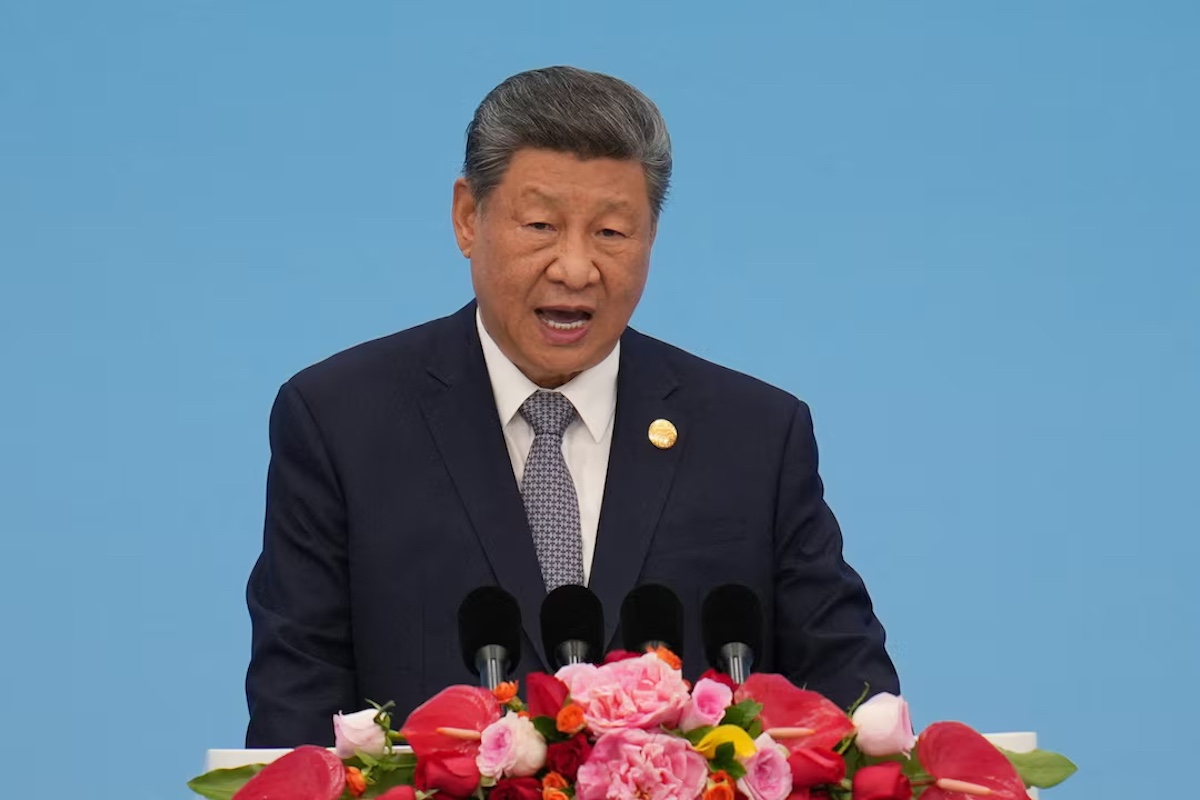
Delivering the opening keynote at the 2026 APEC Summit hosted in Shenzhen, Chinese President Xi Jinping laid out a carefully calibrated, values-driven counter-proposal targeted at wavering Southeast Asian governments and global multinational leaders, directly pushing back against recent U.S. policy moves including transactional bilateral tariff deals, the revitalized Quad security bloc, and sweeping new semiconductor export controls, without explicitly naming the United States in his public remarks.
Xi warned assembled delegates that unilateralism and protectionism were spreading unchecked across the global landscape, leaning into a longstanding Beijing framing of historical inevitability when he posed the defining choice facing regional economies: “To open doors or close doors, work together or against each other… History tells us that opening doors brings progress, while closing doors leaves one behind.” This carefully calibrated rhetorical framework, which positions deepening globalization as an unstoppable, irreversible historical tide, serves two distinct strategic goals: it frames restrictive U.S. export controls on advanced technology as structurally unsustainable and doomed to fail, while avoiding any direct, escalatory rhetorical threats in the 24-hour window before high-stakes scheduled bilateral talks with U.S. President Donald Trump.
Beneath the measured, historically rooted phrasing lies a hyper-specific strategic posture timed precisely to the imminent regulatory and diplomatic milestones unfolding that Thursday. On that day, the U.S. Commerce Department’s Bureau of Industry and Security is set to formally publish its interim final rule in the Federal Register, which restricts remote cloud access to cutting-edge U.S.-origin artificial intelligence chips, triggering a 90-day licensing grace period for all existing commercial arrangements. The rule’s publication is scheduled just hours before Xi is set to hold a one-on-one meeting with Trump, followed by an unprecedented trilateral diplomatic session alongside Russian President Vladimir Putin.
Rather than offering targeted concessions to persuade Washington to roll back the upcoming semiconductor curbs, Xi used his summit address and a series of pre-summit bilateral meetings with regional heads of state to lay out a fully fleshed alternative development path for the entire Asia-Pacific.
The most strategically revealing sections of Xi’s speech centered on artificial intelligence deployment and broad-based industrial upgrading, deliberately reframing the terms of the ongoing U.S.-China tech competition. Where Washington has paired its new BIS remote computing restrictions and strict semiconductor licensing mandates via its Quad partners, including recent announcements made during a U.S. diplomatic stop in Manila, with an exclusive Quad-led artificial intelligence accelerator initiative, Xi sought to shift the entire global tech contest away from narrow upstream silicon manufacturing chokepoints, where U.S. firms currently hold outsized market power, to the downstream commercial application of technology, where China’s massive domestic market offers unmatched scale.
Pointing to the rapid proliferation of domestic unicorn startups and large homegrown AI models across the Asia-Pacific region, Xi argued that the true transformative value of emerging technology lies in its ability to empower every segment of the real economy, from traditional manufacturing to agricultural production. He specifically highlighted use cases ranging from industrial factory robots and agricultural automation systems to autonomous passenger vehicles and commercial drone delivery networks, positioning China as a massive, supersized real-world innovation testing ground where frontier technologies can be deployed, iterated, refined, and scaled at a pace no other market can match.
The core message delivered to visiting multinational executives and Southeast Asian government delegations was unambiguous: while Washington’s Pax Silica initiative and the upcoming BIS cloud rules are designed to cordon off U.S.-controlled advanced computing clusters from Chinese and regional users, Beijing is betting that widely accessible applied industrial AI, built on mature semiconductor nodes, open-weight large language models, and Shenzhen’s fully integrated domestic hardware supply chains, will be the primary driver of measurable real-world productivity gains across the entire Global South.
Xi’s macroeconomic policy pitch was equally carefully tailored to capitalize on widespread regional frustration in the wake of Trump’s recent diplomatic swing through Southeast Asia. Just 24 hours before Xi’s APEC address, Thai Prime Minister Anutin Charnvirakul had been pressured into signing a joint statement outlining a non-reciprocal trade framework that would eliminate tariffs on U.S. exports and commit Bangkok to purchasing $2.6 billion worth of U.S. goods, a deal that still faces pending domestic legislative approval in Thailand.
Addressing these growing regional pressures indirectly during his Shenzhen speech, Xi noted that Asia-Pacific economies are at vastly different stages of development, and argued that applying a one-size-fits-all uniform policy framework will never deliver tangible, inclusive regional cooperation. Tying this position to Beijing’s broader Global South advocacy narrative, he urged all APEC member states to work together to keep global industrial and supply chains stable, open, and unimpeded, and pledged targeted technology cooperation specifically designed to meet the unique needs of developing economies – a deliberate, stark contrast to Washington’s recent reliance on asymmetric bilateral tariff leverage and sweeping extraterritorial compliance audits for foreign firms.
Xi went on to announce that as China launches its 15th Five-Year Plan, supported by a solid 4.6% GDP growth rate recorded across the first three quarters of 2026, Beijing will not only continue to cut import tariffs and expand market access for regional trading partners, but will go far beyond traditional trade liberalization measures. Deploying Beijing’s established policy framing of “institutional opening-up,” he pledged deeper regulatory alignment across notoriously challenging policy areas including cross-border rules, regulatory standards, and certification frameworks to deliver full, unobstructed manufacturing market access, alongside expanded support for digital trade transformation, cross-border e-commerce, and integrated smart customs systems across the region. Rather than merely offering temporary tariff relief, Xi’s address signals a long-term, systematic push to embed Chinese technical standards into the core regulatory architecture of Asia-Pacific economies.
By emphasizing the harmonization of shared technical standards and streamlined smart customs protocols just weeks before the upgraded China-ASEAN Free Trade Area (CAFTA) 3.0 protocol is set to officially take effect on December 1, Beijing is moving proactively to lock in integrated regional supply chain infrastructure before Washington’s new transshipment rules and the 90-day cloud licensing window can erect new barriers to cross-regional tech flows.
To anchor this regional vision in tangible geographic terms, Xi used the Shenzhen summit stage to elevate the Guangdong-Hong Kong-Macao Greater Bay Area (GBA) as a direct, open counterweight to Silicon Valley, presenting it as a replicable model of inclusive regional economic integration. Describing the GBA as a cluster of open, interconnected economies with widespread positive spillover effects for neighboring regions, Xi announced that China will support the creation of a new global World Association for Bay Areas Economic Cooperation to link similar coastal bay-area economic zones across the entire world.
Unveiled just days after Washington secured formal signatories for its San Francisco Declaration under the Pax Silica tech alliance, this new initiative deliberately avoids direct head-on confrontation with U.S.-led tech blocs, instead offering an inclusive, state-backed global cooperation platform that stands in clear contrast to Washington’s security-vetted, exclusive supply chain club.
Perhaps the most strategically significant detail ahead of Thursday’s high-stakes bilateral meeting with Trump, U.S. Treasury Secretary Scott Bessent, and U.S. Commerce Secretary Howard Lutnick, was what Xi deliberately chose not to include in his public address. By omitting any defensive, reactive reference to the upcoming U.S. chip restrictions, and instead reminding delegates that China has served as a consistent anchor of global economic stability and predictability in the 25 years since its 2001 accession to the World Trade Organization, Xi projected the classic Beijing diplomatic posture of “strategic composure.” When Air Force One lands in Shenzhen late Wednesday, the U.S. delegation will find their Chinese hosts deliberately rejecting the transactional, urgency-driven framing favored by the Trump administration, making it clear Beijing views its massive domestic market scale, long-term institutional planning capacity, and patience as its most powerful sources of leverage.
The analysis is contributed by Albert Cleisthenes Wong, an independent geopolitics, technology policy, and digital infrastructure analyst.