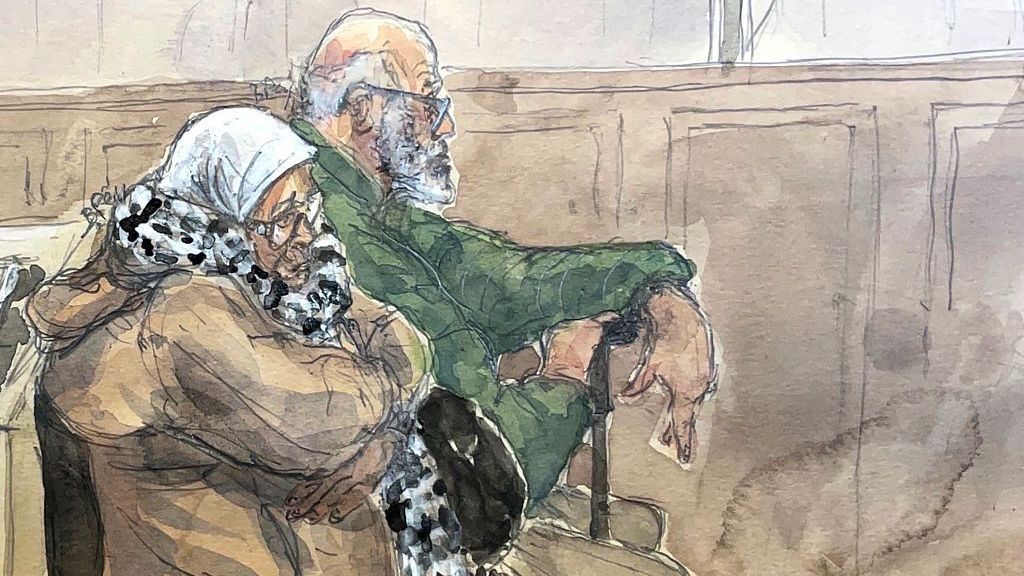
After a nearly 40-year long, sprawling criminal investigation that captivated French law enforcement and public attention, a 72-year-old woman, Halima El Bakhti, has been handed a 20-year prison sentence this week for the fatal abuse of her 4-year-old daughter, a little girl who was known to the public only as the “Little Martyr of the A10” for three decades before her identity was confirmed. The ruling was delivered Tuesday by the Loir-et-Cher Assize Court, which found El Bakhti guilty of torture and barbaric acts that resulted in the child’s death, without premeditated intent to kill. The girl’s 74-year-old father, Ahmed Touloub, was convicted as an accomplice and received a 15-year prison term. The horrific case dates back to August 11, 1987, when passersby discovered the young child’s discarded body on the shoulder of the A10 motorway in Suèvres, a commune in France’s Loir-et-Cher department. Forensic examinations later documented devastating signs of prolonged, relentless abuse across every inch of her small frame: human bite marks scattered across her skin, multiple fractured bones, and severe burn wounds inflicted by a hot iron. With no identifying documents or leads at the time, authorities buried the unnamed child in an unmarked grave close to where her remains were found, launching one of the largest cross-border missing persons investigations in French history. Law enforcement distributed the child’s composite photograph to public spaces across the country and sent official missing person alerts to more than 30 nations across Europe and North Africa, but the case went cold for 31 years. The breakthrough finally came in 2018, when a DNA sample from the girl’s brother, collected during processing for an entirely unrelated legal matter, produced a direct familial match with the unidentified victim’s genetic profile. The long-overdue DNA hit led directly to the arrest of Inass Touloub’s biological parents, who had remained unaccounted for for decades. The high-profile trial opened on November 2, and the jury deliberated for several hours before reaching the final verdict. During court proceedings, lead prosecutor Anaïs Allio laid out the full scope of the child’s suffering, emphasizing that “not a single part of Inass’s body was spared” from abuse, and describing the overwhelming, visceral shock that the entire prosecution team experienced when reviewing the harrowing, nearly unbearable autopsy photographs of the victim. The jury noted that El Bakhti was living with impaired cognitive judgement at the time of Inass’s death, a mitigating factor that prevented her from facing the maximum possible sentence for the charges. French media outlet France Info reported that both defendants remained completely stoic, heads bowed, as the court read out the full legal reasoning behind the verdict. Legal representatives for El Bakhti and Touloub confirmed that the pair have a 10-day window to file an appeal against their respective sentences.