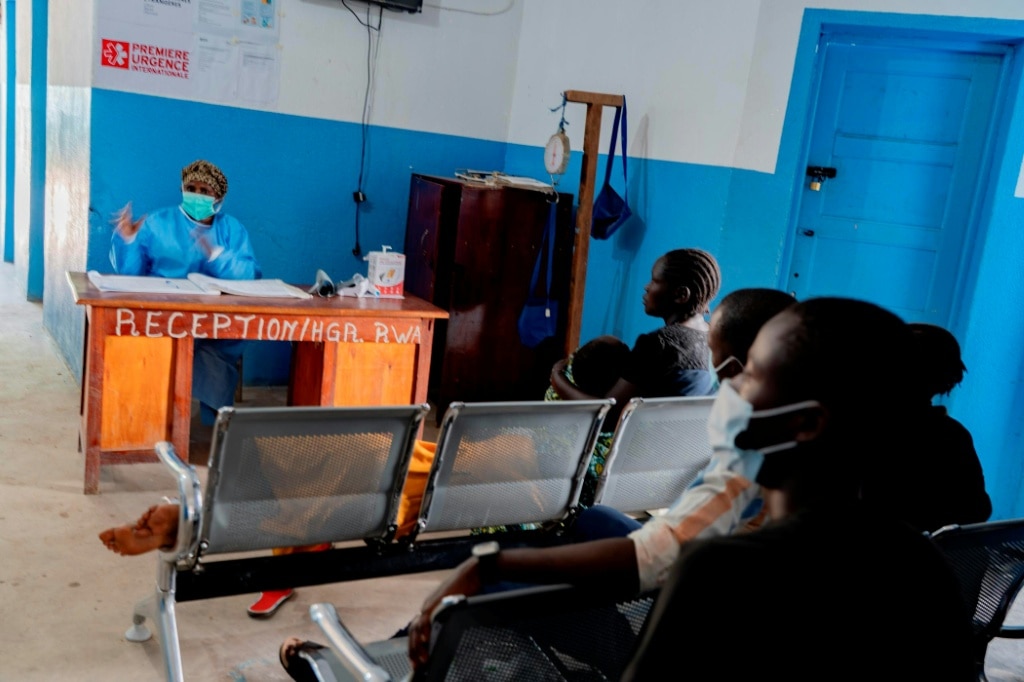
A deadly Ebola outbreak has spread across hard-to-reach regions of eastern Democratic Republic of the Congo, leaving local communities and healthcare workers severely underprepared and facing a growing crisis as aid efforts move at a glacial pace. Rwampara, one of the outbreak’s current epicenters, illustrates the crippling gaps in the early response: at the area’s main hospital, a flimsy plastic strip is the only marker for a planned isolation ward that has yet to be constructed.
This outbreak marks the 17th recorded flare-up of the highly contagious haemorrhagic fever in the DRC, and it has hit a region already destabilized by decades of armed conflict and widespread displacement. Even though Rwampara sits just 7.5 kilometers from Bunia, the largest city in violence-ravaged Ituri province, critical supplies for isolating and treating Ebola patients only began arriving on Monday, several days after the outbreak was officially declared.
At the hospital entrance, a single masked guard struggles to monitor all visitor traffic. A small number of handwashing basins have been set up outside the blue-painted facility, which a local official confirms is already caring for around 100 suspected Ebola cases. Before Friday, even nursing staff on the front lines lacked full personal protective equipment (PPE) — and local residents performing high-risk tasks are far more exposed. Salama Bamunoba, a local youth organization representative, explained that community members have been digging and filling graves for Ebola victims without gloves or any protective gear at all.
The current outbreak is caused by the Bundibugyo strain of Ebola, for which no targeted vaccine or specific antiviral treatment exists. Congolese authorities have reported that over 130 people are already suspected to have died from the virus, with containment efforts relying almost entirely on basic preventive measures and rapid case identification. Bamunoba called the government and its international partners out for significant delays, noting that establishing a proper triage and isolation zone has been the community’s top priority for days, with little action to show for it.
Despite the escalating crisis, daily life continues on the dusty streets of Rwampara for the moment: markets remain open, motorcycles move through crowds, and schools have not been closed. But anxiety is rapidly spreading across Rwampara and surrounding villages, which are already home to more than a million permanent residents and tens of thousands of people displaced by ongoing conflict. Local resident Gims Maniwa said many residents initially dismissed the outbreak as a minor threat, but the situation has deteriorated quickly. “Here, in Congo, a lot of things are done carelessly and that’s not good,” he told reporters.
Congolese officials have pushed back against criticism, with Health Minister Samuel Roger Kamaba claiming authorities already have all the supplies frontline healthcare workers need. The government’s spokesperson also emphasized this week that the DRC has decades of experience responding to Ebola outbreaks, most of which have been managed without widespread vaccine access. The country’s deadliest recent outbreak, which struck eastern DRC between 2018 and 2020, killed nearly 2,300 people out of more than 3,500 confirmed cases.
In recent days, aid has finally begun moving into the affected region. At Bunia’s airport, dozens of World Health Organization (WHO) staff in high-visibility vests have been unloading 12 tonnes of medical supplies from cargo planes, including protective kits and temporary isolation tents, which the organization confirmed had arrived this Tuesday. Aid group Medecins Sans Frontieres (MSF) has also stockpiled tonnes of supplies, including critical PPE for frontline teams, in its Bunia warehouses.
The response effort is facing headwinds from broader aid cuts, however. International funding for humanitarian work in the region has dropped sharply over the past year, particularly from the United States following Donald Trump’s return to the White House. Even with the new supply delivery, Trish Newport, MSF’s emergency programme manager, said the situation remains extremely strained. “Every facility our team called said: ‘We are full of suspect cases. We don’t have any space’,” Newport explained. “This gives you a vision of how crazy it is right now. What is really important is that we get material on the ground as quickly as possible,” she added, noting that the arrival of PPE will be a huge relief for overstretched staff.