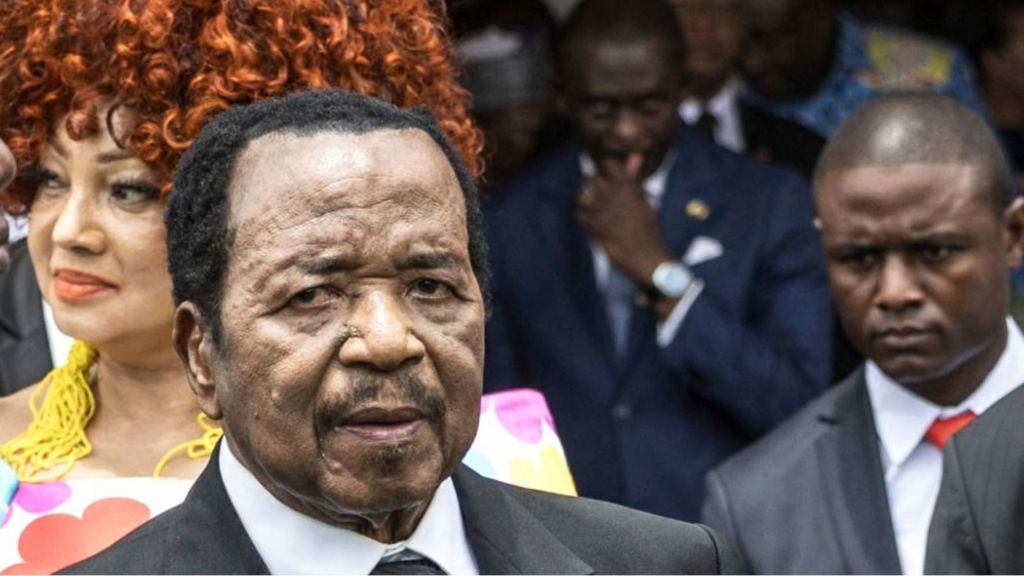
Nearly two months after Cameroon’s 93-year-old long-ruling president Paul Biya withdrew from public view and traveled abroad, he has implemented a sudden shakeup of the country’s top military command, a move that has amplified already simmering public concern over his extended stay in Switzerland.
Biya, who has not appeared at any public event since departing Cameroon for what his official team billed as a short private trip to Geneva on June 7, issued a series of separate presidential decrees on Monday to fill key army leadership roles and elevate five colonels to the rank of brigadier general. Among the promoted officers is Raymond Jean Charles Beko’o Abondo, who was immediately reappointed to lead the elite presidential guard — the unit tasked with Biya’s personal security, a post he has held continuously since 2013.
Military leadership overhauls have become a familiar pattern during Biya’s decades in office, particularly during periods of heightened public scrutiny or when perceptions of political vulnerability emerge. Three years ago, just after an unexpected coup in neighboring Gabon ousted the long-ruling Bongo dynasty and sent political shockwaves across Central and West Africa, Cameroon’s government moved quickly to reshuffle its own top military ranks. Ahead of last year’s deeply contested presidential election, where Biya ran for a controversial eighth term, he once again rearranged the army’s senior leadership. As recently as June this year, he presided over another round of promotions for senior defense and security force officials.
The context of this latest reshuffle, carried out while the head of state remains outside the country, has ignited fierce public debate, especially across Cameroon’s social media platforms. Biya’s prolonged absence has already fueled widespread speculation about the state of his health, though government officials have repeatedly rejected unconfirmed reports that the president has been hospitalized during his trip. Two years ago, press freedom organizations across the continent condemned Cameroon’s government after it imposed a national ban on media reporting about Biya’s health, a restriction that remains in place today.
Beyond health speculation, Cameroonians have increasingly criticized the complete lack of transparency around Biya’s activities during his trip and the uncertainty over when — or if — he plans to return. Since winning re-election last year, Biya pledged to form a new national cabinet, but he has yet to follow through on that promise. A newly created vice-presidency position, established this past April, also remains empty. Despite his absence, Biya has continued to sign official decrees from Geneva, including measures authorizing the Cameroonian government to enter new loan agreements with international financial institutions.
In a recent interview with French-language international broadcaster RFI, Cameroon’s Communication Minister René Emmanuel Sadi pushed back against growing criticism, affirming that the president is in good health and will return to the country imminently. He also dismissed opposition claims that Biya’s months-long absence has left the country without an active head of state, insisting that Biya continues to carry out his presidential duties remotely from his Swiss location.
But opposition leaders reject that framing. Mamadou Mota, vice-president of the opposition Cameroon Renaissance Movement (CRM) party, argues that Biya’s continuing absence has left a glaring institutional gap at the heart of the Cameroonian government. “A country cannot be governed by remote control while critical socioeconomic challenges go unaddressed,” Mota said last week, echoing a widespread sentiment among opposition and independent observers that the long-running absence of the head of state has left the country adrift amid ongoing economic and security crises.