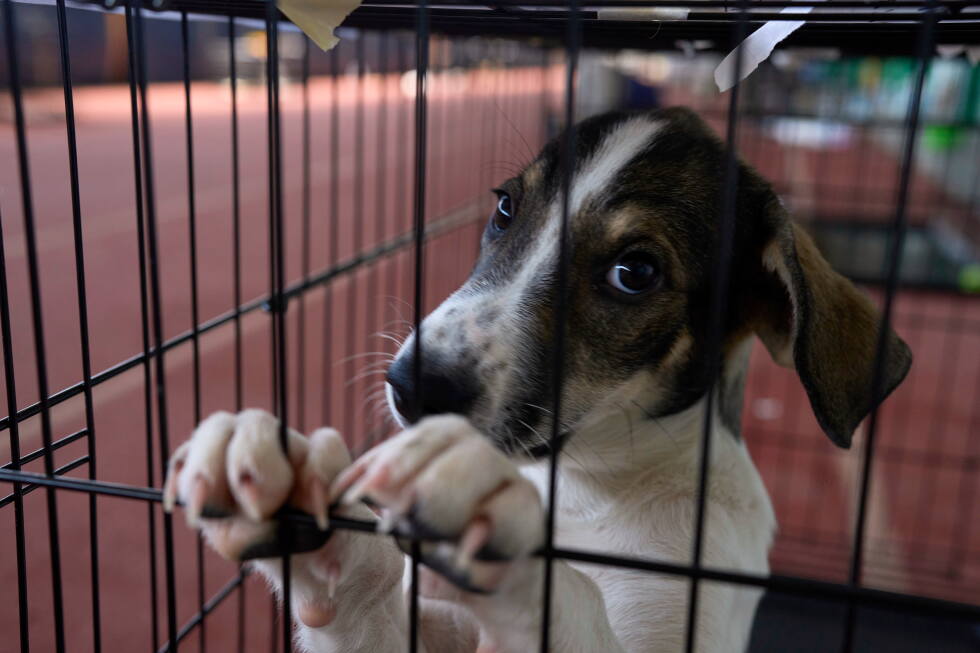
As containment orders were lifted Wednesday for a destructive wildfire that ripped through mountain and coastal terrain west of Athens, Greece, one rescued puppy still waited to go home. Sasa, an alert mixed-breed dog with floppy ears, remains in temporary shelter alongside hundreds of other domestic and wild animals pulled from the path of the blaze by local volunteer rescuers.
The wildfire, which at its peak spread across five active fronts, has scorched more than 100 square kilometers of land and destroyed dozens of residential properties. It is just one of dozens of massive wildfires sweeping Europe during an unseasonably hot summer, a crisis that has put growing numbers of animals at risk and raised urgent alarm among animal welfare organizations across the continent. Even nations that typically experience mild, cool summers have faced large-scale blazes this year, amplifying the scope of the threat.
In Megara, the coastal town 40 kilometers west of Athens at the center of this latest fire, local rescue coordinator Elena Dede says volunteer teams managed to save more than 280 animals — most of them domestic dogs — while operating through extreme heat shifting, unpredictable fire paths, and high winds that amplified the blaze’s spread. Rescued animals including Sasa are currently housed in a repurposed indoor sports facility, each kept in collapsible wire enclosures with basic enrichment and access to fresh water.
Dede described the chaotic conditions rescuers faced, noting “There was so much heat and the fire was so aggressive. It was changing directions all the time.” While the volunteer effort has saved hundreds of lives, both rescuers and welfare advocates acknowledge that the current response system is stretched far beyond its limits.
Richard Parr, director of the U.K.-based Center for Wild Animal Welfare, called the on-the-ground work of firefighters and local volunteer groups “heroic,” but warned that rising global temperatures driven by climate change have dramatically increased risks for millions of animals across Europe. Currently, he explained, most animal rescue efforts during wildfires are unplanned, ad-hoc operations carried out by private citizens and small local charities. “The scale of the challenges they’re facing in terms of the number of animals affected and the areas of fire is gigantic and completely out of step,” Parr said.
His organization is now pushing the European Union to establish a dedicated, centrally funded EU animal rescue service that can coordinate large-scale responses across member states during climate-driven disasters. Parr also called on national and local governments to pre-emptively create designated “fire refuges” for wild and domestic animals across fire-prone regions, such as maintained ponds and rocky outcrops that can offer emergency shelter when blazes break out.
Back in Megara, the rescue effort faces a new logistical challenge: reuniting displaced animals like Sasa with their owners, and finding permanent placement for animals whose owners cannot be located. Dede says local authorities are working to cross-reference rescued animals with posted missing pet notices, and temporary foster homes are being lined up for animals waiting to be rehomed.
Even as the work continues, Dede acknowledges that the animals now in the shelter are the lucky ones. Rescuers worked through thick toxic smoke and extreme stress to carry out missions, and many animals remain unaccounted for. “It was really hard for every volunteer and every person involved to survive the smoke and the stress,” she said. “I will never forget the animals that we knew were left behind. I’m just hoping they were saved and ran free.”