As the high-profile trial of activists linked to Palestine Action over an alleged planned raid on an Israeli-owned arms facility enters its final stages, defense barristers have delivered compelling closing arguments that challenge the prosecution’s core claims, while highlighting severe mental health struggles for one of the defendants. The case centers on allegations of coordinated criminal damage and violent disorder tied to a planned break-in at the Elbit Systems plant in Filton, near Bristol, that was scheduled for August 2024.
Nine people originally faced charges connected to the alleged plot. Of these, 35-year-old William Plastow has already been acquitted of the violent disorder charge, and only faces a single remaining allegation of criminal damage. The eight remaining defendants – 33-year-old Julija Brigadirova, 53-year-old Hannah Davidson, 47-year-old Ian Sanders, 41-year-old Aleksandra Herbich, 30-year-old Teuta Hoxha, 33-year-old Sean Middlebrough, and 31-year-old Madeleine Norman – all deny all charges brought against them. Prosecutors allege the group coordinated the planned break-in by conducting preliminary reconnaissance of the site and purchasing raiding equipment, though none are accused of actually entering the factory premises during the incident.
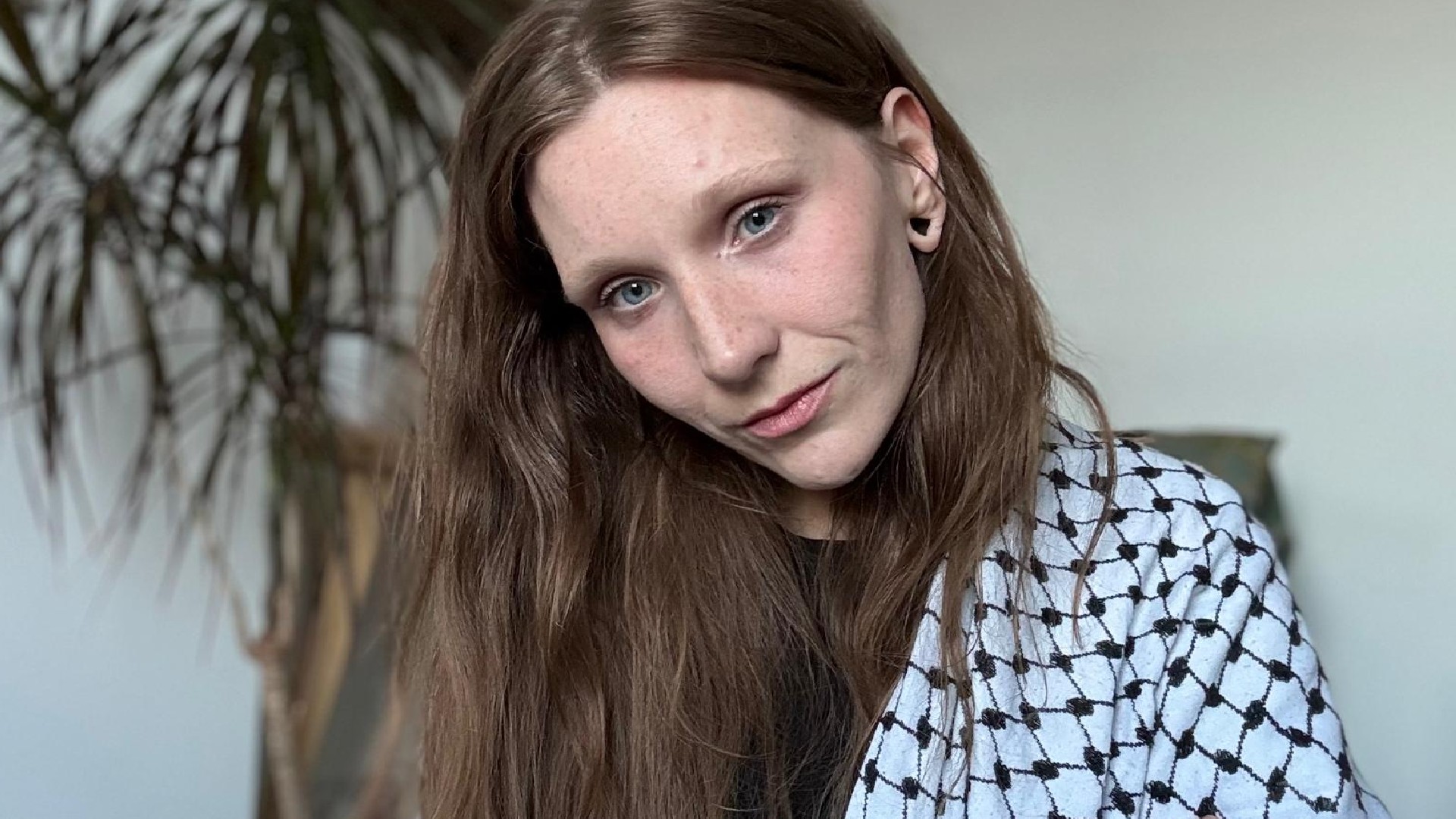
In his closing address to the jury on Wednesday, Tom Copeland, the barrister representing Julija Brigadirova, outlined that his client was grappling with extreme mental and emotional distress – including a serious suicide attempt – at the time the alleged coordination is said to have occurred. Copeland argued that this profound personal crisis explains why Brigadirova’s involvement is absent from the evidence of pre-raid planning: during that period of her life, she simply was not in a position to participate in any coordinated plot. He pointed out that the prosecution’s characterization of Brigadirova as a “key player” in the operation relies entirely on unproven assumption, not tangible evidence. No records of financial transactions linked to the raid, nor any planning or coordination messages linked to Brigadirova’s Signal accounts, have been presented by the prosecution.
“If the prosecution is correct, you would have to call her the invisible coordinator,” Copeland told the jury. “She is not invisible – you can see her sitting in the dock today, she is a real human being with real struggles. The far more plausible explanation is that the prosecution has simply got this wrong, and that mistake is a serious one that cannot be overlooked.”
Prosecutors have pointed to a single July 24 message sent to Brigadirova from her friend Jasmine Cruickshank that asks, “Are you still up for the Bristol van trip next weekend?” The prosecution claims this message proves Brigadirova knew about the Filton action and planned to travel to the site for the raid. Copeland dismissed this argument as baseless, noting that prosecutors never called Cruickshank to testify to explain the context of the message, even though Cruickshank provided a character statement for Brigadirova that was admitted as agreed evidence. Copeland argued that it is unfair for the prosecution to use the out-of-context message against his client while declining to call its sender to answer questions about what it actually meant.
The jury also heard that Brigadirova traveled to Bristol with Cruickshank on August 4, took a selfie at the home of Cruickshank’s father after arriving, and did not return to Manchester in the van driven back by Cruickshank days later. Copeland further criticized the prosecution for downplaying his client’s mental health crisis, framing it only as “low mood” when in fact Brigadirova was hospitalized for four days following her suicide attempt, which was not the first such crisis she had experienced. Copeland suggested that the evidence is consistent with Brigadirova only accompanying friends to Bristol for emotional support during a difficult period in her life, not to participate in a coordinated raid. The first post-raid mention of Brigadirova in any evidence is a message she sent to a contact on the dating app Feeld, which simply said, “just stayed with friends down south, nothing special.”
Defense arguments for other defendants similarly centered on the prosecution’s lack of concrete evidence tying them to coordinated criminal activity. For Aleksandra Herbich, barrister Emma Fenn argued that her client’s role in the days before the alleged raid was so limited that it cannot amount to criminal participation. Fenn noted that the Palestine Action “Coordinator’s manual” requires all coordinators to remain contactable at all times – but Herbich handed her phone over to another defendant ahead of the action, directly contradicting the claim that she was a coordinator. Fenn told the jury that CCTV footage shows Herbich at Paddington Station on August 4 carrying a sushi-sized box, and that co-defendant Madeline Norman testified that the only activity she saw Herbich engaged in at the Bristol Airbnb where activists stayed was cooking large amounts of pasta.
“There is no evidence linking Herbich to any tools or equipment that could have been used for criminal damage or violent disorder,” Fenn said. “At most, she helped with basic cooking and cleaning. Cooking is not an intentional act that assists or encourages the serious offenses the prosecution has charged.”
For William Plastow, who already defeated the violent disorder charge, barrister Andrew Rose argued that the remaining criminal damage charge should also be thrown out, as it contains a fundamental logical contradiction. The prosecution’s case against Plastow rests on the fact that he purchased a number of items including rucksacks, protective gear and crowbars, then handed them over to another individual connected to the case, Charlotte Head. But Plastow testified that he had no knowledge of the Filton plot before the raid happened, and only first learned of the site from a news report the morning after the incident. Rose told the jury that under the judge’s directions, jurors can only convict if they are certain Plastow provided the equipment with the explicit intention that it be used to damage Elbit’s property as part of the Filton plot.
Rose pointed out that Plastow was never given the detailed, site-specific list of items needed for the Filton action, in line with Palestine Action’s stated “need-to-know” policy for operations. “Mr. Plastow was not someone who needed to know, and he did not want to know,” Rose explained. He further argued that since the judge already acquitted Plastow of violent disorder because there was insufficient evidence he knew violence would occur, it is logically inconsistent to claim he knew about the broader plan for criminal damage at Filton. The prosecution’s own case holds that anyone involved in the plot knew it would include both criminal damage and potential violent disorder. “If he had no knowledge of violent disorder, he could not have had knowledge of the criminal damage plan either,” Rose told the jury. “The acquittal on the first charge should mean the second charge is also dismissed.”
Following the completion of closing arguments from the defense team on Thursday, the judge sent the jury out to begin deliberations on the verdicts. The trial is ongoing.
As a public service note, suicide prevention support is available for those in crisis: people in the UK can contact Samaritans at jo@samaritans.org or 116 123, those in the US can reach the National Suicide Prevention Lifeline at 1-800-273-8255, and people in other countries can find local resources at befrienders.org.