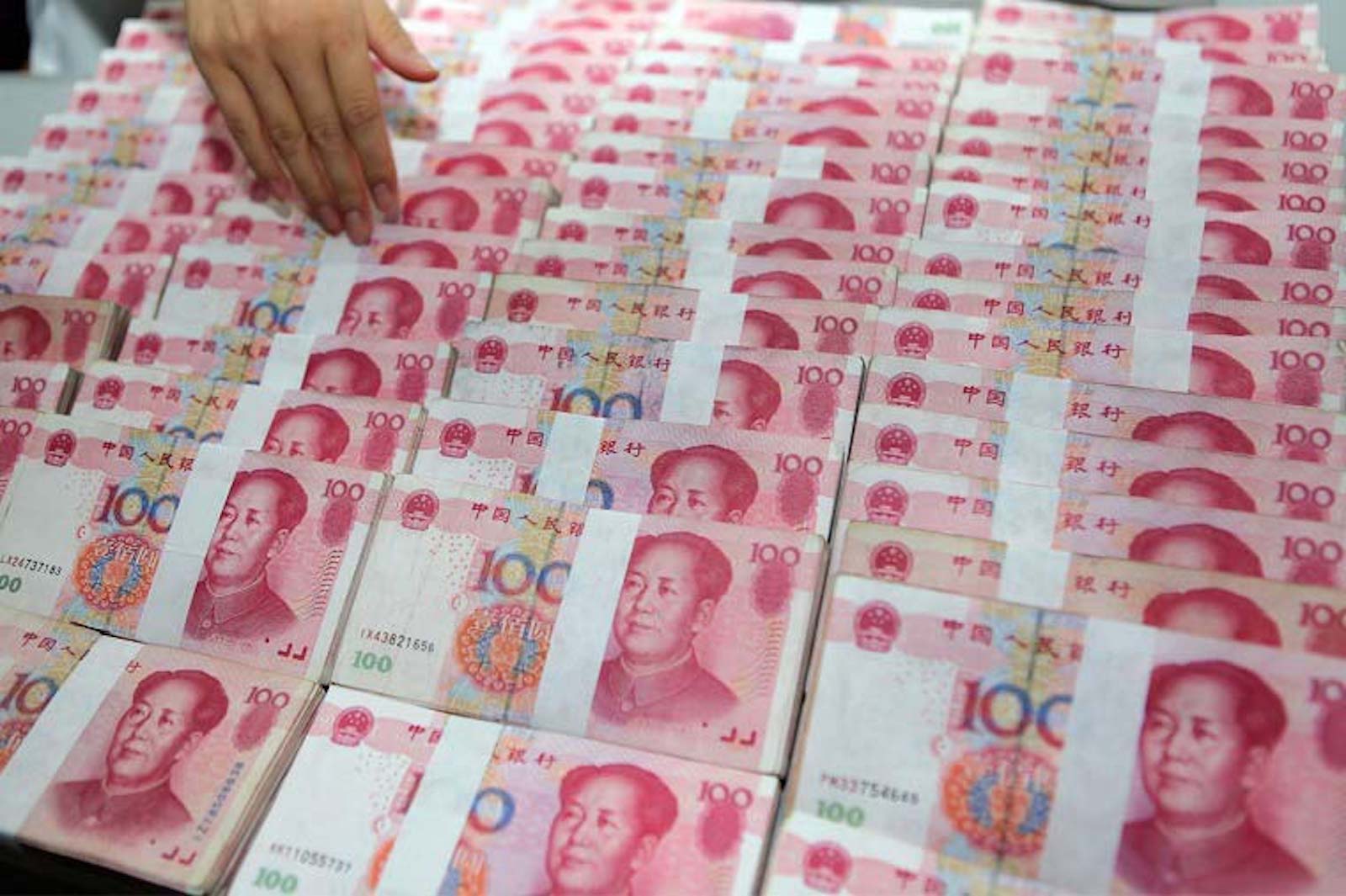
TOKYO — In a move framed by a centuries-old Chinese cultural metaphor that balances freedom and state oversight, Beijing is drawing tighter boundaries around cross-border capital outflows — but analysts warn this “birdcage” strategy risks doing more harm than good for Asia’s largest economy, even as the People’s Bank of China (PBOC) pursues incremental market-aligned reforms to boost the yuan’s global standing.
Over recent weeks, Chinese regulators have moved to shut down informal channels that allow the country’s 1.4 billion citizens to move capital overseas. On May 22, the China Securities Regulatory Commission (CSRC) launched a targeted crackdown on unlicensed brokerage firms that facilitate cross-border investment into foreign markets. Regulators have since pressured financial institutions based in Hong Kong and Singapore to wind down their cross-border offerings of securities, futures, and investment funds, with the full rollout of the crackdown planned over a two-year timeline. Officials have framed the action solely as a crackdown on illicit capital flows, but industry experts warn the broader shift in regulatory posture will almost certainly create an unintended chilling effect across China’s economy.
Ashwin Binwani, founder of Singapore-based Alpha Binwani Capital, warns the crackdown could escalate far beyond its stated target, expanding into a broader clampdown that spooks global markets. “The biggest problem is that you never know how far the crackdown on cross-border capital flow can go,” noted Gary Ng, senior economist at Natixis, adding that uncertainty will inevitably ripple through Hong Kong’s already fragile international financial sector.
This latest round of regulatory tightening is not an isolated policy shift, analysts point out. More than five years after Beijing’s sweeping crackdown on Jack Ma’s Alibaba and the broader Chinese tech sector, global investors are still grappling with the lasting fallout of that sudden, unanticipated regulatory shift. Just last month, new details emerged of Beijing’s tight restrictions on international travel for Chinese artificial intelligence researchers — a modern echo of Soviet-era “birdcaging” of academics, artists, and athletes to prevent defection and limit foreign influence.
These policy moves stand in stark contradiction to President Xi Jinping’s 2013 pledge to allow market forces to play a “decisive role” in China’s economic development. They also highlight a longstanding pattern: the Chinese Communist Party has repeatedly addressed the visible symptoms of China’s economic challenges, rather than tackling their deep-rooted causes.
In the near term, the crackdown is already having corrosive effects on market confidence. Eurasia Group analyst Dominic Chiu notes that major global banks have already begun quietly tightening requirements or freezing new account openings for mainland Chinese clients. In the longer term, experts frame the strategy as a reflection of anxiety rather than progress — an awkward step for a government that is actively lobbying for the yuan to be recognized as a legitimate global reserve currency.
Not all recent Chinese economic policy moves lean toward greater state control, however. In a promising development for global investors, PBOC Governor Pan Gongsheng announced June 17 at a major business forum that the central bank is preparing to transition to a Fed-style overnight policy rate, a reform that would sharpen Beijing’s control over short-term funding costs and align China’s monetary policy framework more closely with global central bank standards.
Full statutory independence for the PBOC would represent a far more transformative change for global markets. For the yuan to truly challenge the dollar and euro as a top reserve currency, the central bank would need genuine authority over monetary policy, rather than its current advisory role under the State Council, which retains final decision-making power. Even so, analysts agree that the overnight rate shift represents meaningful, incremental progress.
Since July 2024, the PBOC has already formally adopted a policy framework centered on the 7-day reverse repo rate as its primary policy tool. That shift represented a step forward, improving the transmission of the central bank’s monetary adjustments from short-term rates to longer-term borrowing costs, and reducing the outsize influence of China’s loan prime rate and medium-term lending facility.
If the PBOC follows through on its planned shift to an overnight policy rate — which analysts view as highly likely — the reform would increase the central bank’s influence over markets through greater transparency. It could also pave the way for scheduled monetary policy meetings, clear forward guidance for markets, and the publication of meeting minutes, all standard practices among major global central banks.
Greater transparency around monetary policy would reduce the opacity that has long deterred foreign investment in Chinese assets, and could boost foreign participation in China’s onshore bond markets, which have already grown steadily via the Bond Connect program. A more predictable, rules-based monetary framework would also strengthen Beijing’s case for the yuan to gain reserve currency status, theoretically reducing the PBOC’s scope for behind-the-scenes micromanagement of the exchange rate. While that shift could lead to greater short-term volatility for the yuan, it would ultimately improve the currency’s long-term credibility among global investors.
The global economic landscape is uniquely favorable for China to position the yuan as a larger player in global trade, finance, and central bank reserves. U.S. national debt is rapidly approaching the $40 trillion mark, inflation is running at 4.2% amid the ongoing Iran war and total political gridlock in Washington, creating widespread demand among global investors for a credible alternative to the dollar. As far back as late 2025, JPMorgan warned that “increased polarization in the U.S. could jeopardize its governance, which underpins its role as a global safe haven.”
Earlier this month, a European Central Bank report confirmed that gold has overtaken U.S. government bonds as the world’s largest reserve asset. At the end of 2025, gold accounted for 27% of global central bank reserve assets, up from 20% just one year prior. “Geopolitical tensions continue to drive strong central bank demand for gold,” ECB President Christine Lagarde wrote of the findings. Hamad Hussain, senior economist at Capital Economics, told CNBC that “recent doubts over the dollar’s safe-haven status could also boost the attractiveness of both gold and the euro as reserve assets over the coming years.”
Alongside the planned overnight rate reform, Pan unveiled new steps to boost the yuan’s global profile during his June 17 speech. The PBOC is launching the FIMA RMB Repo Facility, which will allow overseas central banks, monetary authorities, international financial institutions, and sovereign wealth funds to access yuan liquidity via repo transactions collateralized by Chinese government bonds and other high-grade fixed-income securities. The central bank is also exploring a new liquidity backstop to support non-bank financial institutions during periods of market stress, a policy guardrail that would address a key longstanding concern of global investors seeking greater predictability in Chinese markets.
These incremental reforms come even as Xi Jinping has doubled down on capital controls and other restrictive policies in recent weeks, contradicting pledges he made just last month to a delegation of high-profile U.S. business leaders including Apple’s Tim Cook, BlackRock’s Larry Fink, Blackstone’s Stephen Schwarzman, Nvidia’s Jensen Huang, and Tesla’s Elon Musk, when he promised China would “open wider” to foreign investment and offer “broader prospects” for global business. Since that meeting, Xi’s government has tightened cross-border capital controls, restricted access for AI researchers, and rolled back transparency measures. Instead of expanded access as promised, the leadership of Asia’s largest economy has moved toward greater closure, with recent actions reading more as a sign of deep-seated economic anxiety than the confident leadership global markets have come to expect from Beijing in the Xi era.
Compounding that anxiety, recent economic data has undermined Beijing’s official narrative that deflation has been defeated. Officials have pointed to a 1.2% year-on-year rise in consumer prices in May, following a flat 0% full-year reading in 2025, as proof the economy has turned a corner. But retail sales fell 0.6% year-on-year in May, the weakest reading since late 2022, indicating weak domestic demand is likely deepening. Fixed-asset investment also dropped 4.1% year-on-year in the first five months of 2026, a far steeper decline than analysts forecast.
Like Japan during its decades-long period of stagnation, China is struggling to break the “defeationary mindset” that has taken hold among households and businesses, regardless of the monthly headline numbers published by the National Bureau of Statistics. Strong export performance has not been enough to lift broad economic confidence. To defeat deflation once and for all, Beijing would need to resolve the multi-year property sector crisis and convince Chinese households to deploy the more than $22 trillion in excess savings they have accumulated. That massive pile of household cash is more than four times Japan’s annual GDP, a reminder of the high cost of policy complacency drawn from Japan’s lost decades. The two challenges are closely linked: roughly 70% of Chinese household wealth is tied up in real estate.
Analysts argue that if China built a more transparent, stable domestic economy that offered attractive alternative investment options to real estate, Chinese citizens would have far less incentive to move capital overseas in the first place. Beijing is making a critical mistake, they say, in relying on a restrictive “birdcage” for capital, when what the economy actually needs is bold reform to rebuild domestic confidence and convince households to invest their savings at home.
This analysis is by William Pesek, a contributing columnist on Asian economic affairs.