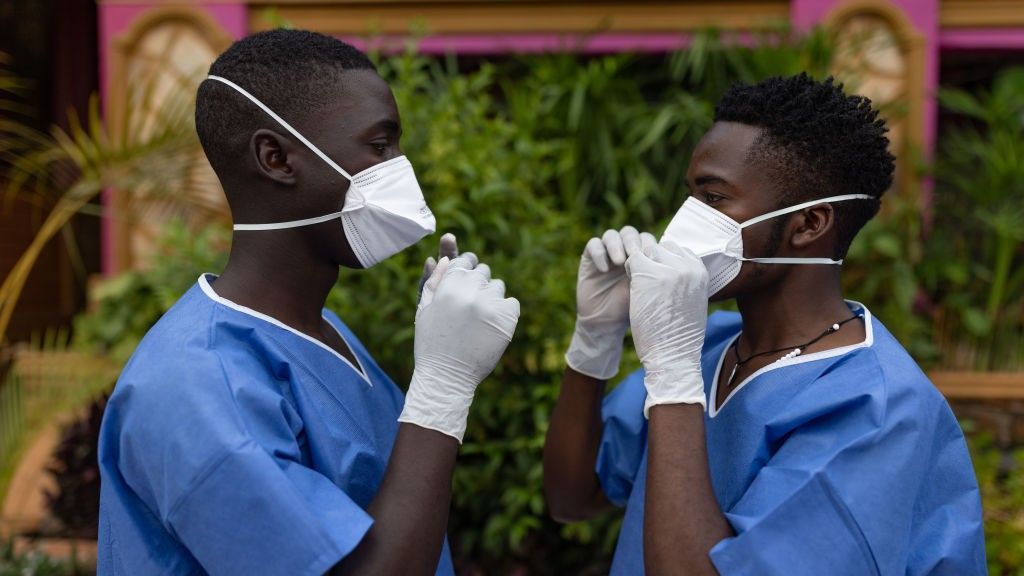
A devastating Ebola outbreak in eastern Democratic Republic of Congo has reached a grim new threshold, with official fatalities surpassing 1,500 to make it the second-worst Ebola event recorded in modern history. Declared publicly this past May, public health experts warn that the actual death toll is far higher than the official count, and Congolese authorities confirmed last Thursday that the virus is spreading at a faster rate than any previous outbreak the country has faced.
Just across the border, however, Uganda’s experience of the same cross-border outbreak paints a dramatically different picture of successful containment. Two weeks ago, the East African nation discharged its final active Ebola patient from care, a moment the country’s health minister described as a “moment of joy.” In total, Uganda recorded just 20 confirmed cases and only two deaths from the virus – a outcome that was not a stroke of luck, according to senior global health officials.
“This is not by luck or chance. It is because people invested in preparedness,” explained Dr Kasonde Mwinga, the World Health Organization’s country representative for Uganda, in an interview with the BBC.
For half a century, DR Congo has borne the brunt of Ebola outbreaks, recording 17 separate events since the virus was first identified. Uganda, by comparison, has faced nine outbreaks since 2000, and government officials say decades of hard-won experience have given the country a playbook to stop transmission before it can spiral into a larger crisis.
A 2011 incident in Uganda’s central Luwero district illustrates this advantage. When a 12-year-old girl arrived at a local hospital with telltale Ebola symptoms, clinicians immediately moved to isolate her, donned full personal protective equipment for all interactions, and safely handled her remains after she died just three hours after admission. Those quick precautions stopped transmission in its tracks, before the virus could spread to other patients or healthcare workers, even before lab tests confirmed the diagnosis.
“We know Ebola. It has been here a few times, we know how to deal with it,” government spokesperson Alan Kasujja told BBC’s Newsday.
Uganda’s first confirmed case in the current cross-border event was a Congolese man who crossed the border to seek medical care. After DR Congo confirmed multiple imported cases originating from its territory, Ugandan health authorities immediately activated a pre-built specialist Ebola treatment center at Kampala’s Mulago Hospital, a facility that was already set up following a 2023 Ebola outbreak. The center already retained leftover medical supplies and maintained a standing emergency response team, meaning the facility was ready to accept patients within 24 hours of activation, according to Dr David Kaggwa, the center’s head.
“It was a matter of sorting and ordering a few more supplies, and then actually in one day we were ready to receive the patients. So, it is easy, it’s not that we’re starting from scratch,” Kaggwa said.
Fifteen of Uganda’s 20 confirmed cases were imported from DR Congo. After the two countries issued a joint public declaration of the outbreak on May 15, residents with Ebola symptoms – including fever, headache, and vomiting – began seeking care directly at the specialized treatment unit, rather than passing through crowded general hospitals, Kaggwa explained. This immediate routing cut off opportunities for community transmission by limiting contact between infected people and the general public.
To further block spread, Ugandan authorities also closed the shared border with DR Congo, accepting the unavoidable economic hit to cross-border traders who rely on daily movement between the two countries to make a living.
Beyond pre-existing preparation, Uganda also benefited from early awareness of the outbreak’s specific character. Before DR Congo confirmed its first cases, the virus spread undetected for weeks: local health officials were testing for common Ebola strains, but the current outbreak is caused by the rare Bundibugyo strain, delaying detection. By the time the outbreak was declared, the virus had already gained a foothold in Congolese communities, giving Uganda advance warning to activate its response before the virus reached its territory.
“Surveillance mechanisms were put in place then it was easy to identify all the patients quickly,” Kaggwa said.
In DR Congo, systemic challenges have hampered surveillance and contact tracing efforts that are critical to stopping Ebola. A field investigator working in Bunia, the city at the outbreak’s epicenter, told Reuters that poor planning, logistical backlogs, and reliance on under-trained staff have left response teams constantly playing catch-up.
“We discover the disease only after it has already spread. We’re just chasing it,” said Dr Moubarack Kano.
Chronic insecurity in eastern DR Congo has compounded these challenges. Ituri province, the current epicenter, has been under military rule for years as government forces battle dozens of active armed groups, while large swathes of territory further south are controlled by the M23 rebel militia. While M23 claims to have contained local transmission through early detection, mass displacement caused by ongoing conflict has left millions of people moving across the region, creating gaps in surveillance that the virus exploits. Cross-border trade and artisanal mining also drive constant population movement, giving the virus more opportunities to jump between communities and across borders.
In contrast, Uganda successfully completed full 21-day quarantine periods for more than 6,000 known contacts of confirmed Ebola cases, a step that Kaggwa says was critical to halting transmission, since most secondary cases emerge from known exposed contacts.
“I would say that our success is mainly due to our promptness and completeness of follow-up,” Kasujja concurred.
This successful containment is not the first time Uganda has earned international recognition for its proactive public health response. In the 1990s and 2000s, the country drew widespread praise for cutting national HIV prevalence from over 10% to 6% in a decade through a large-scale public education campaign centered on the “ABC” prevention framework: abstinence, being faithful, and condom use.
Community buy-in has also been a core pillar of Uganda’s success, Kasujja added. Even after the country was declared Ebola-free, the public continues to follow recommended prevention precautions, he said.
This level of community cooperation is seen in the experience of one of Uganda’s early cases: a nurse who contracted Ebola while working in a Kampala intensive care unit, shortly before the outbreak was officially declared. She had treated a patient who later died of Ebola without anyone knowing the cause of death, and when she developed symptoms two weeks later and learned two of her colleagues had already tested positive, she voluntarily entered isolation immediately. Even when her 11-month-old breastfeeding infant was separated from her for a 21-day quarantine, she continued to fully comply with all public health guidelines.
Uganda broke standard World Health Organization protocol by declaring itself Ebola-free just two weeks after discharging its last patient, instead of the recommended 42-day waiting period. The health ministry justified the early announcement by noting all cases were imported from DR Congo, and no unexplained community transmission ever occurred within Uganda’s borders.
Even with this success, Ugandan officials are under no illusion that the threat has passed. The country shares a long, porous border with Ituri province, the heart of the Congolese outbreak, meaning the virus can easily re-enter Uganda at any time.
In response, Uganda has deployed dozens of healthcare workers across the border to support DR Congo’s response, with Health Minister Chris Baryomunsi writing on social media platform X that the country is standing with its “brothers and sisters” to tackle the shared threat.
“We are going to where the problem is. Uganda cannot win against Ebola if the Democratic Republic of Congo fails,” Kasujja explained.
Uganda has also ramped up screening at border crossings and continues to run public education campaigns on Ebola prevention and response protocols. “We’re always very prepared,” Kaggwa said.