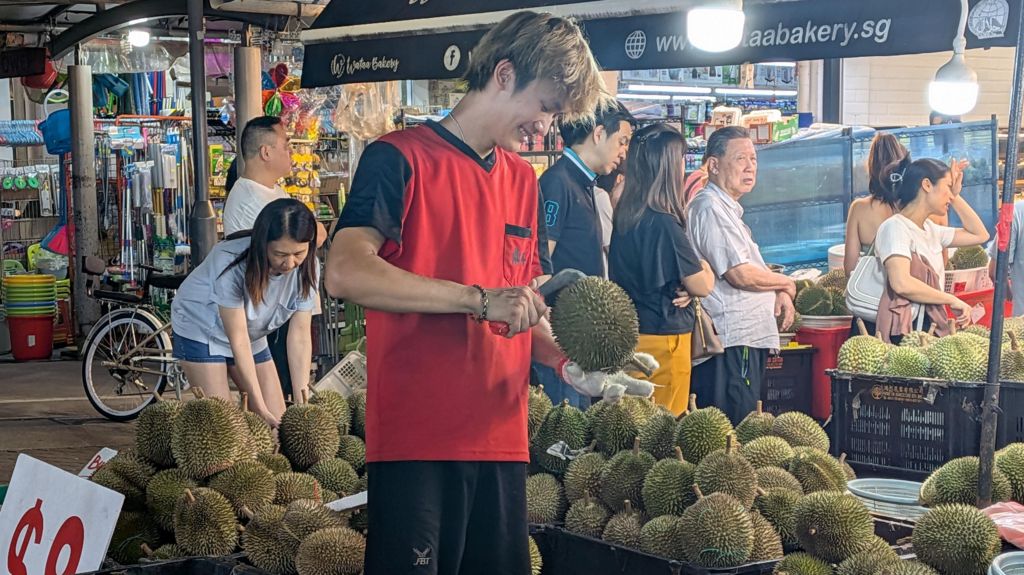
In the bustling eastern Singapore township of Tampines, a queue stretching two full blocks wraps around the popular Durian Ninja fruit stall nearly every day. Since mid-June, the stall has given away 600 kilograms of free durian daily—two whole fruits per customer—an extraordinary promotional generosity made possible by a historic oversupply of the pungent, spiky fruit across the border in Malaysia.
Malaysia, the world’s leading producer of premium durian varieties, typically harvests roughly 550,000 tonnes of durian annually. But 2026 has brought an unforeseen “durian tsunami”: a perfect storm of maturing new plantations and ideal growing conditions that flooded global and regional markets, crashing wholesale and retail prices across the board. For fruit lovers across Southeast Asia, the price collapse is a once-in-a-generation opportunity to indulge in high-quality durian at a fraction of usual costs. Sixty-nine-year-old Cherng, waiting in the Singapore queue, told the BBC he and his family now eat durian almost every day, accessing top-grade fruit for close to 50% less than they paid in previous seasons. Consumers across both Malaysia and Singapore are flocking to stalls offering steep discounts and occasional free giveaways, snapping up the surplus as quickly as vendors can unload it.
However, the windfall for consumers has turned into an economic crisis for Malaysian durian farmers. The current glut is the end result of a decade-long durian boom driven by surging demand from China, particularly for premium varieties like buttery, bittersweet Musang King—often nicknamed the “Hermès of durians” for its high market value and cult following among Chinese consumers. At the height of the boom, thousands of growers cleared existing rubber and oil palm plantations to plant new durian orchards, betting on continuing high returns. Now, a decade later, those newly planted trees have all reached maturity at the same time, flooding the market with a volume of fruit far outstripping current demand.
The price collapse has been staggering. Last December, Raub-based farm owner Lu Yuee Thing sold his Musang King durian to retailers for an average of 13.50 Malaysian ringgit ($3.30) per kilogram. This month, he says he can only command half that price. Johor-based farmer Han Sing Keng has cut his Musang King prices by nearly a third, selling the premium fruit for just 50 ringgit per kilogram, and has turned to growing bananas to offset lost income. Many lower-quality, ungraded durians from new plantations are flooding local markets at rock-bottom prices, dragging down the value of higher-grade product: many of these cheap, unripe or inconsistent quality fruits are labeled as Musang King despite failing to meet export quality standards, undercutting established producers. Some premium varieties like Black Thorn have also seen steep price cuts, while unbranded local “kampung durians” are selling for barely enough to cover harvesting costs.
Many producers were already reeling from unpredictable weather before the glut hit. Durian cultivation requires very specific weather conditions at different growth stages: pollination is easily disrupted by unseasonal heavy rain or wind, trees need a month of hot weather to flower successfully, and cool temperatures for a high-quality harvest. Malaysia’s varied geography left growers unevenly impacted, with some regions facing poor harvests from bad weather even as others produced above-average yields. The combination of poor production outcomes for some and massive oversupply across the industry created a catastrophic double blow for small-scale producers.
The severity of the crisis has prompted emergency action from Malaysian authorities. The Federal Agricultural Marketing Authority has introduced emergency support measures, including purchasing durian from smallholder farmers at a guaranteed base price to protect their incomes, with officials hoping market prices will stabilize within the next few weeks. Industry leaders are also pursuing long-term changes to build a more sustainable sector. Edwyn Chiang Kyn Hoe, secretary general of the Malaysia International Durian Industry Development Association, says the group’s goal is to build a premium Malaysian durian industry that competes on quality, authenticity and geographic origin rather than rock-bottom prices. The association is currently organizing trade events in China to connect Malaysian exporters with Chinese importers, expanding market access to absorb the current surplus and strengthen the industry for future growth.
In the meantime, vendors on both sides of the border are turning to creative promotions to move their overflowing stock. A stall in Pahang, Malaysia went viral online for its “all-you-can-fit” promotion, where customers can fill an entire sack with durian for just 100 ringgit ($24). In Singapore, Durian Ninja owner Kee Eng Chai frames his daily free giveaway as a community gesture, noting that all free durian is claimed within one to two hours, while remaining portions sell for as little as S$1 ($0.74) each. Kee also hopes the low prices will draw a new generation of consumers—he notes his current customer base is mostly older Singaporeans, and the promotion is an opportunity to encourage younger people to explore different durian varieties.